
‘We’ve Been Doing This All Our Life’: Climate Change and Modernization Threaten Ladakh’s Yak Herders

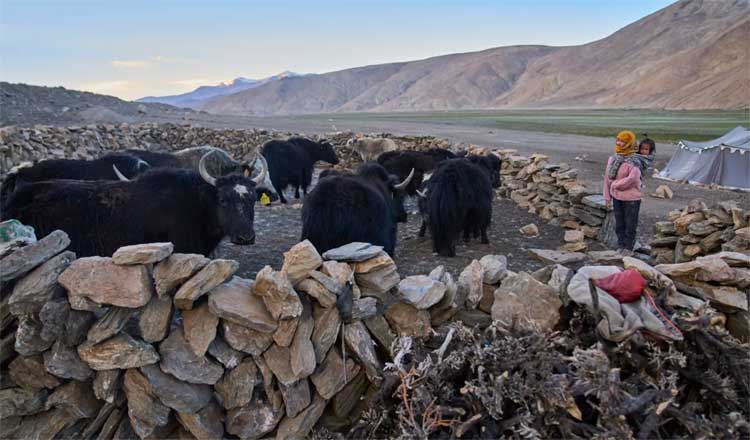
With her one-year-old son strapped to her back, Tsering Dolma ushers a dozen yaks into a stone-walled corral as twilight blankets the rugged terrain of India’s remote Ladakh region. The high-altitude desert, once sustained by reliable snowmelt and rainfall, is witnessing dramatic shifts in climate, endangering the traditional lifestyle of its nomadic herders.
Across Ladakh’s vast and windswept plains—where grassy meadows fade into stony ridges—only a few herders remain, their yaks grazing amid increasingly barren pastures.
“Earlier, it used to snow and rain, but now it has reduced a lot,” says Dolma, 32. “Even the winters are getting warmer than before.”
Climate and Cultural Crisis
Once nourished by predictable snowmelt, Ladakh’s grazing lands are now drying out. Warmer winters, erratic rainfall, and frequent heatwaves are stressing the yaks—animals uniquely adapted to cold environments. Studies show average temperatures in Ladakh have climbed by 3°C over the last four decades.
The result? A steep decline in yak populations. Government data reveals that the number of yaks in Ladakh has fallen from nearly 34,000 in 2012 to under 20,000 by 2019.
“The grass is disappearing. The animals are weaker,” say herders, many of whom are women responsible for milking, wool-gathering, and day-to-day care.
Generations at a Crossroads
In another valley, 73-year-old Kunzias Dolma—unrelated to Tsering—rises before dawn to milk yaks and churn butter while spinning a Buddhist prayer wheel. She and her husband have lived this life for decades. But with younger Ladakhis increasingly seeking jobs in tourism, education, or the service industry, few are following in their footsteps.
“We’ve been doing this all our life,” says Kunzias. “But the youth are going to the cities. They don’t want this hard life.”
Tourism: A Double-Edged Sword
Tourism in Ladakh is booming. New roads have made the area more accessible, opening doors to hotels, homestays, and trekking businesses. While it brings economic opportunity, it also pulls the younger generation away from herding—and puts further pressure on the fragile ecosystem.
Ladakh, once a stop on the ancient Silk Route, is now a frontline witness to the consequences of climate change and rapid modernization. As yaks disappear and centuries-old customs fade, the region’s future hangs in the balance.
Comments are closed.