
“We Border Tibet, Not China”: Arunachal CM Pema Khandu Counters Beijing’s Claims

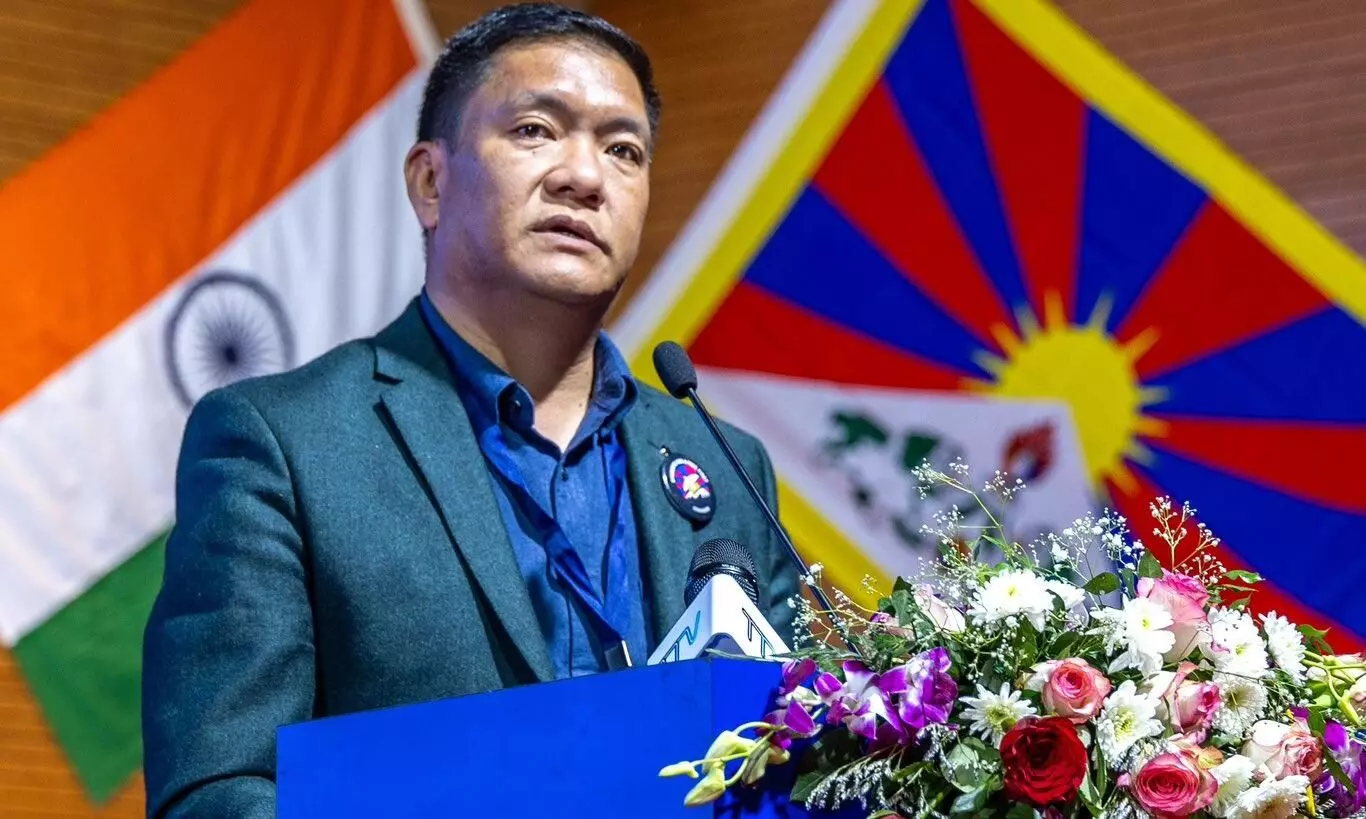
In a bold and unapologetic response to Beijing’s continued cartographic aggression, Arunachal Pradesh Chief Minister Pema Khandu asserted that his state shares a border with Tibet, not China, sending a powerful message amid rising tensions over territorial claims in the eastern Himalayas.
Speaking at a public event in Tawang—a district often at the center of India-China friction—Khandu rejected Beijing’s repeated assertion that Arunachal is part of “South Tibet,” calling such claims baseless and historically inaccurate.
“We Border Tibet, Not China”
Khandu’s remarks come in the wake of China once again issuing a revised map that shows Arunachal Pradesh as part of its territory, escalating diplomatic tensions between the two countries.
Addressing a local audience, the Chief Minister stated:
“We do not share any direct border with what is called the People’s Republic of China. Historically and culturally, we border Tibet. That is a fact known to the people living here for generations.”
His comment not only challenged Beijing’s narrative but also invoked the pre-1950s political geography when Tibet was a distinct political and cultural entity, not under the control of the Chinese Communist Party.
Strategic Importance of Tawang
Khandu’s remarks gain more weight given the strategic significance of Tawang, which lies near the Line of Actual Control (LAC) and has seen multiple standoffs between Indian and Chinese troops in recent years.
Tawang holds deep religious importance for Tibetan Buddhists as the birthplace of the 6th Dalai Lama and is historically linked to the Tibetan administration. China has consistently objected to Indian infrastructure development in the region, prompting repeated diplomatic protests.
However, India has maintained that Arunachal Pradesh is an integral and inseparable part of the country, backed by constitutional authority, democratic governance, and a strong cultural identity rooted in India.
A Defiant Stand Against Map Diplomacy
This is not the first time Beijing has used map diplomacy to reinforce its claims. China has released multiple versions of its official map over the years showing parts of Arunachal Pradesh, Ladakh, and even Aksai Chin as its own. India has consistently rejected these moves, with the Ministry of External Affairs labeling them as “absurd” and without legal basis.”
Pema Khandu’s clear articulation reflects growing Indian political and administrative confidence in the region, and a refusal to allow Beijing’s narrative to dictate ground realities.
Regional Sentiment and National Backing
The Chief Minister’s statements echo the sentiments of the local population, many of whom identify more with Tibetan heritage than any imagined Chinese affiliation. Moreover, New Delhi’s consistent investments in border infrastructure, including roads, tunnels, and advanced communication networks in Arunachal, further strengthen India’s position.
India has also stepped up military preparedness along the LAC, conducting joint military exercises and improving airlift capabilities to ensure swift response to any cross-border provocations.
Comments are closed.