
Wary EU leaders seek to preserve transatlantic ties after a week of Trump’s threats

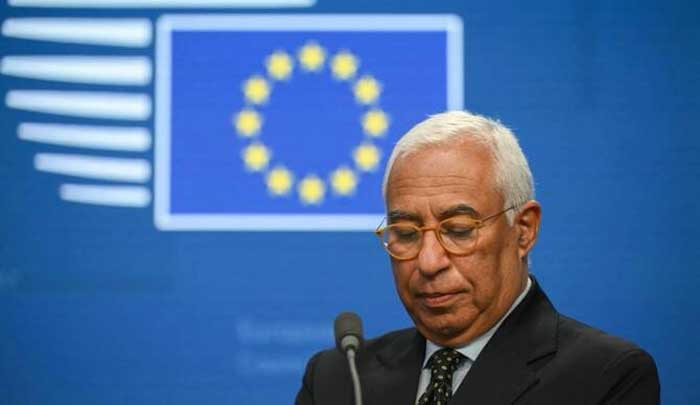
European Union leaders on Thursday welcomed US President Donald Trump’s decision to drop his tariff threats linked to Greenland but voiced strong reservations about joining his proposed “Board of Peace.”
After chairing an emergency summit to reassess strained relations with the Trump administration, European Council President António Costa said leaders agreed it was “very important to preserve and cherish our transatlantic partnership.” He added that the immediate priority was implementing the EU-US trade deal agreed last July. “The goal remains the effective stability of trade relations,” Costa told reporters.
At the same time, Costa stressed that the 27-nation bloc would continue to defend its interests. “The EU will stand up for itself, its member states, its citizens and its companies against any form of coercion,” he said.
His measured tone contrasted with the sharper language of French President Emmanuel Macron. “Europe can make itself respected, and that’s a very good thing,” Macron said on arrival in Brussels. “When we use the tools at our disposal, we get respect — and that’s what happened this week.”
Trump stepped back this week from threats to “acquire” Greenland, a semi-autonomous Danish territory, saying for the first time that he would not use force. He also dropped warnings of tariffs against European countries backing Denmark. However, European leaders remain wary of further shifts by the US president.
Before reversing course, Trump had urged Denmark and NATO allies to stand aside, warning: “You can say yes, and we will be very appreciative. Or you can say no, and we will remember.”
Polish Prime Minister Donald Tusk reiterated that the United States remains Europe’s most important security partner, but cautioned against confusing leadership with domination. “Leadership is okay,” he said.
Details of the hastily agreed “framework” that preceded Trump’s reversal have not been made public, and doubts persist. Danish Prime Minister Mette Frederiksen said Denmark would not negotiate its sovereignty but remained open to discussions on strengthening Arctic security cooperation. She called for a permanent NATO presence in the Arctic, including around Greenland. Macron confirmed French troops would take part in upcoming NATO exercises.
NATO’s top military officer, US Lieutenant General Alexus Grynkewich, said the alliance had not yet begun planning any new Arctic operations, citing a lack of political guidance.
European Commission President Ursula von der Leyen said the EU would seek to deepen ties with Greenland, adding that the Commission would soon propose a “substantive package of investments,” without giving details.
Board of Peace skepticism
EU leaders were far less receptive to Trump’s “Board of Peace,” initially framed as a body to oversee the Gaza ceasefire but later presented by Trump as a potential alternative to some UN functions.
Norway, Slovenia and Sweden have declined to join. Asked about Macron’s reluctance, Trump quipped that he would impose a 200 percent tariff on French wine and champagne to force his participation. Germany has taken a cautious stance, while Hungary and Bulgaria have accepted invitations.
Costa said most EU leaders “have serious doubts” about the board’s scope, governance and compatibility with the UN Charter.
Ukraine remains Europe’s top concern
As leaders met in Brussels, Ukrainian President Volodymyr Zelensky criticised Europe for what he called a slow and fragmented response to Russia’s invasion, now nearing its fourth year. Speaking at the World Economic Forum in Switzerland, Zelensky warned that Europe risked appearing weak and overly dependent on the United States.
Von der Leyen countered that the EU has provided more than €193 billion in support to Ukraine so far and plans to add another €90 billion over the next two years.
“We will never match the sacrifice of the Ukrainian people,” she said, “but we can stand by their side — and the figures speak for themselves.”
Comments are closed.