
War-Torn Communities Struggle to Rebuild as Israel-Lebanon Border Tensions Flare Again

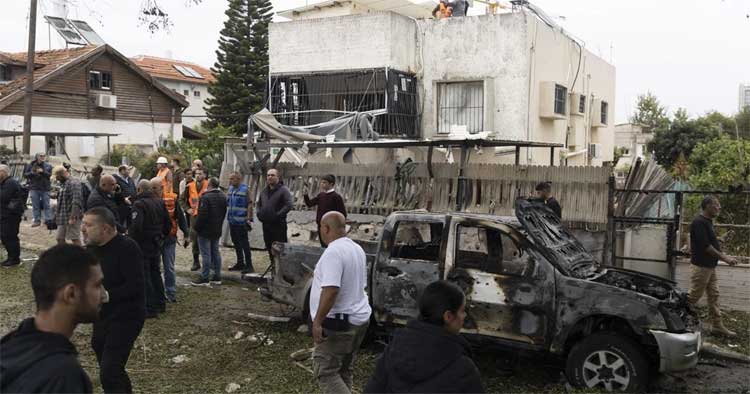
Ilan Rosenfeld steps carefully through the charred ruins of his once-bustling café, past the shattered clay plates that once lined its shelves and the twisted metal remnants of Hezbollah rockets embedded in the debris.
This scorched shell is all that remains of his livelihood in Metula — Israel’s northernmost town, wedged against the Lebanese border on three sides and long a flashpoint in cross-border violence.
“Everything I had, everything I saved, everything I built — it’s all burned,” Rosenfeld said, surveying what used to be his business of 40 years. “Every day I wake up, and all I have left are tears.”
Rosenfeld was among the tens of thousands forced to flee in October 2023 when war erupted between Israel and Hezbollah after Hamas’ attack in the south.
A year after a fragile ceasefire, border towns remain half-empty
Israel says most displaced residents have now returned to their homes in the north, but many towns — especially Metula — remain largely empty. The government’s push to repopulate border communities has been met with hesitation, particularly as Israeli strikes inside Lebanon continue and tensions again appear to be rising.
Hezbollah has refused to fully disarm until Israel withdraws from remaining disputed areas. Israeli strikes in southern Lebanon now occur several times a week.
“The security situation is starting to deteriorate again,” Rosenfeld said, gesturing to a newly distributed list of public bomb shelters. “And where am I in all this? I can barely survive the day-to-day.”
Slow return, massive destruction
Of the 64,000 people evacuated from Israel’s northern border in late 2023, officials say around 55,000 have returned. In Metula, just over half the town’s 1,700 residents are back — but its streets remain eerily quiet.
Residents who returned found around 60% of homes damaged by rocket fire. Others had been infested by rats during the months-long evacuation. The town’s agriculture- and tourism-based economy has collapsed.
With many young families staying away, labor shortages have forced businesses to hire workers from Thailand, said produce seller Jacob Katz. “Most of the people who worked with us before the war didn’t come back,” he said. “We’ve lost a lot … and we can’t read the future.”
Rosenfeld’s café, once a popular stop for tourists overlooking the border fence, is now rubble. He sleeps in a small shelter beside the ruins with only a tent, a refrigerator and a few chairs. A military watchtower and armored vehicles sit just a few meters away.
Feeling abandoned
Israel says it has already invested hundreds of millions of dollars in recovery efforts, with more planned. Residents can apply for financial support. But many say funds have not reached them.
Rosenfeld says he has received no assistance despite repeated requests.
Metula’s deputy mayor, Avi Nadiv, says residents feel forgotten.
“The Israeli government needs to do much more for us,” he said. “The residents of Israel’s northern border — we are Israel’s human shield.”
A spokesman for Cabinet minister Zeev Elkin, who oversees northern reconstruction, accused the local government of not using allocated funds “due to narrow political and oppositional considerations.”
Tensions rise again
Israel accuses Lebanon of failing to curb Hezbollah’s rearmament, while the Lebanese army says it has increased its presence along the border. Israeli strikes have devastated swathes of southern Lebanon, killing at least 127 civilians since the ceasefire, according to a UN report. UN special rapporteur Morris Tidball-Binz has said the strikes amount to “war crimes.” Israel argues it is acting in self-defense and accuses Hezbollah of embedding in civilian areas.
Last week, Israel killed Hezbollah’s top military commander in a strike on Beirut’s southern suburbs — an escalation to which the group has yet to respond.
‘You sacrifice your family to live here’
In Metula, signs of the strain are everywhere. Military drills echo across the valley as farmer and reservist Levav Weinberg plays with his three children. He says they’re too afraid to ride their bicycles outside.
His family returned in July, hoping to revive their livelihood. But now they’re reconsidering.
“The army cannot protect me and my family,” Weinberg said. “You sacrifice your family to live in Metula these days. It’s not a perfect life, it’s not that easy, and at some point your kids pay the price.”
Comments are closed.