
Virat Kohli, Rohit Sharma running out of time to save ODIs; World Cup 2027 may be the last true crowd-puller

For years, ever since the 20-over format exploded onto the global cricketing landscape, eloquent obituaries have been written for its longer white-ball cousin. Somehow, 50-over cricket has survived, even if it continues to stagger forward on unsteady legs, no longer the centrepiece it once was.
The meteoric rise of what was initially dismissed as a frivolous, hit-and-giggle format is a textbook case of cricket cannibalising itself. More than two decades ago, English administrators, alarmed by dwindling interest in one-day cricket, resorted to innovation—some would say gimmickry—to lure back spectators. Thus was born 20-overs-a-side cricket, marketed as “cricketainment”: a three-and-a-half-hour spectacle of relentless batter domination and instant gratification.
Few could have predicted how dominant T20 cricket would become. Much of that transformation traces back to India. The country’s triumph at the inaugural T20 World Cup in 2007, followed closely by the launch of the Indian Premier League, set off a chain reaction that irreversibly reshaped cricket’s economics and appeal.
Despite repeated predictions of its demise, Test cricket has managed to endure. While fewer matches now stretch into a fifth day, the format still attracts purists who cherish the evolving contest between bat and ball. Its length allows teams the chance to recover from adversity—an opportunity rarely afforded in T20 cricket. India, despite recent struggles at home, has remained a vocal supporter of the five-day game, with Rohit Sharma and Virat Kohli emerging as its most prominent standard-bearers.
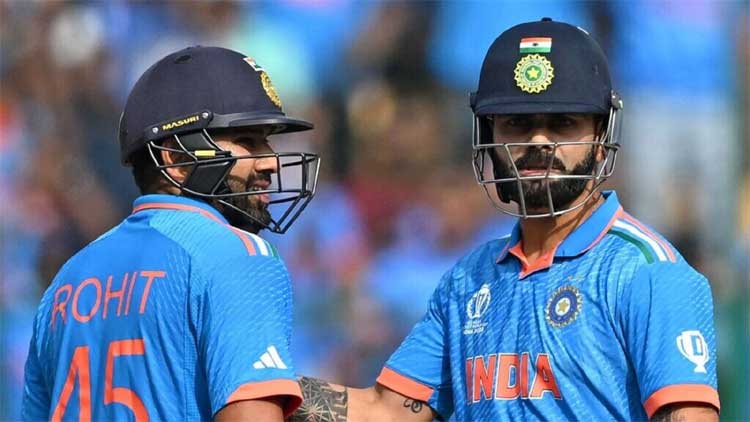
It is around this veteran duo that the latest debate over the future of 50-over cricket has been reignited. Ravichandran Ashwin, never shy of strong opinions, has questioned the relevance of the ODI format in an era dominated by franchise-based T20 leagues. He has even marked the 2027 World Cup in Africa as a potential tipping point, confident that Rohit and Kohli will still feature there. In Ashwin’s blunt assessment, ODIs are “heading towards a slow death.”
History offers context. One-day cricket itself was born out of necessity and innovation. It truly came alive when Kerry Packer introduced night games, coloured clothing, white balls and floodlights—“pyjama cricket” that transformed the sport’s presentation. England experimented with various formats—60, 55 and even 40 overs—before the rest of the world settled on 50. The format was standardised only after India’s iconic 1983 World Cup triumph. Perhaps it is no coincidence that England had to wait until 2019 to finally win a 50-over World Cup.
Once a refreshing alternative to dour, defensive Test cricket played on flat pitches, ODIs are now squeezed uncomfortably between formats. Bilateral series often lack context, stadiums sit half-empty unless India are involved, and players endure seven-hour slogs that feel more like contractual obligations than competitive contests. For broadcasters too, the appeal has waned, with declining television audiences eroding what was once a lucrative commercial model.
Frequent rule changes have further tilted the balance in favour of batters, turning matches into extended slogfests. When similar drama is compressed into three-and-a-half hours, the arithmetic is hard to ignore.
The World Cup remains the format’s lone, glittering exception—a global spectacle that still commands attention. But how long can a single event prop up an otherwise predictable and increasingly redundant format?
It didn’t take Ashwin to sound the alarm, but when a player deeply invested in the sport begins to speak of endgames, it is clear that 50-over cricket is no longer living on borrowed time—it is living on borrowed relevance.
Comments are closed.