
Varanasi and Modi: From ‘Maa Ganga’s Call’ to a Decade of Transformation

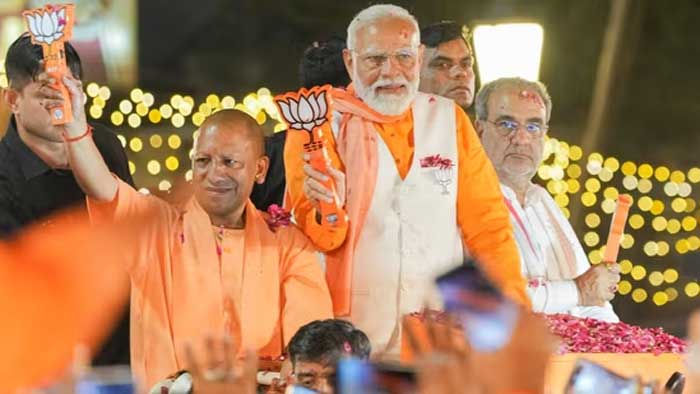
On March 14, 2014, the Bharatiya Janata Party (BJP) named then Gujarat chief minister Narendra Modi as its candidate from Varanasi in Uttar Pradesh. The move displaced sitting MP Murli Manohar Joshi to Kanpur and signaled the BJP’s determination to maximize its gains from the Hindi heartland as the UPA government faltered.
When Modi landed in the holy city on April 24, 2014, he framed his candidacy in deeply spiritual terms: “Na kisi ne mujhe bheja hai, na main yaha aaya hoon, mujhe to Maa Ganga ne bulaya hai.” (“Nobody has sent me, nor have I come here; Mother Ganga has called me.”)
That symbolic declaration turned into political reality. Modi has since won Varanasi three times, built the BJP’s dominance in eastern Uttar Pradesh, and anchored a Hindutva-infused development model with Kashi as its fulcrum.
From Gamble to Stronghold
At the time, Varanasi was no BJP fortress. In 2012 assembly polls, the party had struggled in the district, and Joshi had barely scraped through in 2009. By contesting from Varanasi alongside Vadodara, Modi risked a defeat but also projected himself as a pan-Indian leader rooted in civilisational ethos. Political observers note that Varanasi’s spiritual aura offered Modi cultural legitimacy, merging Hindutva symbolism with a promise of development.
Choosing to retain Varanasi over Vadodara in 2014 was a calculated gamble. The caste equations of Purvanchal favored rivals like the SP and BSP, but Modi’s campaign electrified the region. His massive roadshows and repeated visits transformed Varanasi into both a political showcase and a developmental laboratory.
Transformation of Kashi
Over the past 11 years, projects worth more than ₹52,000 crore have been launched in Varanasi. Infrastructure upgrades include roads, a ring road, underground cabling, a trade facilitation centre, two cancer hospitals, the International Cooperation and Convention Centre, and the flagship Kashi Vishwanath Corridor. The Ganga Aarti was revamped into a global spectacle, and civic improvements—cleaner streets, reduced encroachment, and traffic decongestion—reshaped the city’s image.
Varanasi has also become a diplomatic stage. Modi has hosted leaders including Japan’s Shinzo Abe, France’s Emmanuel Macron, Germany’s Frank-Walter Steinmeier, Mauritius’s Anerood Jugnauth and Navin Ramgoolam, and Sri Lanka’s Mahinda Rajapaksa.
A Political Fulcrum
Locals say the Prime Minister has visited his constituency more than 50 times since 2014, unprecedented for any Indian leader. His presence helped the BJP dominate eastern Uttar Pradesh and adjoining Bihar in the 2014 and 2019 elections, dismantling the stronghold of regional parties.
“Kashi adopted PM Modi, and Modi made Kashi his home,” said Shashi Mishra, a resident. Political scientist Shashi Kant Pandey added, “Varanasi gave his candidacy cultural legitimacy. It was a way of merging Hindutva symbolism with developmental politics.”
For supporters, the city is no longer just an ancient pilgrimage centre but a modernized showcase of Modi’s governance model—an amalgam of faith, identity, and development.
Comments are closed.