
US to Share Intelligence for Ukraine’s Long-Range Strikes on Russian Energy Infrastructure: WSJ

The United States will begin providing Ukraine with intelligence to support long-range missile strikes on Russia’s energy infrastructure, The Wall Street Journal reported Wednesday, marking a significant expansion of Washington’s role in the conflict.
While the US has long shared battlefield intelligence with Kyiv, officials told the paper that the new measures are designed to enable Ukrainian forces to target refineries, pipelines, power plants, and other facilities critical to Moscow’s oil revenues. Energy sales remain the Kremlin’s largest source of wartime funding. Washington is also urging NATO allies to step up with similar intelligence-sharing, according to the report.
The shift comes amid what appears to be a harder US line on Russian energy flows. President Donald Trump has pressed European partners to curtail purchases of Russian oil, offering tougher sanctions on Moscow in return. He has also moved to impose tariffs on Indian imports and pushed countries like Türkiye to scale back discounted crude buys from Russia.
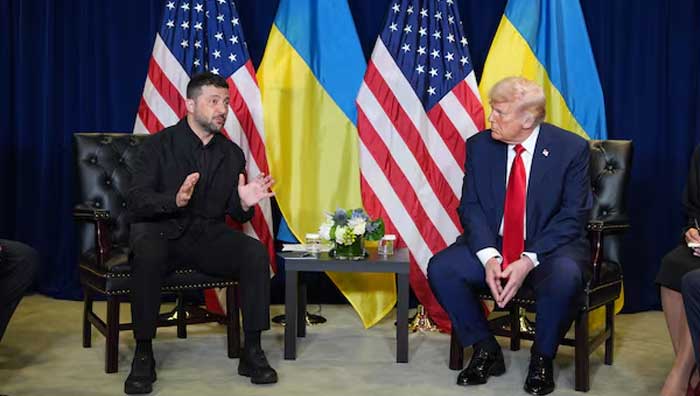
Approval for the expanded intelligence-sharing reportedly came shortly before Trump posted on Truth Social suggesting Ukraine could “fight and WIN all of Ukraine back” with Western backing—a marked rhetorical shift in Washington’s tone. The comment followed his meeting with Ukrainian President Volodymyr Zelensky last week.
In addition to intelligence support, Washington is weighing Kyiv’s request for long-range Tomahawk cruise missiles, which can strike targets up to 2,500 kilometers away—enough to reach Moscow and much of European Russia. Ukraine itself has developed a new domestically produced missile, the “Flamingo,” though production numbers remain unclear.
Russia, which launched its full-scale invasion in February 2022 under the label of a “special military operation,” insists it is countering NATO’s expansion. Kyiv and its European allies dismiss this as cover for an imperial-style land grab.
Responding to US efforts to curb Russian energy exports, Kremlin spokesman Dmitry Peskov said last week: “It is a sovereign state that decides for itself in which areas to cooperate with us. And if certain types of trade in certain goods are deemed advantageous to the Turkish side, then the Turkish side will continue to do so.”
Meanwhile, finance ministers of the Group of Seven pledged earlier Wednesday to tighten enforcement of oil sanctions and target countries and companies helping Moscow evade restrictions.
Comments are closed.