
US Terror Tag on TRF: A Diplomatic Win for India Against Pakistan-Backed Terrorism

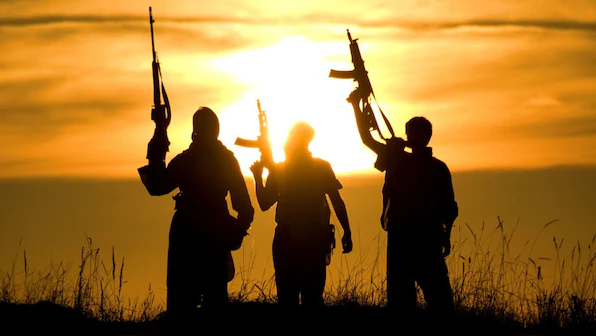
United States designated The Resistance Front (TRF) as a Foreign Terrorist Organization (FTO) and Specially Designated Global Terrorist (SDGT), a move hailed by India as a “strong affirmation” of India-US counter-terrorism cooperation. The designation, announced by US Secretary of State Marco Rubio, targets TRF for its role in the April 22, 2025, Pahalgam attack in Jammu and Kashmir, which killed 26 civilians, mostly tourists, marking it as the deadliest attack on Indian civilians since the 2008 Mumbai attacks. TRF, widely recognized as a proxy of the Pakistan-based Lashkar-e-Taiba (LeT), has been linked to multiple terror attacks in India. The US move, reported by News18, The Indian Express, India Today, and The Hindu, strengthens India’s case against Pakistan at international forums like the Financial Action Task Force (FATF) and the United Nations Security Council (UNSC), particularly after China’s efforts to shield TRF at the UNSC. This article explores the implications of the US designation, its impact on India’s diplomatic efforts, and the broader context of Pakistan’s role in state-sponsored terrorism.
The US Designation of TRF
The US State Department’s designation of TRF as an FTO under Section 219 of the Immigration and Nationality Act and as an SDGT under Executive Order 13224 freezes TRF’s assets globally, restricts its access to funding, and exposes its members to international sanctions. The designation also adds TRF as an alias to LeT’s existing FTO and SDGT status, reinforcing India’s claim that TRF is a front for LeT, a UN-designated terror group responsible for the 2008 Mumbai attacks. US Secretary of State Marco Rubio stated, “This action demonstrates the Trump administration’s commitment to protecting our national security interests, countering terrorism, and enforcing President Trump’s call for justice for the Pahalgam attack.” The move follows TRF’s initial claim of responsibility for the Pahalgam attack, which it later retracted amid diplomatic pressure, as noted in India Today and Times of India.
India’s External Affairs Minister S. Jaishankar welcomed the decision, posting on X: “A strong affirmation of India-US counter-terrorism cooperation. Appreciate @SecRubio and @StateDept for designating TRF—a Lashkar-e-Tayyiba (LeT) proxy—as a Foreign Terrorist Organization (FTO) and Specially Designated Global Terrorist (SDGT).” The Ministry of External Affairs (MEA) echoed this, stating, “The designation of TRF is a timely and important step reflecting the deep cooperation between India and the United States on counter-terrorism”. The US House Committee on Foreign Affairs, chaired by Representative Brian Mast, further supported the designation, emphasizing justice for those who “butcher civilians”.
The Resistance Front and Its Links to Pakistan
TRF, formed in 2019 after India’s abrogation of Article 370, is a Pakistan-based militant group operating in Jammu and Kashmir, designed to appear as an “indigenous” resistance movement to evade international scrutiny, particularly from the FATF, which had grey-listed Pakistan for terror financing until 2022. Indian security agencies, as reported by The Hindu, confirm TRF is a proxy of LeT, orchestrated by Pakistan’s Inter-Services Intelligence (ISI) to revive militancy in Kashmir. Led by Sheikh Sajjad Gul, with a ₹10 lakh NIA reward on him, TRF has been linked to high-profile attacks, including:
-
Pahalgam Attack (April 22, 2025): Killed 26 civilians, mostly tourists, in Baisaran Valley, targeting Hindus to provoke communal tension and disrupt tourism.
-
Reasi Attack (June 9, 2024): Killed nine Hindu pilgrims.
-
Ganderbal Attack (October 20, 2024): Killed six migrant laborers and a doctor.
-
Anantnag Attack (September 13, 2023): Killed three security personnel.
-
Bandipora Attack (July 8, 2020): Killed a BJP leader and two family members.
TRF employs advanced tactics, including drone-based weapon drops, improvised explosive devices, and digital propaganda to recruit youth, often targeting Kashmiri Pandits, migrant workers, and security forces. Indian intelligence identifies key operatives like Hashim Musa (a former Pakistan Army commando) and LeT commander Saifullah Kasuri as coordinating attacks from Pakistan. The group operates under the United Jihad Council, alongside LeT, Jaish-e-Mohammed (JeM), and Hizbul Mujahideen.
Boosting India’s Case Against Pakistan
The US designation significantly strengthens India’s diplomatic efforts to hold Pakistan accountable for state-sponsored terrorism, particularly at the FATF and UNSC:
-
FATF Plenary (September–October 2025): India has been advocating for Pakistan’s return to the FATF grey list, citing its failure to curb terror financing. The US terror tag on TRF provides India with concrete evidence to argue that Pakistan supports LeT proxies, misusing global financial aid for terrorism. News18 reported that India has sent multiple letters to FATF, highlighting Pakistan’s non-compliance with anti-money laundering and counter-terrorist financing protocols. The FATF’s July 2025 report, which noted the Pulwama attackers’ use of e-commerce platforms for explosives, further underscores Pakistan’s role in enabling terror financing.
-
UNSC 1267 Sanctions Committee: India has pushed for TRF’s inclusion in UNSC terror listings since the Pahalgam attack, but China, with Pakistan’s support, blocked naming TRF in a May 2025 UNSC statement. The US designation undermines China’s protective stance and bolsters India’s case for UN sanctions, as it validates TRF’s links to LeT and Pakistan’s ISI.
-
Operation Sindoor: India’s military response to the Pahalgam attack, targeting nine terror camps in Pakistan and Pakistan-occupied Kashmir (PoK) on May 7, 2025, was endorsed by the US as a “calibrated response” to neutralize terror launchpads. The US designation aligns with this, exposing Pakistan’s duplicity in denying TRF’s existence.
Pakistan’s Foreign Minister Ishaq Dar admitted to diluting the UNSC statement to remove TRF’s name, claiming a lack of evidence, a move criticized by Indian officials and X users like @PoojaShali, who called it Pakistan “exposing itself”. Pakistan’s denials, labeling itself a “frontline state against terrorism,” were dismissed by the US, which cited TRF’s role in the Pahalgam attack as evidence of Pakistan’s continued support for terror proxies.
Economic and Social Implications
The US designation has far-reaching implications:
-
Economic Pressure: Pakistan’s potential return to the FATF grey list would restrict its access to global financial institutions, impacting its economy, which relies heavily on international aid. India’s evidence of terror financing could lead to increased monitoring and sanctions, as noted by News18.
-
Social Impact: The Pahalgam attack, targeting tourists to disrupt Jammu and Kashmir’s tourism economy, reflects TRF’s strategy to sow communal discord. The US designation counters Pakistan’s narrative of TRF as a “local resistance,” exposing its transnational terror links and rallying global support for India’s zero-tolerance policy.
-
Diplomatic Leverage: The move strengthens India-US counter-terrorism ties, despite earlier tensions over President Trump’s claims of mediating a ceasefire during Operation Sindoor. It also pressures China, which has shielded Pakistan at the UNSC, to align with global anti-terrorism efforts.
Challenges and Criticisms
Despite the diplomatic win, challenges remain:
-
China’s Resistance: China’s cautious response, calling for “regional anti-terror cooperation” without endorsing the US move, suggests continued support for Pakistan at the UNSC. India must navigate this to secure TRF’s UN listing.
-
Pakistan’s Denials: Pakistan’s rejection of TRF’s terror tag, claiming it dismantled LeT, lacks credibility given evidence of ISI backing. This could prolong diplomatic battles at FATF and UNSC.
-
Domestic Backlash: Pakistan’s domestic unrest, including Baloch militancy and crackdowns on Imran Khan’s party, may lead to further deflection through Kashmir-focused propaganda.
Public sentiment on X reflects strong support for the US move, with posts like @DrSJaishankar’s praising the designation and @Goreunit noting Pakistan’s failed attempts to portray TRF as a local militia.
The Path Forward
To capitalize on the US designation, India should:
-
Strengthen FATF Case: Present evidence of TRF’s financing and Pakistan’s non-compliance at the September–October 2025 FATF plenary, leveraging the US designation to push for grey-listing.
-
UNSC Advocacy: Rally support from allies like the US, UK, and France to overcome China’s veto and secure TRF’s listing under the 1267 Sanctions Committee.
-
Enhance Intelligence Sharing: Deepen India-US operational synergy to track TRF’s digital and financial networks, building on successes like Operation Sindoor.
-
Counter Propaganda: Use platforms like X to highlight TRF’s Pakistan-backed terror activities, countering Islamabad’s “indigenous resistance” narrative.
The US designation of TRF as a global terrorist organization is a significant diplomatic victory for India, reinforcing its case against Pakistan’s state-sponsored terrorism at the FATF and UNSC. By exposing TRF as an LeT proxy, the move validates India’s claims of Pakistan’s role in cross-border attacks like Pahalgam, undermining China’s efforts to shield Islamabad. As India prepares for the FATF plenary and continues its zero-tolerance policy, the designation strengthens its global stance, enhances India-US counter-terrorism cooperation, and pressures Pakistan to dismantle terror infrastructure. With sustained diplomacy and intelligence efforts, India can leverage this milestone to isolate Pakistan-backed terror groups and secure justice for victims of attacks like Pahalgam, advancing regional and global security.
Comments are closed.