
US strike on Venezuela may embolden China’s territorial claims, Taiwan attack unlikely: Analysts

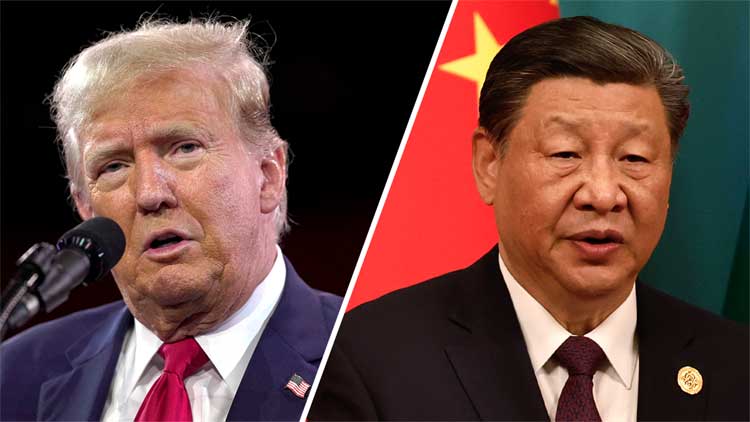
The US military operation in Venezuela is likely to embolden China to more forcefully assert its territorial claims over Taiwan and disputed areas of the South China Sea, but it is unlikely to accelerate any near-term invasion of Taiwan, analysts said.
Experts noted that Chinese President Xi Jinping’s calculations on Taiwan — including any timeline for action — are largely shaped by China’s domestic conditions and long-term military capabilities, rather than by events in Latin America.
Still, President Donald Trump’s audacious raid on Saturday that led to the capture of Venezuelan leader Nicolás Maduro has handed Beijing an unexpected opportunity to intensify criticism of Washington and bolster its own standing on the global stage, analysts said.
Over the longer term, China could point to the US action to defend its positions in disputes with Washington over Taiwan, Tibet, and contested islands in the East and South China seas.
‘Cheap ammunition’ for Beijing
“Washington has consistently argued that Chinese actions violate international law, but this move undermines that position,” said William Yang, an analyst at the Brussels-based International Crisis Group. “It creates a lot of openings and cheap ammunition for China to push back against the US in the future.”
China claims democratically governed Taiwan as its own territory — a claim rejected by Taipei — and asserts sovereignty over nearly the entire South China Sea, bringing it into conflict with several Southeast Asian nations.
China’s foreign ministry, its Taiwan Affairs Office and Taiwan’s presidential office did not immediately respond to requests for comment.
Beijing condemned the US operation in Venezuela, saying it violated international law and endangered peace and security in Latin America. It has demanded the release of Maduro and his wife, who are being held in New York pending trial.
Hours before his capture, Maduro met a senior Chinese delegation in Caracas, according to images he shared on social media. The delegation reportedly included Qiu Xiaoqi, China’s special representative for Latin American and Caribbean affairs. China’s foreign ministry did not respond to questions about the delegation’s whereabouts.
On Sunday, China’s state-run Xinhua news agency described the US action as “naked hegemonic behavior,” arguing that it exposed what it called the hollowness of Washington’s “rules-based international order.”
‘China isn’t the US, Taiwan isn’t Venezuela’
Taiwan has been under increasing pressure from Beijing, which last week staged its largest-ever military drills encircling the island, demonstrating its ability to isolate Taiwan in the event of a conflict.
However, analysts said China was unlikely to use the Venezuelan episode as justification for immediate military escalation across the Taiwan Strait.
“Seizing Taiwan depends on China’s still-developing and insufficient capabilities, not on what Trump did on a distant continent,” said Shi Yinhong, a professor of international relations at Renmin University in Beijing.
Neil Thomas, a fellow at the Asia Society, said Beijing views Taiwan as an internal matter and would be unlikely to cite US actions in Venezuela as a precedent for military action.
“China will want to draw a clear contrast with Washington to promote its claims of standing for peace, development and moral leadership,” Thomas said. “Xi cares far more about China’s trajectory than Venezuela, and he may hope the situation becomes a quagmire for the US.”
Wang Ting-yu, a senior lawmaker from Taiwan’s ruling Democratic Progressive Party and a member of parliament’s foreign affairs and defence committee, also dismissed comparisons between Taiwan and Venezuela.
“China has never lacked hostility toward Taiwan, but it genuinely lacks the feasible means,” Wang wrote on Facebook. “China is not the United States, and Taiwan is certainly not Venezuela. If China could do it, it would have done so long ago.”
Even so, some observers said the episode could heighten risks for Taiwan by reinforcing Beijing’s narratives and prompting Taipei to seek closer ties with the Trump administration.
On China’s Weibo platform, discussion of the US action trended on Sunday, with some users urging Beijing to draw lessons from Trump’s move.
Lev Nachman, a political science professor at National Taiwan University, said Taiwan’s government was likely to issue only cautiously worded support for the US operation, if any.
“What Trump’s actions may do is strengthen Xi Jinping’s narrative and provide more justification in the future for pressure or action against Taiwan,” Nachman said.
Comments are closed.