
US moves to make over $100,000 H-1B visa fee permanent; Indians likely to feel impact

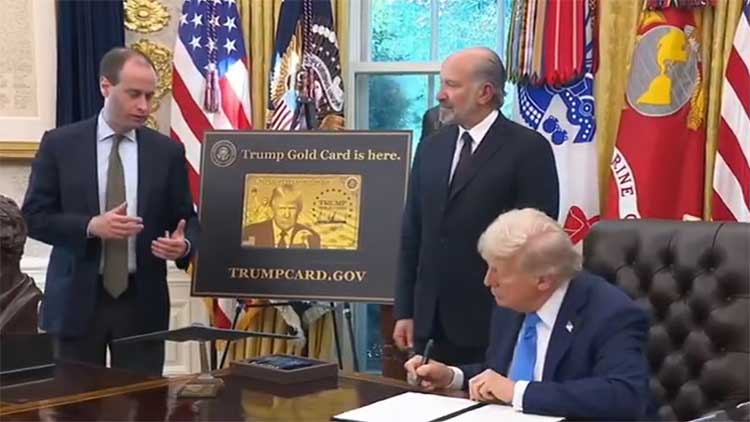
The Donald Trump administration has moved to formalise a more than $100,000 fee for new H-1B visas for highly skilled foreign workers, with the US Department of Homeland Security (DHS) proposing a charge of $103,265.
The proposed regulation was posted online in the Federal Register on Monday and is due to be formally published on Tuesday, triggering a 30-day public comment period. The rule could be finalised by the end of this year, Reuters reported.
Global immigration services firm Fragomen had last week said the DHS had begun the process of proposing new regulations that could introduce additional fees for the H-1B and Optional Practical Training (OPT) programmes.
The H-1B is a temporary, employer-sponsored non-immigrant visa that allows US companies to hire foreign workers in specialised fields. OPT, meanwhile, provides up to 12 months of work authorisation to international students holding F-1 visas.
How will Indians be impacted?
The proposed fee could have a significant impact on Indian professionals and US employers, as Indian nationals account for a large share of H-1B beneficiaries.
According to US Citizenship and Immigration Services (USCIS), 399,402 H-1B petitions covering initial and continuing employment were approved in fiscal year 2024. Of these, 71% of approved beneficiaries were born in India, making Indians by far the largest group affected by changes to the programme.
$100,000 H-1B fee blocked by court
Trump had first imposed a fee of more than $100,000 on new H-1B visas last year through a temporary proclamation. The measure was subsequently blocked by courts after being challenged on legal grounds.
In June, a federal judge ruled that the fee was unlawful and barred the administration from collecting it. The US Court of Appeals for the First Circuit in Boston also rejected the Trump administration’s request last Friday to pause the lower court’s order.
The appeals court declined to stay the June 8 ruling, which found that the fee amounted to an unlawful tax that Congress had not authorised.
Trump’s temporary proclamation imposing the fee is due to expire in September, a year after it was issued.
The H-1B programme currently provides for 65,000 visas annually, along with an additional 20,000 for workers holding advanced degrees. Visas are generally approved for periods ranging from three to six years.
Comments are closed.