
US Begins Social Media Screening for All H-1B, H-4 Visa Applicants; Indians Likely to Be Worst Hit
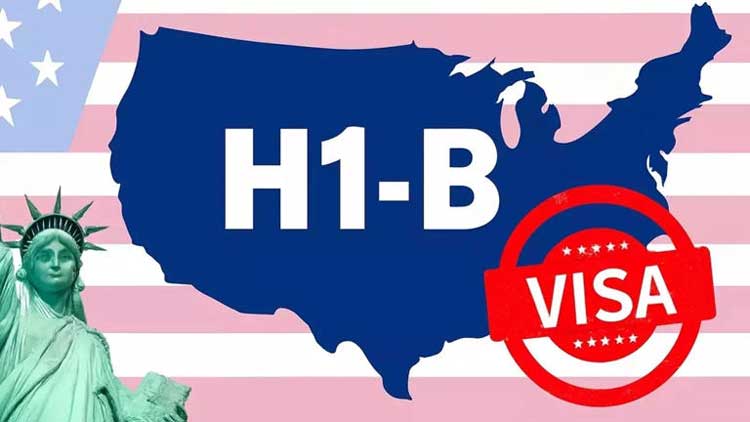
The United States has started screening and vetting the social media accounts of all H-1B visa applicants and their dependent H-4 applicants from Monday, December 15, in line with an earlier directive issued by the US State Department. The move is part of the Donald Trump-led administration’s broader crackdown on immigration, with the stated aim of identifying applicants who are “inadmissible” to the country.
According to the order, a US visa is a “privilege, not a right”, and every visa adjudication is treated as a national security decision.
The H-1B visa allows American companies to hire skilled foreign workers, and Indian nationals form the single largest group of beneficiaries under the programme.
Visa interviews rescheduled, applicants stranded
Even before the new rule formally came into effect, the US Embassy in India rescheduled several visa interviews, disrupting travel plans for many applicants.
“Arriving on your previously scheduled appointment date will result in your being denied admittance to the Embassy or Consulate,” the embassy warned.
In parallel, some H-1B and H-4 visa holders have seen their visas being “prudentially revoked”, even in cases involving only past interaction with law enforcement and no conviction, immigration attorney Emily Neumann said in a post on X. A prudential revocation is a temporary, precautionary measure and does not amount to a permanent cancellation.
As social media screening begins to identify “inadmissible” applicants, here is what the order entails, who will be affected, and why the administration has taken this step.
What does the order say, and who does it apply to?
In an order issued on December 3, the US State Department said it would expand online presence reviews to cover all H-1B applicants and their H-4 dependents. Earlier, such reviews were primarily applicable to students and exchange visitors.
To facilitate vetting, the department instructed H-1B, H-4, and F, M, and J non-immigrant visa applicants to set the privacy settings of all their social media accounts to “public”.
“The State Department uses all available information in visa screening and vetting to identify visa applicants who are inadmissible to the United States, including those who pose a threat to US national security or public safety,” the order said.
Reiterating its stance, the department added that a US visa is not an entitlement and that every decision is taken with national security considerations in mind.
Why Indians are likely to be the worst affected
Indians account for over 70 per cent of all H-1B visas issued, according to US administration data cited in earlier reports. Chinese nationals follow at a distant second, making up around 11–12 per cent.
An estimated 300,000 Indian professionals currently work in the US on H-1B visas, largely in the technology and services sectors. Given their overwhelming share, Indians are expected to bear the brunt of the enhanced screening.
Atal Agarwal, founder of OpenSphere, summed up the frustration of many applicants in a post on X:
“H-1B worker: Background check ✓, Employer sponsor ✓, Degree verified ✓, Fees paid ✓, Years waiting ✓. Still not enough. Now: New Social Media Screening. What did you post on LinkedIn in last 5 years?”
Immigration attorney Ellen Freeman noted that the rescheduling of visa appointments has left many workers stuck in India, risking job losses.
“We have to plead with employers to let them either work from India or take a prolonged leave of absence for as many as five months. In this economic environment and under deliverables pressure, many employers will not be able to wait,” she wrote on LinkedIn.
Why is the Trump administration screening social media?
The State Department said the expanded screening is aimed at identifying applicants who may pose a threat to US national security or public safety.
“The United States must be vigilant during the visa issuance process to ensure that those applying for admission into the United States do not intend to harm Americans and our national interests,” the order said.
It also emphasised that officials would assess whether applicants credibly establish their eligibility and intend to engage only in activities permitted under the terms of their visa.
The move has drawn sharp criticism online, with many users arguing that it infringes on digital privacy and free expression.
What might officials look for?
The order does not spell out in detail what content will be scrutinised. However, a BBC report quoting a senior State Department official, in the context of social media checks for student visas, offers some insight.
Officials have reportedly been instructed to identify individuals who “advocate for, aid, or support designated foreign terrorists and other threats to national security”, or who engage in unlawful anti-Semitic harassment or violence.
While the exact scope of the checks remains unclear, the stated objective is to ensure that visa applicants do not pose security risks and comply with US laws and visa conditions.
Comments are closed.