
‘Unsatisfactory, Imbalanced’: EU Lawmaker Condemns US–EU Tariff Deal as Skewed in Favor of Washington

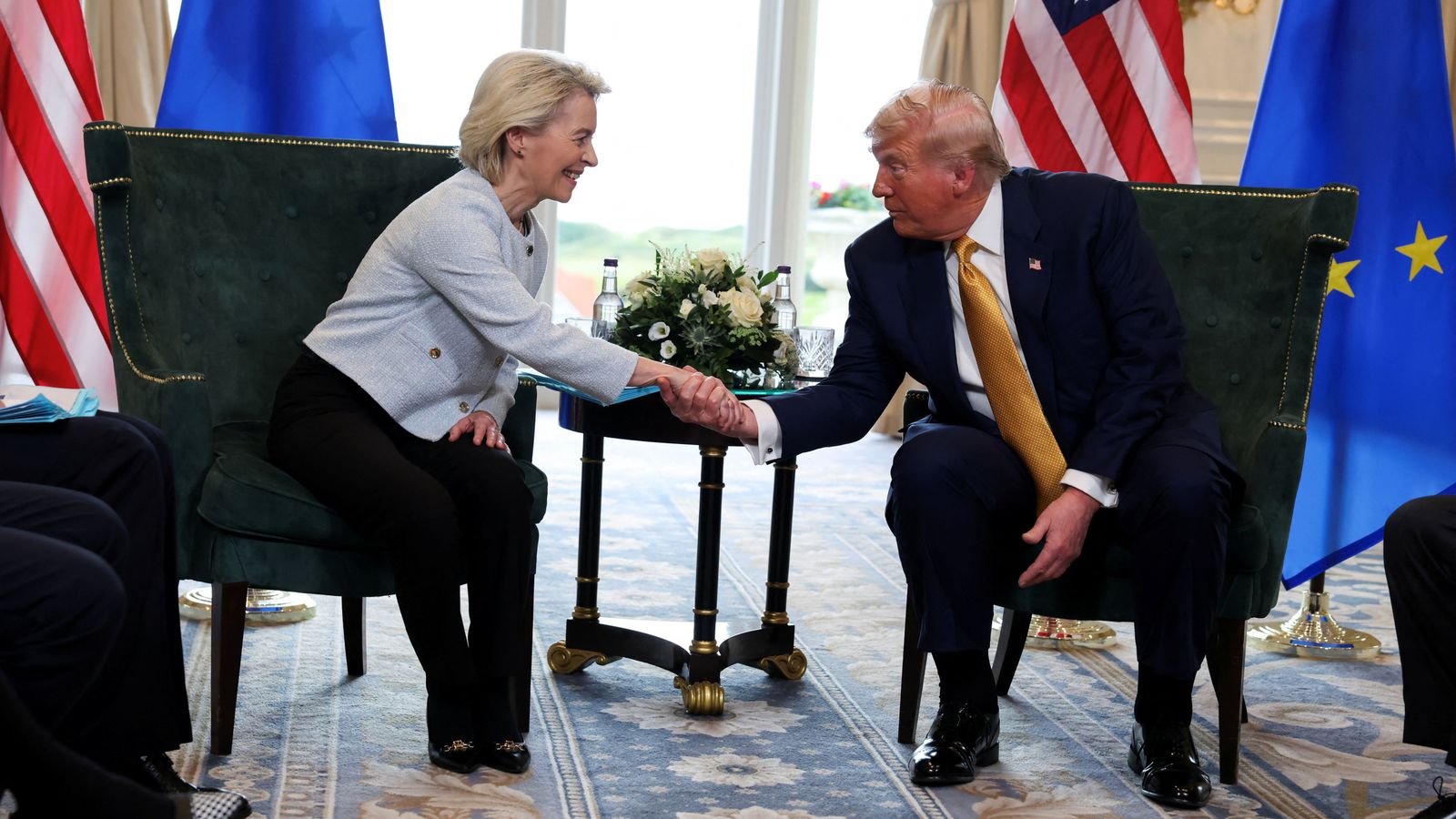
A senior European lawmaker has delivered a stark critique of the newly formed US–EU tariff agreement, describing it as fundamentally “unsatisfactory” and “significantly imbalanced”. The criticism comes from Bernd Lange, chair of the European Parliament’s Committee on International Trade, who warned that the deal could seriously undermine the EU’s economic stability and sovereignty.
Key Points of Contention
-
Under the agreement, most EU exports to the United States will be subject to a 15% tariff—a sharp rise from an average pre-deal rate hovering around 1.5–5%.
-
In contrast, US exports to the EU will benefit from virtually zero tariffs, creating a clear disadvantage for European exporters.
-
Lange was blunt: “This is a deal with a slant. Concessions have clearly been made that are difficult to bear.”
The steep increase in tariff rates, especially on sensitive sectors like automobiles, machinery, spirits, and industrial goods, was seen by many as a disproportionate trade-off, particularly given EU’s prior ambition of zero-for-zero tariff reciprocity.
EU Leadership Voices Discontent
Key voices within the European political and business community echoed Lange’s concerns:
-
German Chancellor Friedrich Merz warned of “considerable damage” to Germany’s industrial and export sectors, viewing the deal as far from beneficial.
-
French Prime Minister François Bayrou labeled the agreement a “dark day” for Europe, accusing EU negotiators of capitulating under US pressure.
-
French officials and MEPs across the political spectrum described the deal as an act of submission, arguing that it erodes Europe’s negotiating power.
Contexts and Strategic Pressures
The agreement is widely viewed as Europe’s attempt to avert a larger trade war. Facing the threat of 30% tariffs on its exports, the EU opted for a watered-down compromise, though it meant accepting higher duties than it had hoped.
The deal includes EU commitments to invest billions in US energy and industrial products, although these pledges are not legally binding. Many analysts and policymakers have expressed concern that such non-binding measures offer little real value in exchange for significant concessions.
Officials ranging from European trade commissioners to lawmakers reaffirmed that the agreement was the least-damaging option available under the circumstances—a reluctant compromise to avoid deeper fallout.
Implications for EU Trade Policy
-
The deal highlights the limitations of EU leverage compared to US economic and military strength.
-
It reinforces the urgency for the bloc to diversify trade partnerships, bolster internal industrial capacity, and reduce dependency on a single giant market.
-
EU lawmakers have signaled intentions to use the bloc’s anti-coercion tool—a legal mechanism for imposing countermeasures against perceived economic pressure—to respond proportionally and deter future unilateral actions from trading partners.
Bernd Lange’s description of the US–EU tariff deal as “unsatisfactory and imbalanced” reflects broader unease across Europe. Many leaders believe the agreement sacrifices long-term competitiveness and strategic autonomy for a short-term avoidance of tariffs.
Comments are closed.