
Unnao Rape Survivor Vows to Continue Fight; Kuldeep Sengar’s Daughter Cries Foul: Who Said What After SC’s Big Order

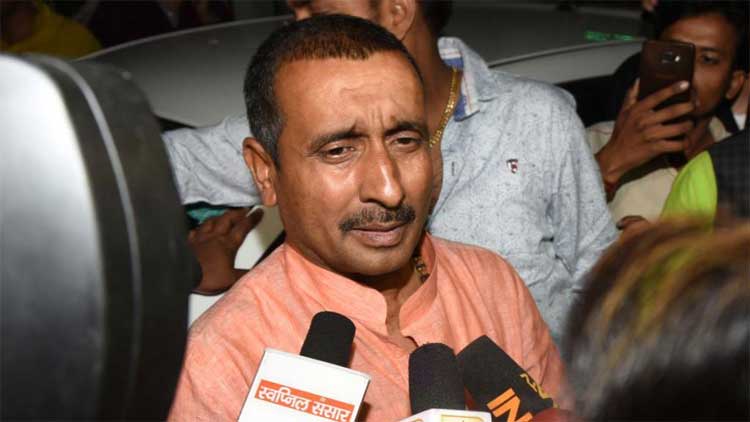
The Supreme Court on Monday stayed a Delhi High Court order that had suspended the life sentence of expelled BJP MLA Kuldeep Singh Sengar in the 2017 Unnao rape case, effectively halting his possible release from prison.
A special vacation bench comprising Chief Justice of India (CJI) Surya Kant and Justices J K Maheshwari and Augustine George Masih paused the Delhi High Court’s December 23, 2025 order, which had suspended Sengar’s sentence and granted him relief. The apex court’s intervention triggered strong reactions from all sides — the survivor and her family welcomed the move, while Sengar’s daughter termed it unjust.
Survivor calls it justice, vows to continue fight
The survivor, who had attempted self-immolation outside the Uttar Pradesh chief minister’s residence in 2018 to draw attention to her case, described the Supreme Court’s decision as justice.
“I have got justice from the Supreme Court. I will not rest until he is hanged. I will keep fighting,” she was quoted as saying earlier by HT.
Speaking later to news agency PTI, she said her family continues to face threats. “Only when he is hanged will my family and I get justice. We still receive threats even today,” she said, reiterating her faith in the judiciary.
Her family also expressed relief over the apex court’s order. The survivor’s sister said she had complete faith that the Supreme Court would ensure Sengar is not released. “He is a monster. He raped my sister and destroyed our entire family. I am satisfied today. His bail should remain rejected,” she said.
The survivor’s mother also thanked the top court and demanded the death penalty for those responsible for her husband’s death, according to the PTI report.
Sengar’s daughter alleges injustice
Reacting sharply to the Supreme Court’s move, Sengar’s daughter Aishwarya Sengar expressed anguish, claiming her family had been denied a fair hearing.
“We have been stripped of our dignity, our peace, and even our basic right to be heard. Still, I hope for justice,” she said in a statement after the order.
According to ANI, she alleged there was an “age-old enmity” between her family and the survivor’s family, predating the rape case. She also claimed the survivor’s uncle was a history-sheeter with multiple cases against him and accused him of attacking her uncle.
Aishwarya further alleged that the survivor had earlier filed cases against other individuals and later included her father’s name. However, she added, “If my father has even glanced at that girl with ill intent, he should be hanged,” ANI reported.
Survivor’s lawyer terms stay a ‘small relief’
The survivor’s counsel, Mehmood Pracha, described the Supreme Court’s stay as only limited relief. “This should not be called a victory. We have just got a little time to breathe,” he said, according to ANI.
Expressing concern, Pracha said the survivor remained under heavy security. “Do you want me to be happy when the girl has been taken away by the CRPF and I don’t even get a chance to speak to her about the order?” he asked.
Background of the case
Kuldeep Singh Sengar, a strongman politician from Unnao in central Uttar Pradesh, has won assembly elections four times from three different political parties. He was last elected from Bangarmau in 2017 on a BJP ticket.
In 2019, Sengar was convicted under IPC Section 376 (rape) and Section 5(c) of the Protection of Children from Sexual Offences (POCSO) Act. In 2020, he was also convicted under IPC Section 304 (culpable homicide not amounting to murder) in connection with the custodial death of the survivor’s father.
The Delhi High Court, while suspending his sentence, had observed that although Sengar was convicted under Section 5(c) of the POCSO Act, an elected representative did not qualify as a “public servant” under Section 21 of the Indian Penal Code.
The Supreme Court has now stayed that reasoning, noting that Sengar was convicted under both the IPC and the POCSO Act, and that the legal issues raised require detailed examination.
Comments are closed.