
UN Rights Chief Warns of Climate Inaction, Calls for People-Centred, Just Transition

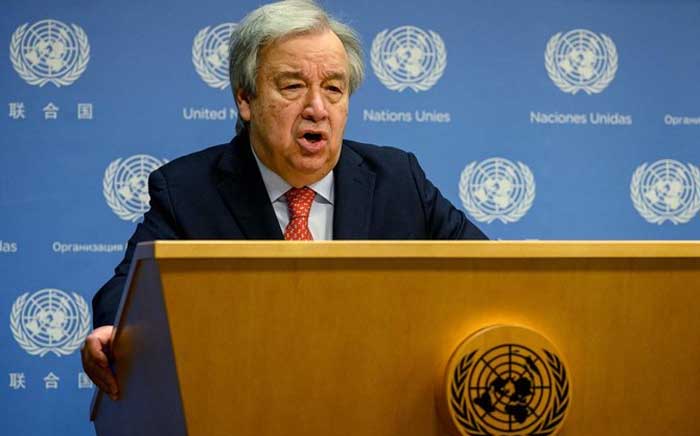
The United Nations’ top human rights official, Volker Türk, on Monday urged the international community to confront the escalating human rights crisis triggered by climate change, warning that current global efforts fall far short.
Speaking at the Human Rights Council in Geneva, Türk posed a stark question to member states:
“Are we taking the steps needed to protect people from climate chaos, safeguard their futures, and manage natural resources in ways that respect both human rights and the environment?”
His answer: “We are not doing nearly enough.”
Human Rights at the Heart of Climate Action
Türk stressed that climate change poses dire threats to human rights—particularly for vulnerable communities—but also presents an opportunity for transformational progress. A cornerstone of this, he said, is a “just transition” away from environmentally destructive practices.
“What we need now is a roadmap to rethink our societies, economies, and politics in ways that are both equitable and sustainable,” he said.
Decent Work Under Threat
The right to decent work was a central theme at the Council’s discussion on climate justice.
Moustapha Kamal Gueye of the International Labour Organization (ILO) warned that if current climate trajectories continue, up to 80 million full-time jobs could vanish by 2030. Additionally, 2.4 billion workers—more than 70% of the global workforce—will face dangerous levels of heat on the job.
Gueye stressed the urgent need for universal social protection, noting that fewer than 9% of workers in the 20 most climate-vulnerable countries are currently covered.
“From a climate resilience perspective, nations are far from achieving the human right to social protection,” he said.
“We must move from reactive responses to institutionalised, rights-based approaches.”
Yet, he also highlighted the potential upside: a shift to low-carbon economies could generate over 100 million new jobs by 2030. However, the jobs may not emerge where the losses occur—underscoring the need for strong safety nets and long-term planning.
‘Defossilizing’ Economies and Minds
Elisa Morgera, UN Special Rapporteur on human rights and climate change, presented her latest report calling for the “defossilization” of economies. She emphasized that phasing out fossil fuels is the most effective way to curb climate change while upholding human rights.
“Fossil fuels are embedded in every part of our lives—our food systems, our oceans, even our bodies,” Morgera said.
“Often, we don’t even realize or choose for them to be there.”
She also called for a “defossilization of knowledge,” highlighting how fossil fuel lobbies have distorted public understanding and undermined climate defenders.
Despite geopolitical gridlock, Morgera said that meaningful action can begin now, at every level of society:
“We can nourish hope and share concrete learnings to inspire course correction within this decade.”
A People-First Climate Agenda
In his closing remarks, Türk reinforced that the climate transition must be rooted in justice and inclusion.
“If we don’t safeguard people’s lives, health, jobs, and opportunities, the transition will only deepen existing injustices and inequalities,” he said.
Gueye echoed this sentiment:
“The global climate agenda is fundamentally a human story. Ambition must go beyond numbers and targets—it must be about people.”
Comments are closed.