
UN Report Warns World Has Entered ‘Uncharted Territory’; Climate Crisis May Exceed Previous Projections

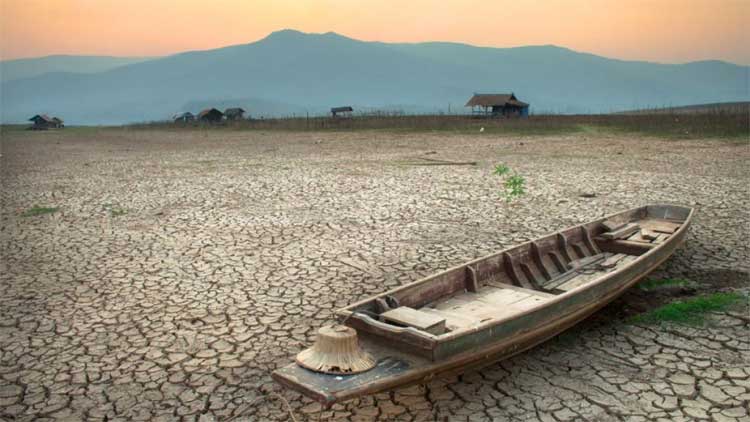
The planet has entered “uncharted territory” as the climate and environmental crisis deepens, with future global warming likely to surpass earlier United Nations projections, according to a new UN report released on December 9, 2025.
Published ahead of the recently concluded COP30 in Belém, Brazil, the report—The Global Environment Outlook, Seventh Edition: A Future We Choose—was prepared by the UN Environment Programme (UNEP) with input from nearly 20 international organisations and 287 scientists across 82 countries.
Rising Temperatures and Threats to Biodiversity
Based on current nationally determined contributions to cut greenhouse gas emissions, the report warns that global mean temperatures could rise between 2.4°C and 3.9°C above pre-industrial levels this century. This far exceeds the Paris Agreement goals of keeping warming well below 2°C, and pursuing efforts to limit it to 1.5°C.
The report also highlights biodiversity loss: one million species—about one-eighth of all documented species—are in decline, with genetic diversity eroding rapidly. Asia is identified as one of the most vulnerable regions.
A Choice Between Transformation and Peril
UNEP Executive Director Inger Andersen stressed the need for systemic transformation. “By investing in energy, food, and resource systems, we can avoid nine million premature deaths by 2050, lift 200 million people out of undernourishment, and provide 300 million more with safe water,” she said. Andersen added that the long-term economic benefits of such investments could reach $20 trillion annually by 2070.
Conversely, continuing on the current path—relying on fossil fuels, over-extracting resources, and degrading nature—would result in severe economic and social costs. “Climate change could slash four per cent off global GDP by 2050, cause widespread loss of life, and drive forced migration,” Andersen warned.
Interconnected Crises
The report details multiple environmental crises:
-
Global warming may surpass previous IPCC estimates, risking irreversible climate tipping points in the coming decades.
-
Critical shifts could include disrupted ocean circulation, accelerated ice-sheet loss, thawing permafrost, forest decline, and coral reef collapse.
-
Land degradation is widespread, with 20–40% of global land affected by 2022, and at least 100 million hectares of fertile land lost annually from 2015–2019.
-
Annual solid waste generation has already exceeded two billion tonnes and could rise to 3.8 billion tonnes by 2050.
-
Most international environmental targets, including the Paris Agreement and WHO pollution standards, are unlikely to be met under current policies.
“These crises are no longer purely environmental—they are economic, social, governance, security, and ethical challenges,” the report states.
Asia-Pacific Faces Heightened Risks
The Asia-Pacific region, despite its diversity, is under mounting pressure. Climate adaptation, resilience to extreme events, land-use management, and pollution control are key priorities. Current progress towards Sustainable Development Goals (SDGs) remains low; only 17% of the 17 SDGs have been achieved, and at the current pace, 90% of SDG targets may be missed by 2030.
Climate activist Harjeet Singh highlighted the urgency for India, given its vulnerability to climate impacts and persistent pollution. “Hope remains. Achieving global goals demands whole-of-society transformation in energy, food, and materials systems,” he said. Singh added that success hinges on a just and equitable transition, strong governance, and holding polluters accountable.
Comments are closed.