
UN Report Warns Climate Change Threatens Migratory Species in Himalayas and Northern India

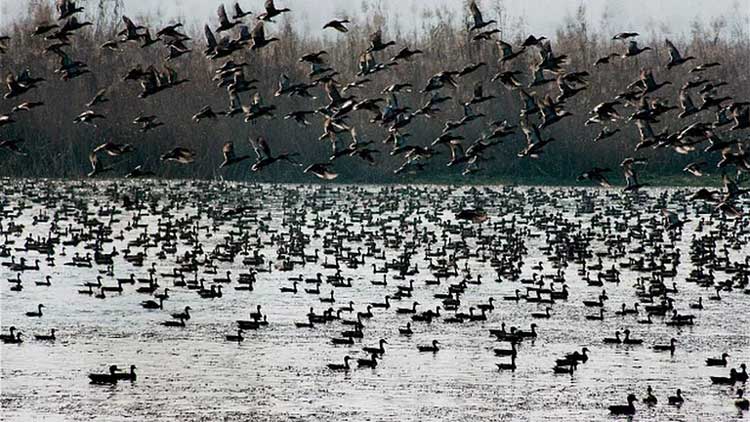
A recent UN Convention on the Conservation of Migratory Species of Wild Animals (CMS) report has raised alarms over the impact of rising temperatures on migratory species in the Himalayas and northern India.
Cold-Adapted Species at Risk
The report highlights that musk deer, pheasants, and snow trout are being forced to move to higher altitudes due to rising temperatures, leaving them with smaller, fragmented habitats. In Uttarakhand, some small mammals could lose more than half of their current range due to climate change.
Even larger species, like the Asian elephant, are experiencing a “habitat gridlock.” Climate and land-use changes are shifting elephant habitats eastward, but limited connectivity prevents most elephants in India and Sri Lanka from following, increasing human-elephant conflicts.
Importance of Migratory Species
Migratory species are vital to ecosystem health, playing crucial roles such as:
-
Carbon storage (e.g., forest elephants)
-
Nutrient circulation across land and oceans (e.g., whales)
-
Maintaining overall ecosystem stability
Environmental changes in one region can therefore have global consequences, affecting species across continents.
CMS Call for Action
CMS scientists are urging immediate measures to protect migratory species. Executive Secretary Amy Fraenkel said:
“Migratory animals are the planet’s early warning system, and they are in trouble. From monarch butterflies disappearing from our gardens to whales veering off course in warming seas, these travellers are sending us a clear signal. Climate change is having immediate impacts, and without urgent action, the survival of these species is at risk.”
Broader Climate Impacts
The report also highlights other environmental challenges:
-
Shrinking habitats and altered water systems due to warming
-
Ocean warming threatening seagrass ecosystems, which are crucial for carbon storage, coastal resilience, and sustaining marine life
-
Extreme weather events further stressing ecosystems and wildlife
The CMS report underscores that without urgent action, climate change could drastically disrupt migratory species and the ecosystems they support, with far-reaching consequences for both biodiversity and human well-being.
Comments are closed.