
UN Refugee Chief Says US Deportations May Breach International Law, Warns Against Rising Backlash

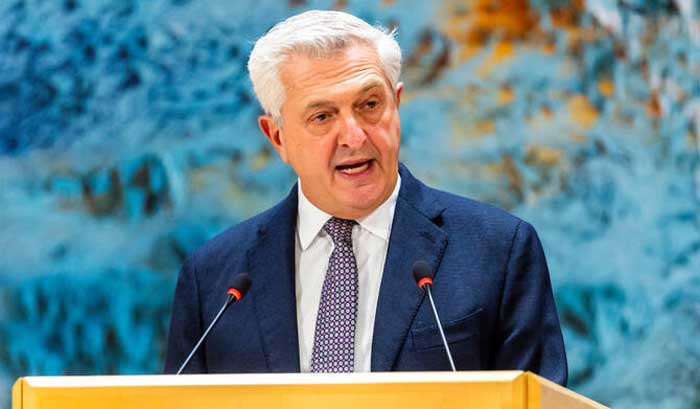
UN refugee agency chief Filippo Grandi on Monday warned that some US deportation practices under President Donald Trump appear to violate international law, amid what he called a growing global “backlash” against migrants and refugees.
Speaking at the opening of UNHCR’s executive committee session in Geneva, Grandi lamented deep funding shortfalls that have forced the agency to cut nearly 5,000 jobs — about a quarter of its workforce — this year. “This was certainly not an easy year for any of us,” he said. “But remember, please: There has never been an easy year to be a refugee — and there never will be.”
Grandi noted that UNHCR has received roughly $5 billion annually in recent years — about half of what it needs — even as wars and repression in Afghanistan, Myanmar, Sudan, Venezuela, and Ukraine have driven the number of displaced people to a record 122 million.
He cautioned that reopening the 1951 Refugee Convention or questioning the right to asylum “would be a catastrophic error,” stressing that “national sovereignty and the right to seek asylum are not incompatible — they are complementary.”
Without naming countries directly at first, Grandi later said he was “worried that the current debate — in Europe, for example — and some deportation practices — such as in the United States — address real challenges in manners not consistent with international law.”
The Trump administration has defended its deportations as targeting the “worst of the worst” and has also led calls to overhaul the global asylum system, arguing it is being abused. Washington has simultaneously slashed humanitarian aid contributions to the UN.
Despite the challenges, Grandi pointed to a few “glimmers of hope” — including the return of over a million Syrian refugees and tentative progress in Congo, where he credited US-led peace efforts for easing conflict between Rwanda-backed forces and Congo’s army. “Instead of speaking only of more bloodshed, or more refugees, we can start to think — cautiously, but a little more optimistically — of stability and returns,” he said.
Comments are closed.