
UN Chief Urges Sahel Nations to Unite Against Escalating Violence
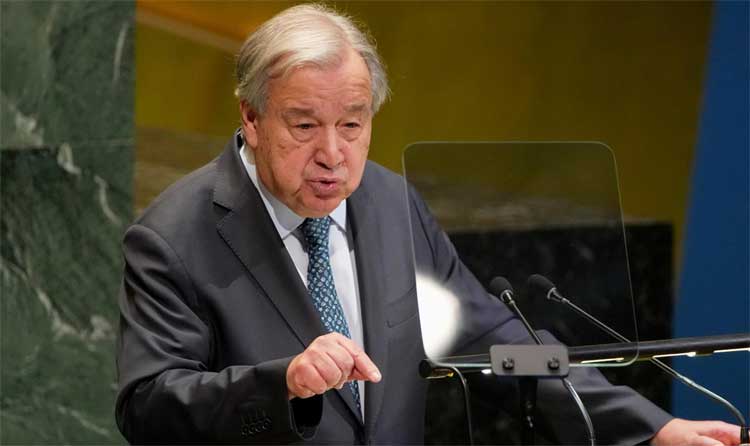
UN Secretary-General Antonio Guterres on Tuesday urged countries in the conflict-ridden Sahel to set aside political rifts and coordinate their efforts against a surge in attacks by armed groups across the region, which is already grappling with a deepening humanitarian crisis.
Speaking to the UN Security Council via video message, Guterres acknowledged “serious political differences” among Sahel states — many of which have experienced recent coups and seen juntas withdraw from the ECOWAS regional bloc. But he stressed that cooperation was indispensable.
“It is absolutely essential that, despite these differences, we build a platform of cooperation among the intelligence and security services of ECOWAS countries, the AES (Alliance of Sahel States), Mauritania, Chad and Algeria, to allow for coordinated action against terrorism,” he said.
Violence by Islamist militants and other armed groups has expanded dramatically in recent years. According to an AFP analysis of ACLED conflict data, extremist attacks in the Sahel have doubled in scope since 2019 and now span territory twice the size of Spain, contributing to 77,000 deaths.
Groups linked to Al-Qaeda — particularly the Group for the Support of Islam and Muslims (JNIM) — as well as the Daesh affiliate in the region, have intensified operations across nearly all of Mali and Burkina Faso, reaching from western Niger and Nigeria to the Senegal border.
ECOWAS Commission President Omar Alieu Touray told the Security Council that restoring trust among regional governments was vital, arguing that effective intelligence sharing and coordinated military efforts were impossible without it.
“Trust is needed for countries to collaborate in information and intelligence sharing, joint border patrols and joint operations,” Touray said. “Unfortunately, the situation in our region is characterized by mistrust and high levels of suspicion among stakeholders. No amount of money will help us overcome terrorism if we don’t collaborate.”
As conflict spreads, humanitarian needs are soaring. The Sahel and Lake Chad Basin require $4.9 billion this year for emergency response, yet less than a quarter of that amount has been secured, Guterres warned. The humanitarian plan for Mali is only 16 percent funded.
Sierra Leone’s President Julius Bio, who chairs ECOWAS, called for a joint UN–ECOWAS–African Union “compact for peace and resilience in the Sahel” to stabilize one of the world’s most fragile regions.
Comments are closed.