
Ukraine Marks Four Years Since Russian Invasion

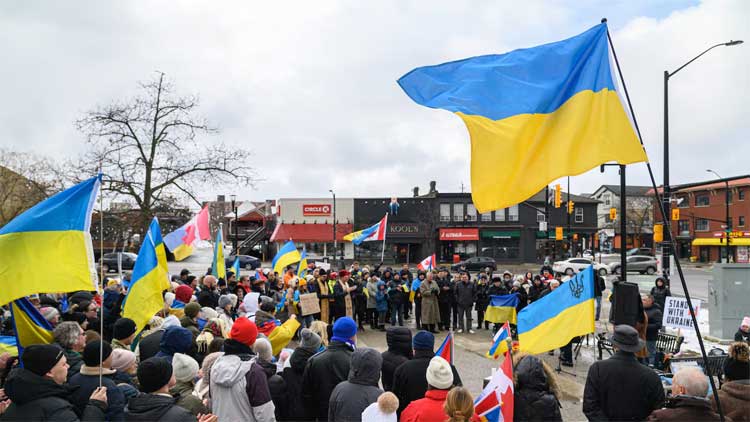
Ukraine on Tuesday marked the fourth anniversary of Russia’s full-scale invasion, drawing renewed expressions of solidarity from its closest allies while the conflict showed no sign of ending. What has become Europe’s deadliest war since World War II has claimed tens of thousands of lives since the Kremlin sent troops into Ukraine on February 24, 2022, anticipating a swift victory but encountering fierce resistance.
The global repercussions have been profound, prompting many European nations to boost defence spending amid fears of a wider confrontation with Russia. Yet diplomatic efforts, revived last year with United States involvement, have so far failed to stop the fighting, which has ravaged Ukraine and left it facing the enormous challenge — and cost — of rebuilding.
To mark the anniversary, European Commission President Ursula von der Leyen and European Council President Antonio Costa were expected in Kyiv. Both leaders said they would attend a commemoration ceremony, visit a Ukrainian energy facility damaged by Russian strikes, and hold talks with President Volodymyr Zelensky. They were also set to join a videoconference with Ukraine’s partners in the so-called “Coalition of the Willing,” including Britain, France, and Germany.
Impasse
Russia, which occupies nearly 20 percent of Ukrainian territory, continues to strike civilian areas and infrastructure, fuelling the most severe energy crisis of the war during a harsh winter. Western governments have imposed sweeping sanctions on Moscow, forcing it to redirect key oil exports to alternative markets, particularly in Asia.
Despite sustaining heavy losses, Russian forces have in recent months made incremental gains along the frontline, especially in the eastern Donbas region — the focal point of some of the war’s bloodiest battles and a territory Moscow seeks to annex. US-brokered negotiations remain underway, with Zelensky insisting on firm security guarantees from Washington before considering any compromise, including on territorial questions.
Moscow has rejected Ukrainian proposals to deploy European troops following any ceasefire, while President Vladimir Putin has repeatedly signalled that Russia would pursue its aims by force if diplomacy fails.
Reconstruction
The protracted war has devastated Ukraine, which was already among Europe’s poorest nations before the invasion. A joint assessment by the World Bank, European Union, and United Nations, published with Kyiv on Monday, estimated that post-war reconstruction could cost roughly $558 billion over the next decade.
Russia has framed its invasion as a response to Ukraine’s NATO aspirations, arguing that Kyiv’s potential membership would threaten Russian security. Speaking on Monday at a ceremony marking “Defenders of the Fatherland Day,” Putin maintained that Russian troops were protecting the country’s “borders” and safeguarding its “future.”
Ukraine, a former Soviet republic, views the conflict as an attempt to reassert Russian imperial influence. In a BBC interview broadcast on Sunday, Zelensky warned that Putin had “already started” World War III, accusing Russia of seeking to reshape the global order.
Comments are closed.