
U.S. to Cut Staff at Key NATO Command Centers, Stirring European Anxiety

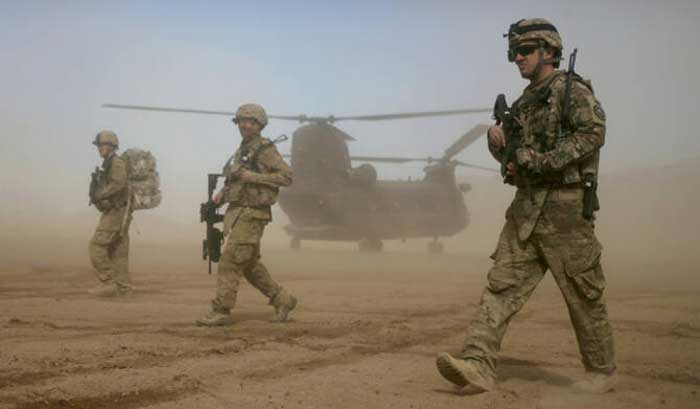
The United States plans to reduce the number of personnel stationed at several key NATO command centers, a move likely to heighten concerns in Europe about Washington’s commitment to the alliance, three sources familiar with the matter said this week.
The Trump administration has informed some European capitals that it will eliminate about 200 positions from NATO bodies responsible for planning and overseeing the alliance’s military and intelligence operations. The sources spoke on condition of anonymity to discuss private diplomatic exchanges.
Among the entities affected are the NATO Intelligence Fusion Center in the United Kingdom, the Allied Special Operations Forces Command in Brussels, and Portugal-based STRIKFORNATO, which oversees certain maritime operations. Several other NATO units will also see reductions, the sources said.
The sources did not specify the reasons for the cuts, but said they broadly align with the administration’s stated intention to shift more U.S. military resources toward the Western Hemisphere. The Washington Post first reported the decision.
Trump Reposts Message Casting NATO as a Threat
While modest compared with the overall U.S. military footprint in Europe, the move is likely to fuel unease among allies. Around 80,000 U.S. troops are stationed across Europe, nearly half of them in Germany, and the staff reductions do not necessarily signal a broader withdrawal from the continent.
Still, European anxiety is already high amid President Donald Trump’s renewed campaign to acquire Greenland from Denmark, which has raised unprecedented fears of territorial pressure within NATO itself.
On Tuesday morning, Trump reposted a message on social media that described NATO as a threat to the United States, while characterizing China and Russia as mere “boogeymen.” The president is scheduled to travel to the World Economic Forum in Switzerland later in the day.
A NATO official downplayed the staffing changes, saying such adjustments are not unusual and noting that the U.S. presence in Europe remains larger than it has been in years.
“NATO and U.S. authorities are in close contact about our overall posture to ensure the alliance retains a robust capacity to deter and defend,” the official said.
The White House and the Pentagon did not respond to requests for comment.
Military Impact Unclear, Symbolic Impact Significant
Reuters was unable to obtain a full list of NATO entities affected by the cuts. One source said about 400 U.S. personnel currently serve in the bodies slated for reductions, meaning the number of Americans at those commands will be cut by roughly half.
Rather than withdrawing personnel immediately, the United States will largely stop backfilling positions as staff rotate out, the sources said.
The drawdown comes at one of the most diplomatically fraught moments in NATO’s 77-year history. During his first term, Trump repeatedly threatened to withdraw from the alliance and said he would encourage Russian President Vladimir Putin to attack members that failed to meet defense spending targets.
Trump appeared to soften his stance in mid-2025, praising NATO Secretary-General Mark Rutte and European leaders after they agreed to boost defense spending at a June summit. But in recent weeks, tensions have resurfaced.
In early December, Pentagon officials told diplomats the United States wants Europe to assume primary responsibility for NATO’s conventional defense capabilities — from intelligence to missile defense — by 2027, a timeline many European officials view as unrealistic. A subsequent U.S. national security document called for shifting more American military resources to the Western Hemisphere, raising questions about Europe’s future priority for Washington.
Trump has also revived his long-standing push to acquire Greenland, infuriating officials in Denmark and across Europe. Over the weekend, he said he would impose tariffs on several NATO countries starting February 1 over their support for Denmark’s sovereignty over the island, prompting European Union officials to consider retaliatory measures.
Comments are closed.