
U.S. Resumes Student Visa Processing with New Requirement to Disclose Social Media Accounts

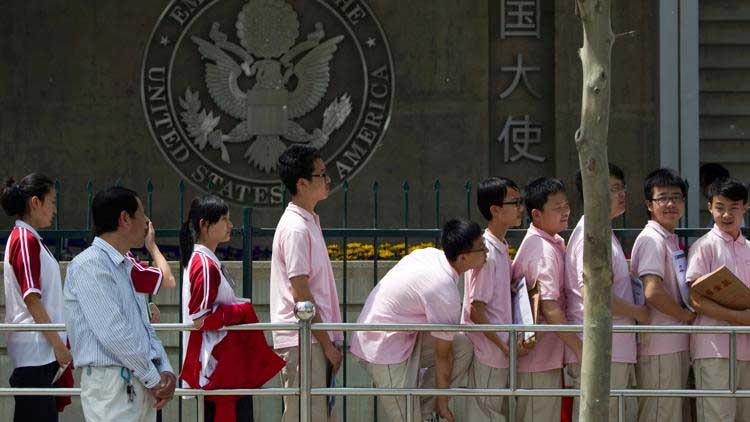
The U.S. State Department announced Wednesday that it is resuming the processing of student visa applications for foreign nationals — but with a significant new requirement: all applicants must now make their social media accounts publicly accessible for government review.
In a formal notice, the department said it had lifted the May suspension of visa processing for international students, but warned that applicants who refuse to unlock their social media accounts could be denied entry. Officials stated that refusal may be interpreted as an attempt to hide online activity or avoid scrutiny.
Consular officers will now be instructed to review applicants’ posts and messages for any signs of hostility toward the United States — including criticism of its government, institutions, culture, or founding principles.
The change follows a month-long pause in new visa interviews, during which the Trump administration prepared to expand its social media screening policy. The move is part of a broader effort to intensify vetting procedures for international visitors and tighten immigration controls.
For many foreign students, the announcement ends weeks of uncertainty. “I’m really relieved,” said a 27-year-old Chinese Ph.D. student in Toronto, who secured an interview appointment for next week after checking the visa scheduling site multiple times daily. He plans to begin a U.S. research internship in late July and requested to be identified only by his surname, Chen, due to fears of being targeted.
Students from countries like China, India, Mexico, and the Philippines have taken to online forums and social media to share updates, monitor appointment availability, and track U.S. State Department briefings.
In addition to the social media review, the department has reportedly instructed consulates to prioritize students enrolling in institutions where international students make up less than 15% of the student population. According to a U.S. official speaking on condition of anonymity, the move is intended to diversify student placement.
An Associated Press analysis of 2023 federal data found that foreign students exceed the 15% threshold at nearly 200 U.S. universities — most of them private, including all eight Ivy League institutions, as well as large public universities such as the University of Illinois and Penn State.
The latest policy is part of a wider pattern of heightened scrutiny faced by international students under the Trump administration. Earlier this year, some foreign students had their legal status revoked over minor infractions — a decision the administration later reversed. Additionally, the government has broadened the criteria under which a student can lose legal status.
As part of a political battle with institutions like Harvard University, the administration has floated the idea of capping foreign student enrollment at 15%, arguing it would preserve opportunities for domestic students. Harvard currently relies on international students for a quarter of its student body and a significant share of tuition revenue.
The State Department defended the new vetting policy by saying it is critical to national security. “This will ensure we are properly screening every single person attempting to visit our country,” a spokesperson said.
Internal guidelines sent to consular officers instruct them to flag any signs of “hostility toward the citizens, culture, government, institutions, or founding principles of the United States.”
However, civil liberties advocates have raised alarm. Jameel Jaffer, executive director of the Knight First Amendment Institute at Columbia University, said the policy echoes Cold War-era ideological screenings that excluded prominent thinkers and artists from entering the U.S.
“This policy makes a censor of every consular officer, and it will inevitably chill legitimate political speech both inside and outside the United States,” Jaffer warned.
In a related effort, the Trump administration has also urged 36 countries to improve their vetting of travelers or face visa restrictions. A State Department diplomatic cable over the weekend gave those nations 60 days to comply or risk being added to the existing travel ban list, which currently includes 12 countries.
Comments are closed.