
Typhoon Fung-wong Batters Northern Philippines, Leaves Two Dead and Over 1.4 Million Displaced

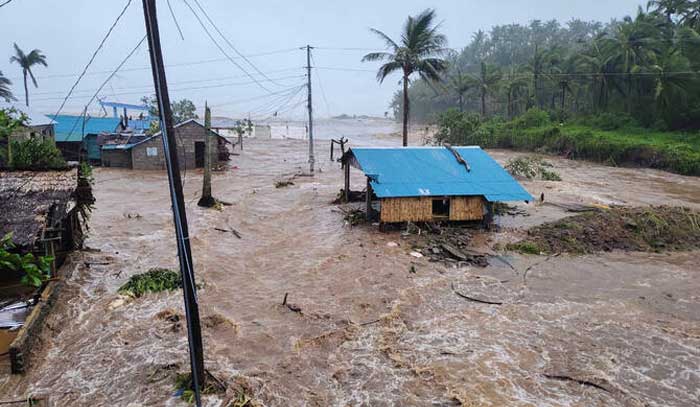
Typhoon Fung-wong swept out of the northwestern Philippines on Monday after unleashing torrential rains and fierce winds that triggered floods, landslides, and widespread power outages across several provinces. At least two people were killed, and more than 1.4 million residents were forced to flee their homes.
The storm, packing sustained winds of up to 185 km/h (115 mph) and gusts reaching 230 km/h (143 mph), made landfall in Aurora province on Sunday night as a super typhoon, before weakening as it moved across the mountainous northern regions and agricultural plains. By Monday morning, the 800-kilometer-wide system had drifted away from La Union province into the South China Sea, state forecasters said.
Authorities reported that one person drowned in Catanduanes province, while another woman was killed when her home collapsed in Catbalogan City, Eastern Samar.
Ahead of the typhoon, more than 1.4 million people had sought safety in evacuation centers or with relatives. Around 318,000 remained in shelters as of Monday. Heavy rains flooded at least 132 northern villages, with some residents reportedly stranded on rooftops as water levels surged. Nearly 1,000 houses were damaged, and roads blocked by landslides were expected to be cleared once weather conditions improved.
“While the typhoon has passed, its rains still pose danger in certain areas of northern Luzon and even parts of Metro Manila,” said Bernardo Rafaelito Alejandro IV of the Office of Civil Defense. “Rescue and relief operations are underway.”
President Ferdinand Marcos Jr. declared a state of emergency on Thursday due to the combined impact of Typhoon Kalmaegi—which killed at least 224 people in central provinces last week before striking Vietnam—and the anticipated devastation from Fung-wong, locally known as Uwan.
Despite the back-to-back disasters, officials said the Philippines has not requested international aid, though both the United States and Japan have expressed readiness to assist.
In anticipation of the storm, schools and most government offices were ordered closed on Monday and Tuesday. Over 325 domestic and 61 international flights were canceled, while around 6,600 passengers and cargo workers were stranded at ports after the coast guard banned sea travel due to rough conditions.
The Philippines experiences about 20 tropical cyclones annually, along with frequent earthquakes and volcanic activity, making it one of the world’s most disaster-prone nations.
Comments are closed.