
Twin Cyclones Senyar and Ditwah Leave Over 1,000 Dead Across Indian Ocean Region; Sri Lanka, Indonesia Worst-Hit

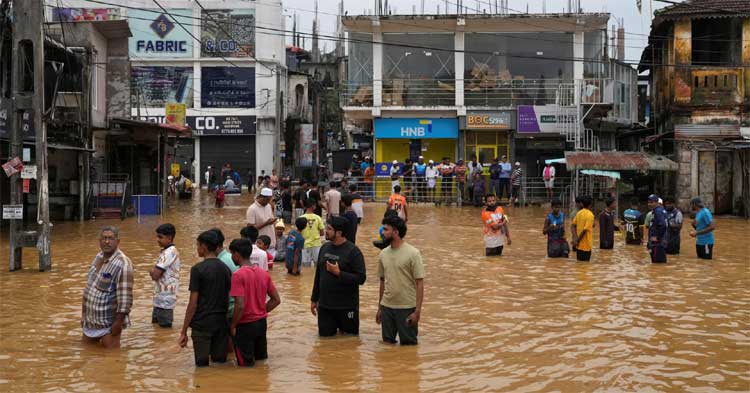
Two powerful storms — Cyclone Senyar and Cyclone Ditwah — have unleashed massive destruction across the Indian Ocean region, leaving more than 1,000 people dead and tens of thousands displaced. Indonesia, Thailand and Sri Lanka have suffered the heaviest losses, while parts of southern India have also reported fatalities and widespread flooding.
After a deep depression over the Strait of Malacca intensified into Cyclone Senyar last week, the storm moved across Indonesia and Malaysia before dissipating over the South China Sea, according to the Hong Kong Observatory, cited by Bloomberg. Almost immediately afterward, a second system — Cyclone Ditwah — developed over the southwest Bay of Bengal, tracking toward Sri Lanka and India.
Cyclone Senyar: A Rare Weather Phenomenon
Cyclone Senyar posed no major threat to India as it formed over the Strait of Malacca and travelled away from the Indian coastline. But in Indonesia’s Sumatra, it delivered one of the deadliest disasters in recent years: at least 500 people died, with 508 reported missing, AFP reported, quoting the country’s disaster agency.
Relief operations have been severely hampered by washed-out roads, landslides and collapsed communication networks. Helicopters and naval ships have been deployed to reach stranded communities after entire villages were submerged, with some homes inundated up to their rooftops.
Indonesia’s weather bureau said cloud-seeding efforts were underway to suppress further rainfall in the hardest-hit regions.
Senyar was the first tropical cyclone to form in the Strait of Malacca since Typhoon Vamei in 2001 — a rarity attributed to low Coriolis force near the equator. The HKO said unusually warm waters contributed to its formation.
In Thailand, torrential rain from Senyar triggered severe flooding that killed at least 176 people and affected more than 20 lakh households. Economic losses are estimated at 23.6 billion baht (₹6,560 crore), with the hospitality, rubber and palm oil sectors worst hit.
Cyclone Ditwah: Sri Lanka’s Deadliest Disaster in Decades
Cyclone Ditwah, which formed on November 27, approached the Tamil Nadu–Puducherry–south Andhra Pradesh coast by November 30 but stopped short of making landfall in India. Still, it caused intense rainfall across the region.
Sri Lanka, however, bore the brunt. Flooding and landslides triggered by Ditwah have killed 334 people, with 370 more missing. The island nation’s president, Anura Kumara Dissanayake, said Sri Lanka was facing its “largest and most challenging natural disaster.”
In Tamil Nadu, three people died in rain-related incidents over the past 24 hours, officials said.
A Third Storm Brewing: Typhoon Koto
Adding to the regional strain, Typhoon Koto is currently churning offshore east of Vietnam. Although it is expected to weaken, meteorologists say it could still dump heavy rain over central and north-central Vietnam, which has already suffered weeks of historic flooding causing an estimated $3 billion in damage.
Forecasters expect rainfall to ease across most affected areas by midweek, with a drier pattern likely to set in over Peninsular Malaysia and Sumatra by mid-December.
Comments are closed.