
Turkish Court Orders Release of Nationalist Leader Ümit Özdağ After Five Months in Jail

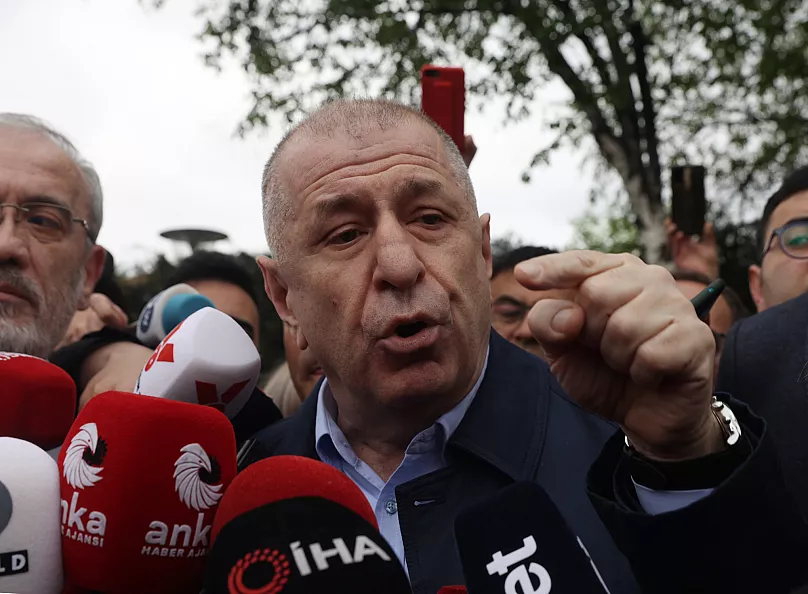
In a major political development, a Turkish court in Istanbul on Wednesday ordered the release of Ümit Özdağ, the outspoken leader of the nationalist Victory Party (Zafer Partisi), nearly five months after his controversial arrest on charges of inciting public hatred.
Özdağ, who has long been a polarizing figure in Turkish politics due to his strong anti-refugee stance, was jailed in January 2025 after being accused of using social media platforms to stoke unrest and fuel xenophobic sentiment in the central province of Kayseri, a region that witnessed sporadic violence and protests against Syrian refugees last year.
Background of the Case
The charges against Özdağ stemmed from a series of posts and speeches he made online, where he allegedly blamed refugee communities for rising crime and economic instability. Turkish prosecutors argued that these statements, delivered at the height of local tensions in Kayseri, incited public unrest and contributed to mob violence targeting migrant neighborhoods and businesses.
The Victory Party leader was arrested under Article 216 of the Turkish Penal Code, which criminalizes incitement to hatred and enmity among the public. His detention sparked intense debate across political lines, with critics accusing the government of silencing dissent, while supporters of the ruling establishment insisted the law was being applied to maintain social harmony.
Court Ruling and Release
In its ruling on Wednesday, the Istanbul court cited “time served” and “insufficient grounds to justify continued pre-trial detention” as the primary reasons for Özdağ’s release. The court noted that the investigation phase had been completed, and any further restriction on his freedom would be “disproportionate.”
Legal experts say that while Özdağ has been released from custody, he may still face trial later this year, and could potentially receive a prison sentence if convicted. The case remains open, and judicial proceedings will resume with his testimony now being collected outside of detention.
Political Reactions Across the Spectrum
The decision to release Özdağ has ignited strong political reactions. Victory Party supporters celebrated the ruling as a win for “free speech and nationalist sovereignty,” with many taking to social media and public squares in Istanbul and Ankara to welcome their leader back.
In his first public statement after release, Özdağ remained defiant, declaring,
“I was imprisoned not for breaking the law, but for speaking the truth. The Turkish people will not be silenced, and we will continue to stand against policies that threaten our national identity.”
Opposition leaders and civil rights advocates, however, presented a more cautious tone. Some hailed the release as a sign that Turkey’s judiciary can act independently, while others warned that the normalization of xenophobic rhetoric remains a pressing concern in a country hosting over 3.5 million Syrian refugees.
Refugee Issue and Rising Nationalism in Turkey
The backdrop to Özdağ’s arrest and release is a broader, more contentious issue — Turkey’s refugee policy and the increasing politicization of migration. With the economy under strain and unemployment high, anti-refugee sentiment has grown across segments of Turkish society, providing fertile ground for nationalist parties like the Victory Party to gain momentum.
Ozdag’s party, which has made the deportation of refugees a central pillar of its platform, has steadily gained popularity, especially among disaffected youth and conservative voters. Analysts warn that this trend could reshape Turkey’s political landscape in the coming elections, further polarizing debates on migration, identity, and national sovereignty.
Ümit Özdağ’s release raises significant questions about the balance between freedom of expression and the responsibility to prevent hate speech. While the legal battle is far from over, his return to political life is likely to reinvigorate nationalist discourse in Turkey — a country already grappling with internal divisions and complex geopolitical dynamics.
As the judicial process moves forward, all eyes will be on whether Turkey’s courts can strike a fair balance between maintaining public order and preserving democratic freedoms in a rapidly changing political climate.
Comments are closed.