
Trump was asked, ‘Will you capture Putin too like Maduro?’ Here’s what the US President said

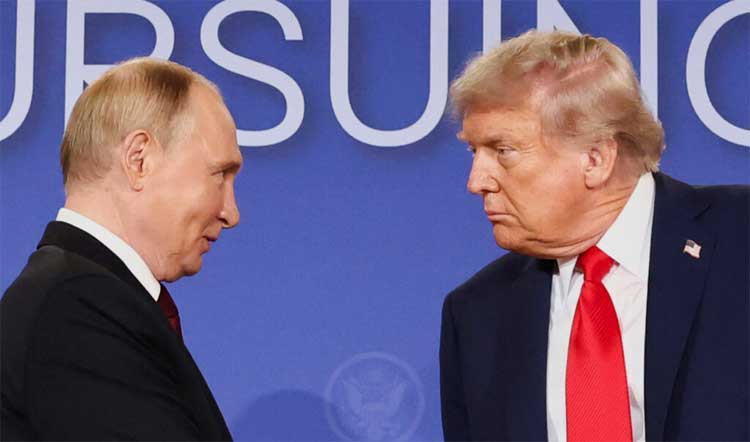
US President Donald Trump on Friday downplayed speculation that Washington could launch a dramatic military operation against Russian President Vladimir Putin similar to the raid that led to the capture of Venezuela’s Nicolas Maduro, saying such a move was “not necessary,” even as he expressed deep frustration over the continuing war in Ukraine.
Asked about Ukrainian President Volodymyr Zelensky’s cryptic remarks suggesting Putin could be “next” after Maduro’s arrest, Trump told reporters he did not see the need for such action. “I don’t think it’s going to be necessary. I think we’re going to have a — and always had — a great relationship with him,” Trump said.
Speaking during a meeting with senior US oil and gas executives, Trump said he was “very disappointed” that the Russia-Ukraine conflict had not yet ended. “I settled eight wars. I thought this would be in the middle of the pack or maybe one of the easier ones,” he said, referring to Russia’s invasion of Ukraine, which began in 2022.
Putin remains the subject of an arrest warrant issued by the International Criminal Court in The Hague over alleged war crimes in Ukraine, a development that has further complicated diplomatic efforts to bring the fighting to an end.
Zelensky’s hint after Maduro’s arrest
Trump’s remarks came days after a shock US military operation in Caracas saw former Venezuelan president Nicolas Maduro seized in a pre-dawn raid and flown to the United States to face drug-trafficking and other charges. The unprecedented move rattled governments worldwide and prompted reactions from US allies.
Zelensky, responding to the episode, made an indirect reference to Putin, saying that if this was how a “dictator” must be treated, then “the United States knows what to do next.”
Trump, however, publicly rejected the idea of ordering a similar mission against the Russian leader.
Reflecting on the toll of the Ukraine war, Trump said he regretted not being able to end it sooner. “Last month, they lost 31,000 people. Many of them were Russian soldiers. The Russian economy is doing poorly. I think we’re going to get it settled. I just wish it could have happened quicker because a lot of people are dying,” he said.
How Maduro was captured
According to US accounts, the operation in Venezuela began shortly after midnight in Caracas, with airstrikes followed by a raid by elite Delta Force troops on Maduro’s residence. Maduro and his wife, Cilia Flores, were taken into custody and flown to a US military base before being transported to New York aboard the USS Jima.
Maduro’s vice president, Delcy Rodríguez, has since assumed the presidency, while condemning the US action as “illegal and illegitimate.” Despite the sharp rhetoric, exploratory talks between Caracas and Washington have begun, with US diplomats returning to the Venezuelan capital to assess reopening the embassy.
Oil, prisoners and protests
Trump has linked Venezuela’s political transition to its vast oil reserves, urging US energy companies to invest while promising “total security” under arrangements that would bypass the Venezuelan state. He has claimed companies are ready to invest up to $100 billion and said the US plans to sell tens of millions of barrels of Venezuelan crude.
Venezuelan authorities have also begun releasing political prisoners, a move Washington says followed the US raid. Families gathered outside prisons in Caracas on Friday hoping for reunions, even as protests against Maduro’s arrest and US involvement continued.
“We don’t have to give one little drop of oil to Trump after all that he has done to us,” said Josefina Castro, a 70-year-old activist protesting in Caracas. “Our Venezuelan brothers died in the attack, and that hurts.”
Comments are closed.