
Trump Warns Hamas: “We will have no choice but to go in and kill them” if Bloodshed Persists in Gaza

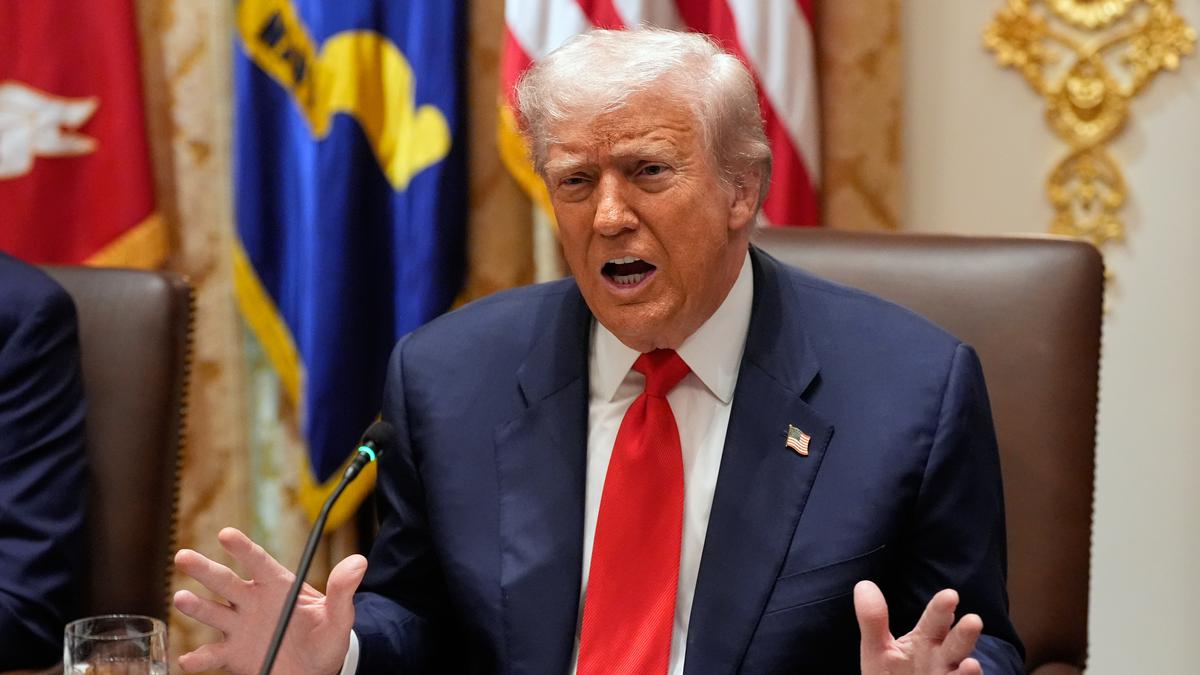
President Donald Trump issued a stark warning on October 16, 2025, telling Hamas that if the internal bloodshed in Gaza continues, “we will have no choice but to go in and kill them.” The comment — delivered amid a fragile ceasefire and a recent hostage exchange between Israel and Hamas — marked an unusually blunt public statement by the U.S. president about potential action against the Palestinian group.
What he said and what he later clarified
Trump’s initial warning was widely reported as an ultimatum aimed at curbing violence inside Gaza carried out by rival armed groups and, reportedly, by some Hamas elements against opponents. After the remark circulated, White House messaging and subsequent reporting made clear that Trump said he did not intend to send U.S. ground troops into Gaza; instead he suggested that regional partners “very close, very nearby” could take action with U.S. support if necessary.
Why the warning came now
The statement followed a tenuous ceasefire and hostage deal meant to pause a two-year war that devastated large parts of Gaza. Even after the agreement, reports said armed clashes, punitive actions against suspected criminals or rival factions, and episodes of public executions were destabilizing the territory — developments that apparently prompted Trump’s impatience and public admonition. Observers say the internal breakdown of order in Gaza, with competing groups and local strongmen filling power vacuums, has alarmed international backers and humanitarian organizations alike.
Reactions at home and abroad
The president’s language immediately drew mixed reactions. Supporters framed it as a forceful stance against Hamas and against lawlessness in Gaza; critics warned that such rhetoric risks escalating tensions and undermining delicate diplomatic work around the ceasefire and hostage returns. Allies in the region, particularly Israel, welcomed strong U.S. pressure on Hamas, while many international and humanitarian actors called for restraint and adherence to international humanitarian law.
Legal and strategic implications
Experts stress there is a legal and strategic difference between threatening kinetic action and actually deploying U.S. military forces into Gaza. Any U.S. military intervention in Gaza would raise complex questions under international law, require clear objectives and rules of engagement, and almost certainly draw intense global scrutiny and regional political fallout. For now, officials pointed to alternative measures — diplomatic pressure, sanctions, intelligence cooperation, and support for partners — as more likely levers than a U.S. invasion.
What could happen next
With the ceasefire still fragile, the immediate priorities for Washington and other stakeholders are to stabilise conditions on the ground, ensure the safe return of hostages and bodies as outlined in the deal, and prevent further cycles of revenge killings that could collapse the agreement. If violence continues or escalates, Washington’s options range from stepped-up diplomatic and economic pressure to more direct material support for partners; the threshold for U.S. direct military involvement, officials and analysts say, remains high.
Bottom line
President Trump’s warning to Hamas is a forceful expression of frustration at the ongoing violence inside Gaza and a signal of readiness to back tougher measures if the ceasefire and the rules of the hostage deal are not respected. But the administration’s insistence that U.S. forces would not be deployed — coupled with international calls for restraint — underscores the precarious balance between deterrence, diplomacy, and the risk of renewed wider conflict.
Comments are closed.