
Trump Turns Historic Shutdown into Power Play, Redefining How Washington Handles Funding Crises

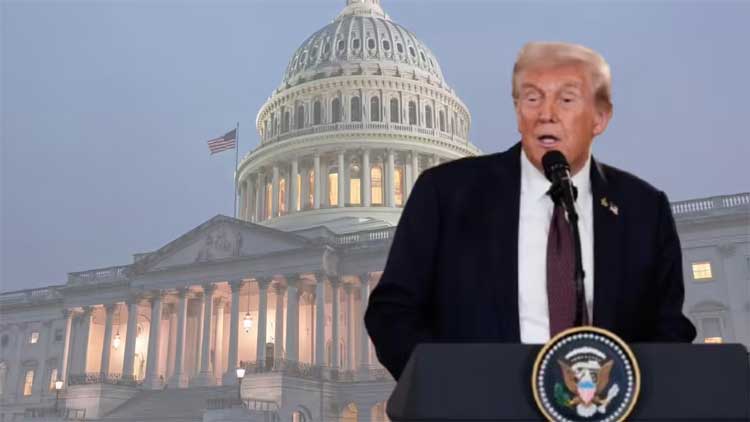
What began decades ago as a legal mechanism to enforce fiscal discipline has now evolved into a powerful political weapon — one that President Donald Trump appears intent on wielding to expand his control over the federal government.
The current government shutdown, already the second-longest in U.S. history with no end in sight, marks a striking transformation in how funding lapses are used in Washington. Once rooted in adherence to law, shutdowns have now become a tool for political leverage and presidential dominance.
From Legal Necessity to Political Weapon
The modern shutdown era began in 1980, when then–Attorney General Benjamin Civiletti under President Jimmy Carter issued a legal opinion interpreting the Antideficiency Act of 1870 as requiring agencies to halt operations once funding expired. The move was meant to uphold the law — not to create political crises.
Civiletti’s ruling, initially tied to a brief dispute involving the Federal Trade Commission, laid the groundwork for a practice that would later become one of Washington’s most visible symbols of dysfunction.
“I couldn’t have ever imagined these shutdowns would last this long or be used as a political gambit,” Civiletti said in a 2019 interview before his death in 2022.
How Shutdowns Became Partisan Battlegrounds
For more than a decade after Civiletti’s ruling, shutdowns were rare and short-lived. That changed in the mid-1990s, when Republican House Speaker Newt Gingrich clashed with Democratic President Bill Clinton over federal spending.
Those standoffs, while politically damaging for Republicans, established shutdowns as a bargaining tactic in budget negotiations. Another major shutdown came in 2013, when Tea Party Republicans faced off with President Barack Obama over the Affordable Care Act.
But under Trump, historians say, the shutdown has taken on a new dimension.
Trump’s Shutdown Strategy: Power Through Paralysis
Unlike his predecessors, Trump has used the funding lapse to consolidate power, reshaping spending priorities and punishing political opponents.
“I can’t believe the Radical Left Democrats gave me this unprecedented opportunity,” Trump wrote on his social media platform at the outset of the shutdown.
According to analysts, the administration has stretched the traditional rules of shutdown management, selectively funding military operations, redirecting research funds, and attempting to lay off thousands of federal workers, many in agencies aligned with Democratic priorities.
“This is a kind of freewheeling presidential appropriation power — contrary to the Constitution and the Antideficiency Act,” said Charles Tiefer, former acting general counsel for the House of Representatives.
At a recent White House luncheon, Trump reportedly introduced his budget director Russ Vought as “Darth Vader,” boasting that he was “cutting Democrat priorities and they’re never going to get them back.”
Democrats Dig In
Democrats have refused to support a Republican-backed bill to reopen the government, saying they won’t give in to Trump’s “power grab.”
“This isn’t just about health care or funding,” said Sen. Tim Kaine (D-Va.), whose state has been hit hard by the shutdown. “It’s about stopping a nonstop punishment parade — layoffs, canceled projects, pressure campaigns — that’s eroding our institutions.”
The shutdown’s toll is mounting: federal workers have gone nearly a month without pay, SNAP benefits are at risk of running out by November 1, and air travel delays are worsening amid staffing shortages.
Some Democrats worry the longer it lasts, the more authority Trump will amass.
“I’ve voted to end the shutdown because it empowers the president beyond what he would otherwise have,” said Sen. Angus King (I-Maine). “It damages the country and shifts power away from Congress.”
As the impasse drags on, one thing has become clear: a process once meant to uphold the law has become a test of political endurance — and a measure of how much unilateral power a modern president can seize in the absence of a functioning Congress.
Comments are closed.