
Trump Invites Colombia’s Petro to White House After Earlier Threat of Military Action

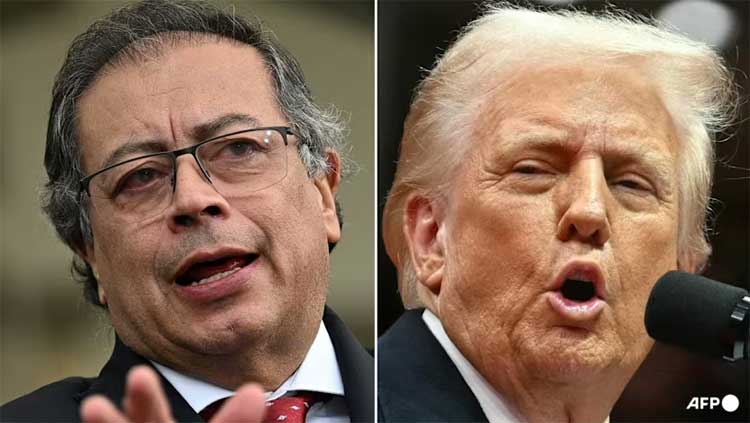
Days after publicly suggesting that a U.S. military operation against Colombia “sounds good”, U.S. President Donald Trump confirmed on Wednesday that arrangements are being made for Colombian President Gustavo Petro to visit the White House for talks, signaling a sudden diplomatic shift between the two capitals.
The announcement came after the leaders held their first phone conversation since Trump’s controversial remarks over the weekend. According to officials on both sides, the call focused on bilateral relations, including disagreements over drug trafficking and security cooperation. Trump praised Petro’s tone and described the exchange as respectful, while Petro—speaking to supporters at a rally in Bogotá—confirmed he had asked for a restart of dialogue between the countries.
“It was a great honor to speak with President Petro,” Trump wrote on social media, adding that he looked forward to meeting him “in the near future” in Washington. No specific date for the visit has yet been announced.
From Threats to Engagement
The shift in tone comes against a backdrop of escalating tensions between Washington and Bogotá in recent months. Since Trump returned to the White House in 2025, relations have soured over differences in narcotics policy, military actions in the region, and mutual accusations.
Last year, the Trump administration sanctioned Petro and members of his government over alleged links to cocaine trafficking—claims for which no credible evidence has been presented. The U.S. also revoked Petro’s visa and cut back aid as part of a broader pressure campaign tied to anti-drug efforts.
The latest flashpoint came after U.S. forces conducted a high-profile military operation to capture Venezuelan President Nicolás Maduro, drawing sharp criticism from Petro and other Latin American leaders. Over the weekend, Trump accused Petro of presiding over a “sick” nation that exported cocaine to the United States, and when asked about possible intervention, replied “sounds good to me”—comments that sent shockwaves through the region.
Petro’s Response and Regional Reaction
While Petro welcomed the diplomatic outreach, his earlier responses to Trump’s rhetoric were fiery. At one point, he warned that any attack on Colombian sovereignty would amount to “declaring war” and invoked his past as a member of Colombia’s M-19 guerrilla movement to underscore his resolve.
The dispute has also sparked widespread protests across Colombia, with demonstrators denouncing U.S. military actions in Venezuela and potential threats against their country. Tens of thousands rallied in cities including Bogotá and Cúcuta, chanting slogans opposing U.S. intervention and criticizing Trump’s handling of regional affairs.
Strategic Stakes and Next Steps
The U.S. and Colombia have long been key partners in the global counternarcotics effort, with Bogotá traditionally seen as a cornerstone of Washington’s engagement in Latin America. However, recent policies—including U.S. strikes on suspected drug vessels and the revocation of Colombia’s drug-war ally status—have strained cooperation. Analysts say the planned White House meeting could serve as a reset point, even as deep disagreements remain.
For now, both administrations appear to be testing a diplomatic détente, even after days of sharp exchanges and public threats. The outcome of the upcoming White House visit, and whether it yields concrete agreements on security and anti-drug cooperation, will be closely watched in capitals across the Western Hemisphere.
Comments are closed.