
Trump Imposes New Tariffs: India Faces 25% Duty, Pakistan Gets a Cut

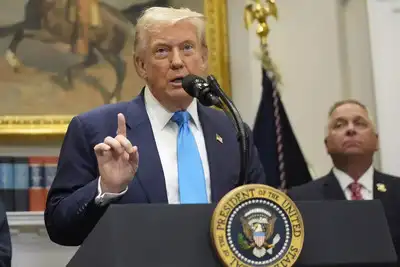
U.S. President Donald Trump announced a 25% tariff on all Indian goods entering the United States, effective August 7, 2025, accompanied by an unspecified penalty linked to India’s continued purchases of Russian oil and military equipment. This move, part of Trump’s aggressive “America First” trade policy, also saw Pakistan’s tariff rate reduced from 29% to 19%, following a U.S.-Pakistan deal to develop Pakistan’s oil reserves. The tariff differential has sparked debates about economic strategy, geopolitical alignments, and their impact on India’s $86.5 billion export market to the U.S. This article delves into the reasons behind these tariffs, their economic and sectoral impacts, India’s response, and the broader implications for U.S.-India relations amidst a global trade war.
Background: Trump’s Tariff Strategy and Global Trade War
Since his second inauguration in January 2025, President Trump has pursued a sweeping trade agenda aimed at reducing the U.S. trade deficit, which he declared a “national emergency” on April 2, 2025. His strategy includes imposing “reciprocal tariffs” on countries with perceived unfair trade practices or significant trade surpluses with the U.S. Key developments include:
-
April 2, 2025: Trump announced a baseline 10% tariff on nearly all U.S. imports, with higher rates for 68 countries and the EU, effective April 5, causing a stock and bond market crash.
-
Steel and Aluminum Tariffs: On March 12, 2025, a 25% tariff was imposed on steel and aluminum imports, raised to 50% on June 4, 2025, targeting countries like India and Brazil.
-
BRICS Criticism: Trump has criticized BRICS nations (Brazil, Russia, India, China, South Africa) for “anti-American policies,” imposing an additional 10% tariff on July 6, 2025, for BRICS-aligned countries.
-
Country-Specific Tariffs: By August 1, 2025, Trump signed an executive order imposing tariffs ranging from 10% to 41% (Syria) on 68 countries and the EU, effective August 7, 2025. India’s 25% tariff is among the higher rates, while Pakistan’s was lowered to 19%.
India, with a $41.2 billion trade surplus with the U.S. in 2024–25, faces scrutiny for its high tariffs (averaging 17%) and non-tariff barriers, which Trump labeled “strenuous and obnoxious.” Additionally, India’s purchase of discounted Russian oil (37% of its oil imports) and military equipment has drawn U.S. ire, particularly amid the Ukraine conflict. In contrast, Pakistan’s tariff reduction follows a U.S. deal to develop its oil reserves, with Trump hinting at potential oil sales to India.
Details of the Tariff Imposition
India’s 25% Tariff and Penalty
-
Effective Date: August 7, 2025, delayed from an initially announced August 1, 2025, to allow U.S. Customs to update systems.
-
Scope: The 25% tariff applies to all Indian goods entering the U.S., over existing tariffs (e.g., 50% on steel and aluminum, 25% on autos). An unspecified penalty, tied to India’s Russia ties, may further increase duties.
-
Affected Sectors:
-
Gems and Jewellery: Tariffs may rise to 30–38.5% (from 5–13.5%), impacting $10 billion in exports, including cut diamonds.
-
Telecom Products: Mobile components face a 25% tariff, affecting $6.5 billion in exports, including Apple’s iPhone production in India.
-
Apparel and Textiles: Duties may reach 31–37% (from 6–12%), threatening labor-intensive garment exports.
-
Food and Agriculture: Tariffs on agricultural goods will rise to 29–30% (from 14–15%), impacting products like rice and seafood.
-
Pharmaceuticals: $8.1 billion in exports may face higher costs, potentially disrupting U.S. supply chains for generic drugs.
-
-
Economic Impact: Approximately 10% of India’s $86.5 billion exports to the U.S. could be affected between July and September 2025, potentially weakening the rupee past ₹87 per USD and triggering capital outflows.
Pakistan’s Tariff Reduction to 19%
-
Context: Pakistan’s tariff was reduced from 29% to 19% following a U.S.-Pakistan deal to develop “massive oil reserves,” announced on July 30, 2025.
-
Implications: The deal aims to bolster Pakistan’s economy, with Trump suggesting Pakistan could supply oil to India in the future. This move aligns with Trump’s warmer relations with Pakistan, including hosting its army chief, Asim Munir, in June 2025.
-
Trade Dynamics: Pakistan exported $5.18 billion to the U.S. in 2023, primarily textiles and leather, benefiting from the lower tariff compared to India’s 25%.
Reasons for the Tariffs and Geopolitical Context
India’s Trade Practices
Trump has criticized India’s high tariffs (e.g., 45% on vegetable oils, 50% on apples) and non-tariff barriers, such as import-quality requirements, which he claims restrict U.S. exports ($45.3 billion in 2024). India argues its tariffs (17% average) are comparable to emerging economies like South Korea (13.4%) and China (7.5%), and the U.S. imposes high duties on dairy (188%) and cereals (193%).
India’s Russia Ties
India’s purchase of 37% of its oil from Russia and ongoing military equipment deals, including S-400 systems, have frustrated the U.S., particularly amid efforts to isolate Russia over the Ukraine conflict. U.S. Secretary of State Marco Rubio called India’s energy trade a “point of irritation,” despite acknowledging its strategic partnership. Trump’s additional penalty reflects this geopolitical tension, though details remain unclear.
U.S.-Pakistan Relations
Trump’s deal with Pakistan to develop oil reserves signals a strategic pivot, possibly to counterbalance India’s influence in South Asia and leverage Pakistan’s proximity to Afghanistan and Iran. The tariff reduction to 19% incentivizes Pakistan’s cooperation, contrasting with India’s higher tariff burden.
Stalled Trade Talks
Despite multiple rounds of negotiations, India and the U.S. failed to finalize a trade deal by Trump’s August 1 deadline. Key sticking points include India’s resistance to opening its agriculture and dairy sectors, citing the livelihoods of 700 million rural citizens, including 80 million smallholder dairy farmers. Trump’s tariff announcement is seen as a pressure tactic to force concessions.
India’s Response and Strategy
India’s Commerce Ministry issued a statement on July 30, 2025, noting it had “taken note” of Trump’s tariff decision and was studying its implications. The government emphasized its commitment to a “fair, balanced, and mutually beneficial” trade agreement, prioritizing the welfare of farmers, entrepreneurs, and MSMEs. Union Commerce Minister Piyush Goyal highlighted ongoing negotiations, with a U.S. trade delegation expected in New Delhi on August 25, 2025, for the sixth round of talks.
Strategic Moves
-
Highlighting Tariff Reductions: India plans to cite recent duty cuts, such as those in the 2025 Union Budget (lowering average tariffs to 10.6%), to counter Trump’s claims of high tariffs.
-
Protecting Key Sectors: India is likely to resist U.S. demands to open agriculture and dairy markets, prioritizing rural livelihoods.
-
Retaliatory Measures: While not yet announced, India may consider retaliatory tariffs on U.S. imports like oil ($4.5 billion), diamonds, and aircraft, though this risks escalating the trade war.
-
Geopolitical Balancing: India’s refusal to accept U.S. mediation in its conflict with Pakistan in May 2025 and its continued BRICS engagement may complicate negotiations.
Market Reaction
Indian benchmark indexes fell 0.9% on July 31, 2025, but later pared losses as investors viewed the tariffs as a negotiation tactic. Analysts warn of rupee depreciation and export disruptions if the tariffs persist beyond September 2025.
Sectoral and Economic Impacts on India
Key Affected Sectors
-
Gems and Jewellery: The U.S. accounts for over ₹83,000 crore ($10 billion) of India’s jewellery exports. Higher tariffs (30–38.5%) may reduce competitiveness, impacting MSMEs in Surat and Jaipur.
-
Pharmaceuticals: India’s $8.1 billion pharma exports, including generic drugs, face supply chain risks as U.S. consumers bear higher costs.
-
Textiles and Apparel: A 31–37% duty threatens India’s garment exports, potentially shifting orders to Bangladesh (20% tariff) or Pakistan (19%).
-
Telecom and Electronics: Apple’s $17 billion iPhone exports from India may face new barriers, prompting a reevaluation of its supply chain shift from China.
-
Oil Refining: Restrictions on Russian oil imports could force refiners like Reliance Industries to buy costlier oil, reducing margins and raising domestic fuel prices.
Broader Economic Implications
-
Export Losses: Bloomberg estimates 10% of India’s U.S. exports ($8.65 billion) could be impacted, affecting GDP growth projections for 2025–26.
-
Rupee Depreciation: The rupee may weaken past ₹87 per USD, increasing import costs and inflation.
-
Supply Chain Shifts: Companies may divert exports to markets like the EU or ASEAN, though these cannot fully replace the U.S. market.
-
Consumer Impact in the U.S.: Higher tariffs will raise prices for American consumers, with J.P. Morgan estimating an effective tariff rate of 18.2%, costing households up to $2,400 in 2025.
Geopolitical and Strategic Implications
U.S.-India Relations
The tariffs strain U.S.-India ties, despite their strategic partnership as a counterbalance to China. Trump’s warm rapport with Prime Minister Narendra Modi during his first term has cooled, with trust at its lowest since the 1990s, according to analyst Ashok Malik. India’s refusal to accept U.S. mediation in its May 2025 conflict with Pakistan and its BRICS alignment have further complicated relations.
U.S.-Pakistan Dynamics
Trump’s deal with Pakistan reflects a strategic alignment, possibly to secure influence in South Asia and access to Pakistan’s oil reserves. The tariff reduction to 19% and the oil deal signal preferential treatment, contrasting with India’s punitive tariffs. Trump’s suggestion that Pakistan could sell oil to India is provocative, given the two nations’ rivalry.
Russia and BRICS
India’s energy and defense ties with Russia, a key BRICS partner, are a flashpoint. The U.S. views India’s discounted oil purchases as sustaining Russia’s war economy, prompting the additional penalty. India’s commitment to BRICS and strategic autonomy may limit its concessions to the U.S., risking further trade tensions.
Policy Recommendations for India
To navigate this trade war, India should:
-
Accelerate Trade Talks: Prioritize concessions in non-sensitive sectors (e.g., machinery, chemicals) to secure tariff reductions, leveraging the August 25, 2025, talks.
-
Diversify Export Markets: Strengthen trade with the EU, ASEAN, and Africa to offset U.S. market losses.
-
Enhance Domestic Resilience: Boost MSME support and domestic manufacturing under Make in India to absorb export shocks.
-
Counter Geopolitical Narratives: Emphasize India’s strategic role in countering China and its recent tariff cuts to negotiate exemptions.
-
Prepare Retaliatory Measures: Develop targeted tariffs on U.S. imports like oil and aircraft, but use them sparingly to avoid escalation.
President Trump’s imposition of a 25% tariff on Indian goods, coupled with an unspecified penalty for Russia ties, marks a significant escalation in his global trade war, with India caught in the crosshairs. The tariff reduction for Pakistan to 19%, alongside a strategic oil deal, underscores shifting U.S. priorities in South Asia. For India, the tariffs threaten key export sectors like gems, pharmaceuticals, and textiles, while complicating its energy strategy and geopolitical balancing act. As India prepares for further negotiations, its ability to leverage recent tariff cuts, diversify markets, and maintain strategic autonomy will be critical. The coming months will test India’s economic resilience and diplomatic finesse, as it navigates a turbulent global trade landscape to safeguard its national interests and sustain its growth trajectory toward Viksit Bharat by 2047.
Comments are closed.