
Trump Claims Ceasefire Between Iran and Israel After Iran’s Missile Strike on US Base in Qatar

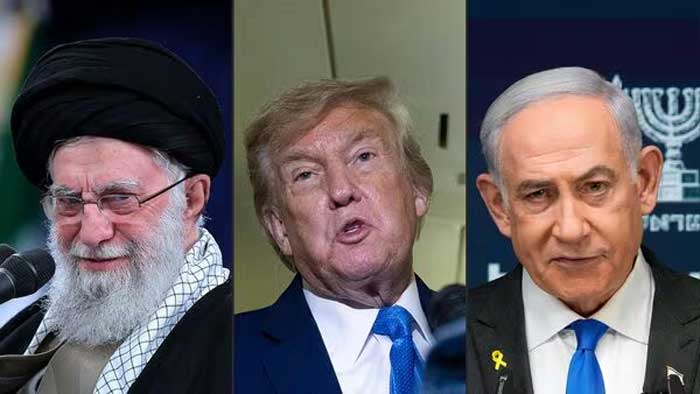
Former US President Donald Trump claimed Monday that Israel and Iran had agreed to a “complete and total ceasefire” just hours after Iran launched a limited missile strike on a US military base in Qatar in retaliation for American bombing of its nuclear sites.
Iran signaled it would halt its attacks if Israel stopped its strikes by 4 a.m. Tehran time on Tuesday. While Israel did not officially acknowledge any ceasefire, reports of its strikes ceased after that time. However, Iranian Foreign Minister Abbas Araghchi denied that any agreement had been reached, stating on social media, “As of now, there is NO ‘agreement’ on any ceasefire… The final decision… will be made later.”
Trump, posting on Truth Social, declared a phased 24-hour ceasefire would begin around midnight Eastern time, promising it would bring an “Official END” to the war. But the Israeli military declined to comment, and Prime Minister Benjamin Netanyahu’s office did not immediately respond.
Iranian state TV anchors referred to a “Trump-claimed ceasefire” and noted fresh Israeli strikes around Tehran, Urmia, and Rasht, including a residential area, around the time of Trump’s statement.
Iran and Israel had exchanged intense attacks since the weekend. Iran launched missiles and drones at Israeli cities, including Tel Aviv and Haifa, while Israel responded with strikes on government buildings and repression forces in Tehran. In a rare move, Israeli forces targeted symbolic sites like the gate of Tehran’s Evin prison, known for housing political prisoners and dual nationals.
The Iranian missile attack on the US-operated Al Udeid Air Base in Qatar was preceded by a warning to Washington, which helped prevent casualties. Iran said the number of missiles fired matched the number of US bombs dropped on its nuclear sites. Trump described Iran’s retaliation as a “very weak response.” Qatar condemned the strike as a violation of its sovereignty, though most of the missiles were intercepted.
Iran appeared to signal a desire to de-escalate. Iranian President Masoud Pezeshkian wrote, “We neither initiated the war nor seek it. But we will not leave invasion… without answer.”
Tensions spiked after US stealth bombers struck three Iranian nuclear facilities over the weekend, prompting fears of a wider regional conflict. Iran warned the strikes crossed a “very big red line.” Trump raised eyebrows by hinting at regime change, asking, “If the current Iranian Regime is unable to MAKE IRAN GREAT AGAIN, why wouldn’t there be a Regime change???” The White House later said he was “simply raising a question.”
Despite public denials, Israeli officials privately indicated they hoped for a ceasefire that could lead to renewed nuclear talks between the US and Iran. However, they remained prepared for a prolonged low-intensity conflict if necessary.
Israeli strikes also targeted roads near Iran’s underground Fordo nuclear enrichment facility, which had already been hit in Sunday’s US attack. UN nuclear watchdog chief Rafael Grossi said heavy damage was expected at Fordo, though Iranian officials claimed sensitive materials had been removed beforehand.
Monday’s Iranian attacks included missile strikes on Tel Aviv and Haifa, and air defense systems were reportedly active in Jerusalem. No major casualties were reported in Israel from the latest wave.
The human toll of the conflict continues to mount. According to the Human Rights Activists group based in Washington, Israeli strikes in Iran have killed at least 974 people, including 387 civilians. In Israel, at least 24 people have died and over 1,000 have been injured.
The US evacuated around 250 citizens and their families from Israel over the weekend amid escalating violence, though approximately 700,000 Americans—many dual nationals—remain in the country.
Russian President Vladimir Putin, a close Iranian ally, condemned the US and Israeli strikes as “absolutely unprovoked aggression” after meeting with Iran’s foreign minister in Moscow, underscoring the international stakes of the crisis.
As of Tuesday morning, while relative calm prevails, the lack of clear ceasefire confirmation from all sides leaves the region on edge—balancing between a tentative pause and the risk of further escalation.
Comments are closed.