
Trump Announces U.S.-Japan Trade Deal Featuring Lower Auto Tariffs and Major Investments

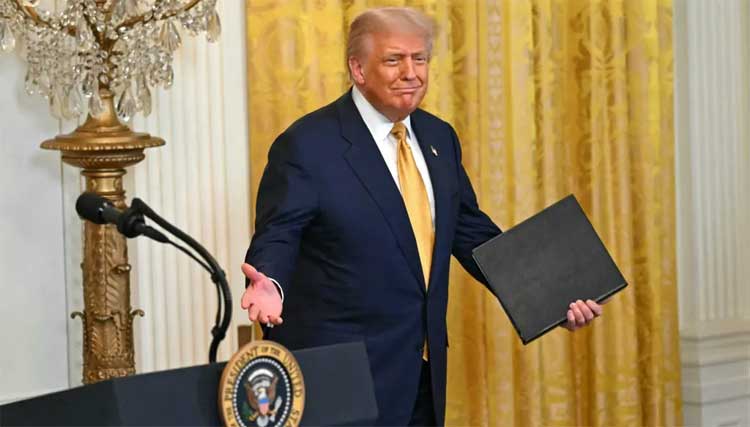
Former President Donald Trump on Tuesday announced a new U.S.-Japan trade agreement that includes a reduction in tariffs on Japanese auto imports and pledges of significant Japanese investment in the United States.
In a post on Truth Social, Trump claimed the deal involves $550 billion in Japanese investments and expanded market access for American exporters of cars, trucks, rice, and agricultural products. The announcement followed a White House meeting with Japan’s chief trade negotiator, Ryosei Akazawa.
Trump said the agreement reflects “a very exciting time for the United States of America,” adding, “We will continue to always have a great relationship with the country of Japan.”
Auto Tariffs Lowered, but Key Questions Remain
While Trump’s post did not specify changes to auto tariffs — which currently stand at 25% on Japanese vehicles — Japan’s public broadcaster NHK, citing a government official, reported that the new deal reduces that rate to 15%. The White House has not released formal details, and Reuters could not independently confirm the tariff cut.
Markets responded positively: shares of Honda, Toyota, and Nissan surged more than 6%, while the yen strengthened against the dollar and U.S. equity futures gained.
Japanese Prime Minister Shigeru Ishiba confirmed receiving an initial report from his delegation in Washington but declined to comment on specifics. He remains under political pressure at home after his ruling coalition lost control of Japan’s upper house in elections on Sunday. Ishiba said he would not decide whether to resign until more information on the deal was available.
Economic and Political Implications
Japanese economist Kazutaka Maeda said the tariff reduction could help shield Japan’s economy from recession, while Kristina Clifton of Commonwealth Bank of Australia called the deal “a better outcome” for Japan, especially given Trump’s earlier threats of steeper tariffs.
Autos remain a central tension in U.S.-Japan trade. In 2024, the U.S. imported over $55 billion in Japanese vehicles and auto parts, compared to just $2 billion in U.S. auto exports to Japan — a persistent imbalance Trump has long criticized.
The deal may also pave the way for joint energy projects, including a long-sought natural gas pipeline in Alaska, which Japanese officials had previously considered unfeasible. The project, among others favored by Trump, gained traction during the trade negotiations.
Trump’s Race to Secure Trade Deals Before August 1
The announcement comes amid a broader push by Trump to finalize a series of trade deals before an August 1 deadline, after which new and higher tariffs are scheduled to take effect. Trump has used the looming tariff increases as leverage in negotiations with multiple countries.
To date, Trump has claimed framework agreements with Britain, Vietnam, Indonesia, and paused escalating tariffs on China. However, many of these deals remain vague, with few official details released by the foreign governments involved.
As has become a pattern, Trump revealed the Japan deal unilaterally and via social media, with limited public documentation. Nearly three weeks after Trump announced a similar deal with Vietnam, neither country has issued a formal statement outlining its terms.
European Union trade negotiators are expected in Washington on Wednesday for further talks.
Comments are closed.