
Trump Administration’s “Make America Healthy Again” Report Sparks Backlash Over Vaccine, Autism Focus

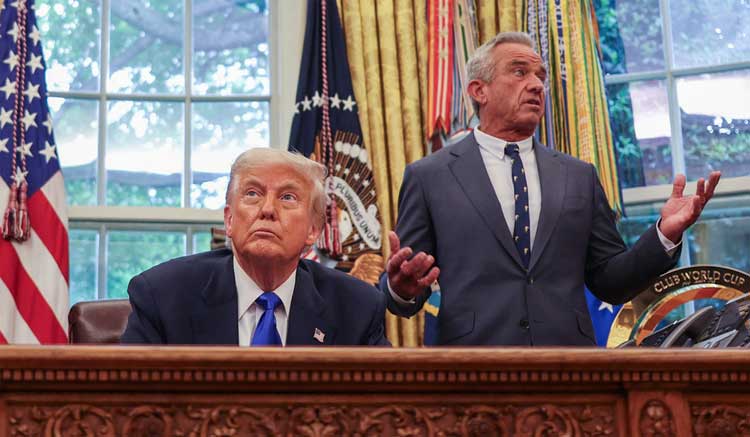
The Trump administration on Tuesday unveiled its latest “Make America Healthy Again” (MAHA) report, directing public health and environmental agencies to prioritize investigations into vaccine injuries, prescription drug use, and the causes of autism.
The 20-page report, overseen by Health and Human Services Secretary Robert F. Kennedy Jr., echoes many of the themes championed by Kennedy’s politically diverse MAHA movement. While it promises to eliminate childhood diseases and improve children’s health, it lacks detailed regulatory proposals to overhaul U.S. healthcare.
Among its most controversial recommendations is a plan to expand federal investigations into vaccine injuries. Kennedy pledged to “recast the entire program” for reviewing reported cases, insisting that such reports should be welcomed to improve product safety. Currently, the CDC investigates vaccine injury claims, but Kennedy criticized the process and noted doctors are not compensated for filing complaints.
The report’s release comes amid mounting criticism of Kennedy’s leadership at the CDC, which was plunged into turmoil last month after he abruptly fired his chosen director and other senior officials resigned in protest. Lawmakers have since grilled him over what they describe as an anti-vaccine agenda.
Medical experts also raised alarms. Dr. Susan J. Kressly, president of the American Academy of Pediatrics, warned that Kennedy’s rhetoric, combined with Trump administration budget cuts to Medicaid and other programs, could worsen child health outcomes. “It lacks details on how the administration plans to address those issues and omits key drivers that harm children’s health, including gun violence and environmental hazards,” she said.
The final draft of the MAHA report, slightly revised from a version leaked in August, also calls for the National Institutes of Health to link health insurance claims, medical records, and wearable-device data to study chronic diseases and conditions such as autism. Kennedy has long pledged to identify the cause of autism but has not revealed specifics of the promised research effort.
On Tuesday evening, Trump signed a memorandum implementing the report’s first recommendation: stricter enforcement of pharmaceutical advertising standards. Officials said hundreds of warning letters would soon go out to companies running misleading ads on TV, online platforms, and through influencers.
The report also touches on issues ranging from ultraprocessed foods to water quality and fluoride, while tasking NIH—despite facing a 40% budget cut—with spearheading much of the proposed research.
Comments are closed.