
Trump Administration Clarifies $100,000 H-1B Fee Will Not Apply to Existing Visa Holders or Students in the U.S.

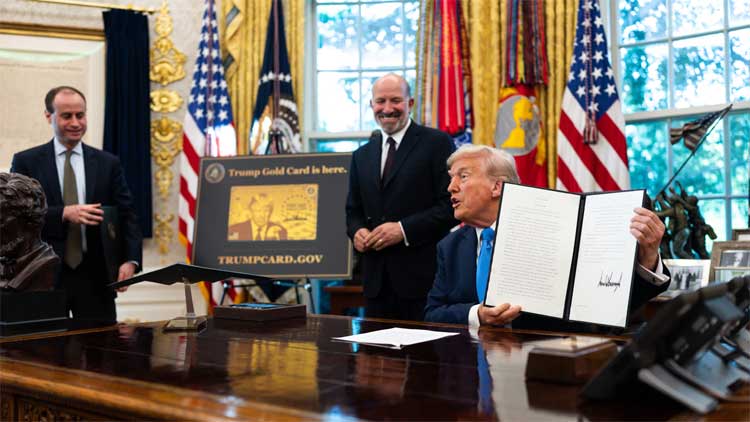
In a major relief for thousands of Indian professionals and students in the United States, the Trump administration has clarified that recent international graduates and others already in the country will not be subject to the new $100,000 H-1B visa fee introduced last month. Officials also confirmed that existing H-1B visa holders are exempt from the steep charge.
The clarification follows weeks of confusion after President Donald Trump’s proclamation, which imposed an annual $100,000 (₹90 lakh) fee on employers sponsoring foreign workers in specialty occupations. The policy, set to take effect from September 21, sparked widespread concern among Indian professionals, U.S. tech firms, and immigration attorneys.
Relief for Current Visa Holders and Students
In new guidance, the U.S. Citizenship and Immigration Services (USCIS) said the fee does not apply to anyone already in the country on a valid visa, including F-1 students, L-1 intra-company transferees, and H-1B holders seeking renewals or extensions.
The proclamation “does not apply to any previously issued and currently valid H-1B visas, or any petitions submitted prior to 12:01 a.m. ET on September 21, 2025,” the agency said. It also clarified that H-1B holders can continue to travel freely in and out of the U.S., addressing one of the biggest concerns raised after the fee was announced.
Importantly, international students changing status from F-1 to H-1B will also be exempt, easing fears among recent graduates working under Optional Practical Training (OPT).
Why Indian Workers Were Most Affected
The decision comes as a major reprieve for Indian professionals, who form the backbone of the H-1B program. Over 300,000 Indian nationals currently work in the U.S. on H-1B visas, mostly in the tech and services sectors.
Indians account for nearly 70% of all new H-1B visas, followed by Chinese nationals at around 12%. The visa allows highly skilled workers to stay in the U.S. for up to three years, with one possible three-year extension.
Previously, H-1B application fees ranged from $215 to $5,000, depending on company size. The new $100,000 levy — up to 100 times higher — would have exceeded the median annual salary of many new H-1B workers, prompting experts to warn it could “effectively kill the program” by pricing out smaller employers and startups.
Broader Implications for the Indian-American Community
The H-1B route has long been a key pathway for upward mobility among Indian families in the U.S. Researchers behind The Other One Percent note that the visa program played a central role in making Indian-Americans one of the most educated and highest-earning immigrant groups.
When dependents are included, H-1B holders make up roughly one-fourth of the three million–strong Indian-American community. Major Indian IT firms such as Infosys, TCS, and Wipro rely on the program to deploy engineers to U.S. client sites, while American tech giants — including Amazon, Google, and Microsoft — depend heavily on Indian H-1B talent.
Political Reactions to Trump’s Visa Fee
The $100,000 fee announcement drew sharp criticism both in the U.S. and India. U.S. Commerce Secretary Howard Lutnick defended the measure, saying it was intended to attract “high earners” and discourage hiring “low earners who take jobs from Americans.”
In India, opposition leaders accused the Modi government of failing to safeguard the interests of Indian workers. Rahul Gandhi said the administration had “once again abandoned Indian professionals abroad,” while Congress chief Mallikarjun Kharge called the new fee a “birthday gift” from Trump to Modi, referencing the U.S. president’s recent congratulatory call to the prime minister.
The Indian government said it was studying the new policy’s implications. Meanwhile, Prime Minister Narendra Modi, speaking in Gujarat, urged for “self-reliance,” declaring that “India’s only real enemy is dependence on other countries.”
Comments are closed.