
Trump Abruptly Exits G7 Summit Amid Escalating Iran-Israel Conflict

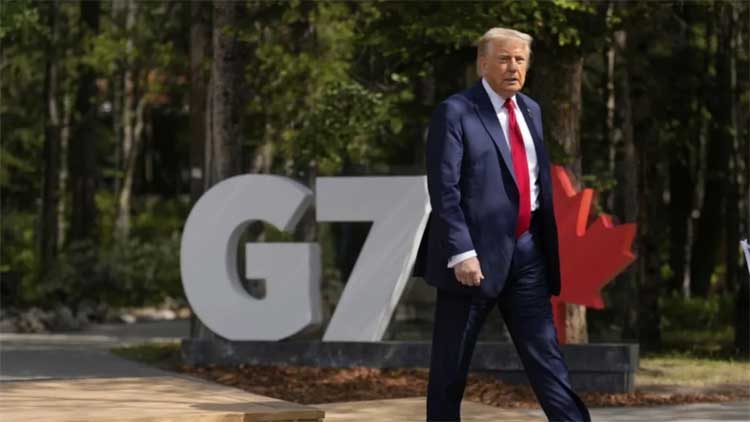
President Donald Trump departed the Group of Seven (G7) summit a day early on Monday, citing the escalating conflict between Israel and Iran. The U.S. president issued a stark warning on social media just hours before leaving, urging: “Everyone should immediately evacuate Tehran!”
The summit, hosted in the Canadian Rockies, was intended to address key global flashpoints—including Ukraine, Gaza, and trade—but was overshadowed by the growing confrontation in the Middle East. Four days earlier, Israel had launched a sustained aerial assault on Iranian targets, intensifying fears of regional war.
Trump’s Stark Warning on Iran
At the summit, Trump declared that Iran must “curb its nuclear program before it’s too late,” adding that Iranian leaders “would like to talk,” but had already missed a 60-day window to reach an agreement before the Israeli strikes began. When asked about possible U.S. military involvement, Trump replied tersely, “I don’t want to talk about that.”
Hours later, his tone turned graver. “They have to make a deal,” he said again—before posting the evacuation warning online and skipping a series of Tuesday meetings on Ukraine and global trade.
White House Press Secretary Karoline Leavitt later confirmed: “Much was accomplished, but because of what’s going on in the Middle East, President Trump will be leaving tonight after dinner with Heads of State.”
G7 Allies Urge De-escalation
While Trump signaled a unilateral path, key European leaders—UK Prime Minister Keir Starmer, French President Emmanuel Macron, German Chancellor Friedrich Merz, and Italian Premier Giorgia Meloni—held informal talks late Sunday on how to de-escalate the Iran-Israel crisis.
Chancellor Merz told reporters Germany was working on a joint communique that would affirm: “Iran must under no circumstances be allowed to acquire nuclear weapons-capable material.” The European bloc emphasized diplomacy over confrontation, hoping to prevent the conflict from spreading across the region.
‘America First’ and Global Isolation
Trump’s early departure reflected not only the urgency of the Iran crisis but also his increasingly go-it-alone approach to global affairs. He reiterated his opposition to past G7 decisions—specifically criticizing the 2014 expulsion of Russia—and floated the idea of adding China to the group.
“AMERICA FIRST means many GREAT things, including the fact that IRAN CAN NOT HAVE A NUCLEAR WEAPON. MAKE AMERICA GREAT AGAIN!!!” Trump posted on Truth Social.
Trump also seemed more interested in pushing trade grievances than building global consensus. During the summit, he signed a trade framework with the UK—initially announced in May—and touted it as “protection” for Britain, saying, “I like them, that’s why. That’s their ultimate protection.”
Trade Tensions Simmer
The Trump administration has implemented steep tariffs: 50% on steel and aluminum, 25% on automobiles, and a 10% baseline tax on imports from most countries. While some allies—including the UK—secured quota-based relief, others like Canada and Mexico still face tariffs up to 25%, nominally tied to anti-fentanyl efforts.
German Chancellor Merz admitted, “There will be no solution at this summit, but we could perhaps come closer in small steps.”
Canadian Prime Minister Mark Carney, who met with Trump on Monday, confirmed that both leaders “agreed to pursue negotiations toward a deal within the coming 30 days.”
Fallout from Trump’s Exit
Trump was scheduled to meet Tuesday with Mexican President Claudia Sheinbaum and Ukrainian President Volodymyr Zelensky. Zelensky had planned to discuss a potential U.S. defense package for Ukraine—talks that are now in question following Trump’s sudden departure.
As reporters were escorted from Monday’s opening session, Carney reportedly said to Trump, “Mr. President, I think you’ve answered a lot of questions already”—a quiet acknowledgment of how Trump’s declarations on Iran, Russia, and China had dominated the summit narrative.
Despite G7 leaders’ efforts to maintain stability, Trump’s early exit and confrontational stance underscored the increasingly unpredictable dynamics of global diplomacy.
Comments are closed.