
‘Too Little, Too Late’: Experts Criticise EU’s New 2040 Climate Target Ahead of COP-30 in Brazil

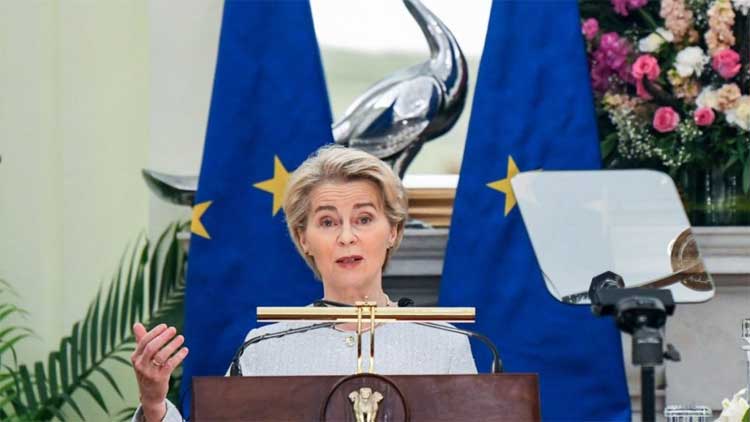
Days before the 30th United Nations Climate Change Conference (COP-30) opens in Belém, Brazil, the European Union (EU) has adopted its 2040 climate target and finalised its Nationally Determined Contributions (NDCs) for 2035. But climate experts say the move lacks ambition and urgency, calling it a “missed opportunity” for stronger global leadership.
“Ready for Belém! Just arrived at COP-30 with good news. The EU has just adopted its NDC for 2035—66–72% in GHG reduction by 2035. A milestone on our path to reaching climate neutrality by 2050,” European Commission President Ursula von der Leyen announced on X.
The EU’s New Climate Targets
In negotiations held earlier this week, EU member states agreed to commit to a 90% reduction in greenhouse gas emissions by 2040 compared to 1990 levels. The framework includes an 85% domestic reduction and up to 5% reliance on international carbon credits.
“The next step will be negotiations with the European Parliament,” the European Commission said in a statement on Wednesday. “The Commission stands ready to help ensure a swift agreement while maintaining the essence of the proposal.”
The EU also formally adopted a 2035 target to cut emissions by 66.25%–72.5%, a range first floated in its earlier “statement of intent.” The bloc said it is heading into COP-30 with “a clear message that Europe is staying the course and delivering on its climate commitments, both at home and on the global stage.”
Background: Why the Target Matters
Under the European Climate Law, the EU must set an intermediate climate target for 2040 to chart the path toward net-zero emissions by 2050. The law required this target to be presented within six months of the first Global Stocktake of the Paris Agreement, completed in 2023.
The European Commission submitted its proposal in July 2025, which is now under the EU’s ordinary legislative procedure and forms the basis of the new NDC.
Critics Call It a Missed Opportunity
Environmental groups have criticised the EU’s targets as insufficient to meet global climate goals.
“The EU has settled for too little, too late,” the World Wildlife Fund (WWF) said in a statement. The organisation noted that when a range is adopted, only the lower bound is typically pursued — in this case, 66.25%.
“Member states are claiming they have agreed on a 90% target, but that’s just sleight of hand,” said Michael Sicaud-Clyet, Climate Policy Officer at WWF EU. “Once you strip off the offsets and the potential emergency break for carbon sinks, the real figure will be lower than 85%. The EU should lead by example, not by loophole.”
Under the Paris Agreement, carbon offsets allow countries to compensate for emissions by funding projects that remove or reduce greenhouse gases elsewhere. But climate advocates argue such mechanisms often delay direct domestic action.
“Adding a review clause after five years only worsens the issue,” Sicaud-Clyet added. “It turns what should be a stable, long-term direction for investors and industries into a moving target. Targets must provide clarity — not uncertainty.”
Looking Ahead to COP-30
As the world convenes in Belém for COP-30, the EU’s new commitments will likely be under close scrutiny. While the bloc has historically positioned itself as a leader in global climate policy, experts warn that its new roadmap may not be ambitious enough to keep the Paris Agreement’s 1.5°C goal within reach.
Comments are closed.