
Thousands of glaciers set to vanish every year by the 2050s, study warns

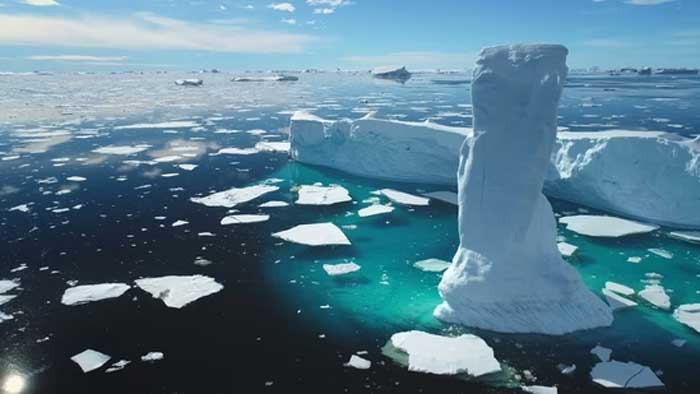
A new study published in Nature Climate Change warns that up to 4,000 glaciers worldwide could disappear every year by the mid-2050s if global warming continues on its current path, underscoring the profound consequences of climate policy decisions on Earth’s ice reserves.
Glacier loss set to accelerate sharply
Led by glaciologist Lander Van Tricht of ETH Zurich and Vrije Universiteit Brussel, the study shifts focus from how much ice is lost to how many individual glaciers vanish entirely each year — a metric rarely quantified on a global scale.
Researchers estimate that around 1,000 glaciers are currently disappearing annually. Depending on future emissions trajectories, that figure could double or even quadruple within the next few decades.
Even under the most optimistic scenario — limiting global warming to 1.5 degrees Celsius — glacier loss is projected to peak at roughly 2,000 glaciers per year by around 2041. Under a 2.7°C warming scenario, which aligns closely with existing government pledges, about 3,000 glaciers would disappear annually between 2040 and 2060. In a worst-case scenario of 4°C warming, losses could reach as many as 4,000 glaciers per year by the mid-2050s.
The authors say the accelerating disappearance of glaciers could become one of the most visible and symbolic markers of global climate failure.
Loss is inevitable — but scale depends on action
The study notes that significant glacier loss is already locked in due to past emissions. However, the scale and speed of future losses remain highly sensitive to political and policy choices.
Regions with smaller glaciers, such as the European Alps and the subtropical Andes, are expected to reach peak glacier loss earlier than areas with larger ice masses. In these regions, up to half of all glaciers could disappear within the next two decades. By the end of the century, glacier loss in the Alps is projected to slow to near zero — not because conditions improve, but because few glaciers will remain.
In contrast, areas with larger glaciers, including Greenland and parts of Antarctica’s periphery, are likely to see peak losses later in the century. Globally, glacier disappearance rates are expected to decline toward the late 21st century, largely because the most vulnerable glaciers will already have vanished.
While sea-level rise has dominated climate discussions, the researchers argue that tracking the number of glaciers lost each year offers a stark and emotionally powerful measure of the accelerating climate crisis.
Comments are closed.