
The Lock Net: China’s Internet Censorship and Global Implications in 2025

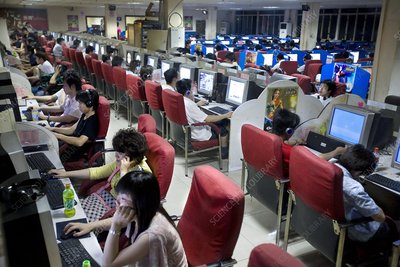
China’s internet censorship system, often referred to as the “Great Firewall,” has evolved into a sophisticated and multi-layered framework dubbed the “Lock Net” by researchers Laura Edelson and Jessica Batke in their June 30, 2025, investigation published by ChinaFile. This system, characterized by network-level filtering, service-level controls, and pervasive self-censorship, not only shapes China’s digital landscape but also influences global internet dynamics. As of August 7, 2025, recent developments, including tightened VPN restrictions, AI-driven surveillance, and regional censorship disparities, underscore China’s silent rewriting of internet rules. This article explores the mechanics of the Lock Net, its recent advancements, domestic impacts, and global ramifications, drawing on the latest reports and analyses.
The Mechanics of the Lock Net
The Lock Net operates on three reinforcing levels, as outlined by Edelson and Batke:
-
Network-Level Censorship: The Great Firewall blocks foreign content at China’s borders, targeting over 200,000 domains as of 2024, including Western media like The New York Times, Reuters, and social platforms like Facebook and YouTube. It uses DNS spoofing, IP blocking, URL filtering, and deep packet inspection to control cross-border traffic.
-
Service-Level Censorship: Domestic platforms like WeChat and Sina Weibo are legally required to enforce real-name registration and filter content using keyword algorithms and manual reviews. For instance, WeChat’s algorithms, documented by Citizen Lab in 2021, train on monitored content to block sensitive terms like “Tiananmen Square” or “Hong Kong protests.”
-
Self-Censorship: Vague laws, such as the 2024 State Secrets Law, and intermittent enforcement—like “invitations to tea” with police—encourage users to avoid sensitive topics. A 2022 study estimated only 3% of Chinese netizens use VPNs, reflecting widespread compliance due to fear of repercussions.
This multi-layered system, managed by the Cyberspace Administration of China (CAC) and the Central Propaganda Department, ensures information aligns with the Chinese Communist Party’s (CCP) narrative, prioritizing state security and social stability.
Recent Developments in 2025
As of August 7, 2025, China’s censorship regime has seen significant advancements:
-
Enhanced AI Surveillance: The Ministry of Public Security unveiled new AI tools in May 2025, capable of monitoring VPN users and analyzing 30 billion Telegram messages, enhancing real-time censorship capabilities. These tools use pattern-matching to block encrypted traffic with human-readable content, bypassing the need for advanced AI algorithms.
-
Regional Censorship in Henan: A Great Firewall Report study (May 2025) found Henan residents face five times more website blocks than the national average, affecting tens of millions. This regional disparity, targeting 100,000 additional domains, signals a shift toward localized control, possibly to curb dissent in populous areas.
-
VPN Crackdowns: The CAC has intensified restrictions on unauthorized VPNs, with developers and sellers facing up to seven years in prison. Licensed VPNs, compliant with censorship and backdoor access laws, are now mandatory for state enterprises, reducing access to uncensored internet. In July 2025, disruptions to popular VPN services were reported, further limiting circumvention tools.
-
Generative AI Regulations: October 2023 rules banning AI content that “incites subversion” were enforced in 2025, with companies like Baidu ordered to align large language models with CCP ideology. This has stifled innovation and restricted chatbot functionalities.
These measures, part of Xi Jinping’s vision of “cyberspace sovereignty,” aim to create a national intranet that connects to but is isolated from the global internet, as articulated at the 2015 World Internet Conference.
Domestic Impacts
The Lock Net profoundly shapes China’s digital and social landscape:
-
Suppressed Dissent: The 2022 zero-COVID protests, sparked by a deadly Urumqi fire, saw rapid censorship of social media posts and search restrictions on platforms like Sina Weibo. The CAC ordered increased moderation, arresting protesters and scrubbing references to circumvention tools. Despite this, coded language like “F4” for Wuhan officials shows netizens’ resilience.
-
Journalistic Constraints: Independent media like Caixin face financial strain from censorship, with ad hoc directives favoring state media. In 2025, journalists reporting on labor protests in Sichuan were detained, and posts about economic slowdown were deleted, reflecting tightened controls post-COVID.
-
Social Media Control: WeChat’s monitoring has led to self-censorship among Uyghurs, who block overseas relatives to avoid detention. The 2021 Personal Information Protection Law (PIPL) and 2024 State Secrets Law further restrict data sharing, chilling online expression.
-
Economic Censorship: Negative economic news, critical amid China’s 4.7% GDP growth in Q2 2024, is systematically censored. Financial platforms like Wallstreetcn.com were taken offline in 2025 for unspecified violations, highlighting the CAC’s broad authority.
A 2019 study by Yuyu Chen and David Y. Yang found that students with VPN access were 42.4% more aware of global protests, suggesting censorship limits political awareness and fosters negative perceptions of China’s governance.
Global Implications
The Lock Net’s influence extends beyond China, reshaping global internet dynamics:
-
Content Leakage: As internet traffic routes through China, foreign users in countries like Thailand may face blocks on sites like ChinaFile if censored in China. This disrupts global access, as seen with Marvel Rivals, a game co-developed by NetEase, which embeds Beijing’s censorship rules, affecting players worldwide.
-
Corporate Compliance: Companies like Apple, which removed VPN apps from its China store in 2017, and Google, criticized for its censored Dragonfly project, face pressure to align with Chinese rules, potentially globalizing censorship standards.
-
AI and Technology Exports: Chinese AI tools, trained on censored data, are exported globally, embedding CCP biases. This raises concerns about surveillance and data privacy in countries adopting these technologies.
-
Cyber Sovereignty Advocacy: China’s push for “internet sovereignty” at forums like the UN influences authoritarian regimes, promoting state-controlled internet models over open systems.
Resistance and Circumvention
Despite the Lock Net’s efficacy, Chinese netizens employ creative tactics:
-
Coded Language: Terms like “rice bunny” (mi tu) for #MeToo and Winnie the Pooh for Xi Jinping evade filters, though censors adapt quickly.
-
VPN Usage: An estimated 20 million users accessed VPNs in 2018, though this dropped to 3% by 2022 due to crackdowns. Tools like Tor and proxy servers remain in use, but face increasing blocks.
-
Online Activism: The 2022 White Paper protests and posts under Li Wenliang’s Weibo account show persistent dissent, with netizens archiving censored content using emojis or translations.
However, the CAC’s Level I Internet Emergency Response, used during the 2022 protests, restricts cross-border content dissemination, limiting global awareness of Chinese dissent.
Challenges and Future Outlook
The Lock Net faces challenges:
-
Technological Evasion: AI-driven circumvention tools, like those developed by GreatFire.org, challenge censors, though authorities counter with advanced surveillance.
-
Economic Costs: Censorship slows internet speeds, with Shanghai’s 209.4 Mbps contrasting Xinjiang’s 20 Mbps, impacting economic productivity.
-
Global Pushback: Western calls for open internet, as voiced by the U.S. State Department in 2015, urge China to lift blocks, though Beijing’s “cyberspace sovereignty” stance prevails.
Looking ahead, China’s investment in 5G (2.2 million base stations by 2022) and AI surveillance suggests the Lock Net will grow more sophisticated, potentially isolating China’s internet further while influencing global standards.
Comments are closed.