
The climate price of cooling: How air conditioning could drive global warming by 2050

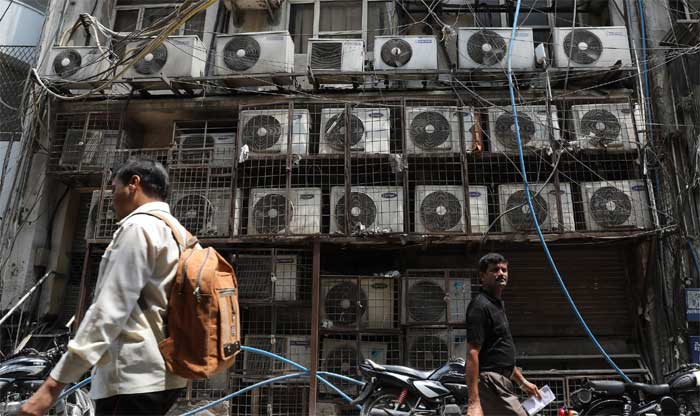
It’s a double-edged sword. As the planet warms, more people are switching on air conditioners to cope with rising heat. But while AC keeps us comfortable, it also consumes enormous amounts of electricity, emits greenhouse gases and, paradoxically, contributes to the very climate crisis we’re trying to fight.
A new study published in Nature Communications warns that by 2050, air-conditioning-related emissions could raise the global average temperature by up to 0.05°C under a middle-of-the-road climate scenario. The main culprits are carbon emissions from power generation and the leakage of chemical refrigerants used in cooling systems.
Rather than focusing solely on temperature rise, the researchers adopted a broader lens, analysing how climate change, cooling demand and economic growth interact and amplify future warming. They assessed how factors such as humidity and rising incomes could boost AC ownership, then fed the data into a climate simulator to estimate the overall warming impact.
The team evaluated five future climate pathways — scenario models commonly used by the Intergovernmental Panel on Climate Change — ranging from rapid green energy adoption to continued heavy reliance on fossil fuels.
The cost of staying cool
The study identifies rising incomes, rapid urbanisation and falling appliance prices as the key drivers of AC growth. Under the SSP245 “middle-of-the-road” scenario, income growth alone accounts for 190% of the projected increase in global AC consumption by 2050. While electricity demand is a major contributor to emissions, refrigerant leaks could make up as much as 60% of total AC-related pollution by mid-century.
A striking finding is the imbalance between cooling demand and actual access. Wealthier regions, which often face milder heat, consume the bulk of air conditioning, while hotter, lower-income countries use far less. Bridging this cooling gap using current technologies, however, could add between 14 and 146 billion tonnes of greenhouse gases to the atmosphere.
The researchers estimate that rising incomes in low-income regions alone could drive demand for an additional 94 million AC units at medium-income levels, 150 million at high-income levels, and over 220 million at the highest-income tiers. Factoring in expanded usage and longer operating hours, this could contribute an extra 0.003°C to 0.05°C of warming even under the most optimistic SSP119 pathway — underscoring the trade-off between equitable access to cooling and additional climate impact.
What can be done?
To address the challenge, the authors propose a two-pronged strategy: rapidly transitioning to cleaner energy sources while phasing out high-impact chemical refrigerants, and redesigning buildings and cities to reduce dependence on air conditioning in the first place. Without such measures, staying cool could come at an increasingly high environmental cost.
Comments are closed.