
Tharoor’s Critique of Rahul, Dynasties Becomes BJP’s Bihar Election Weapon

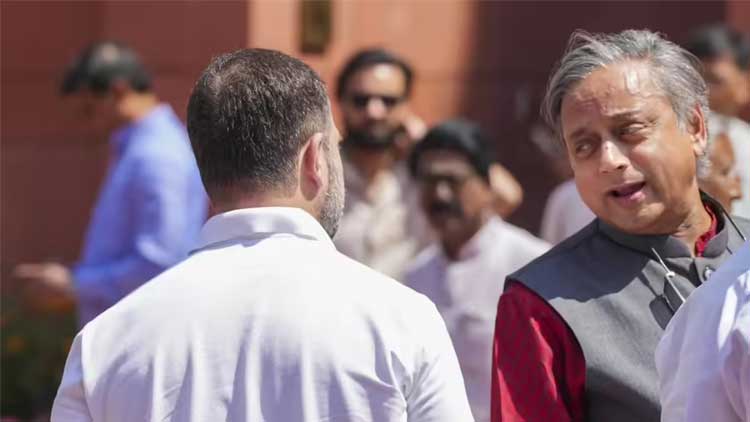
A sharp critique of political dynasties by Congress MP Shashi Tharoor has given the BJP fresh ammunition just days before the Bihar assembly election. In an article published on October 31 by Project Syndicate, Tharoor wrote that the Nehru-Gandhi family’s legacy, though linked to India’s freedom struggle, has also entrenched the belief that “political leadership can be a birthright.”
BJP spokesperson Shehzad Poonawalla seized on the remarks, calling them “a direct attack” on “nepo kids” Rahul Gandhi and RJD leader Tejashwi Yadav. “Wonder what repercussions will follow against Dr Tharoor for speaking so candidly,” Poonawalla posted on X, sharing a screenshot from the piece.
Tharoor — who has had a strained equation with the Congress high command, particularly after losing the 2022 party presidential race to Mallikarjun Kharge — stops short of naming the BJP in his criticism but lists several dynastic parties across India. He cites the Nehru-Gandhi line, from Jawaharlal Nehru to Rahul Gandhi and Priyanka Gandhi Vadra, and argues that “a sense of entitlement” often allows leaders to remain in charge “despite successive electoral defeats.” The Congress, effectively led by Rahul Gandhi, has lost most major elections since 2014.
Calling dynastic politics “a grave threat to Indian democracy,” Tharoor argues that India’s parties are largely “personality-driven” and that only “meaningful internal elections” can fix the system. “Nepotism generally trumps meritocracy,” he writes, noting that leadership selection is typically controlled by a small coterie.
Among the parties he names are the Biju Janata Dal (Odisha), Shiv Sena (Maharashtra), Samajwadi Party (Uttar Pradesh), Lok Janshakti Party (Bihar), the Abdullahs and Muftis in Kashmir, the Badals in Punjab, KCR’s family in Telangana, and the Karunanidhi-Stalin family in Tamil Nadu. Tejashwi Yadav is not mentioned, though the BJP insists the attack extends to him.
Tharoor also quotes data showing that 149 families have multiple members in state assemblies, while 11 Union ministers and nine chief ministers come from political families. He links the trend to low literacy, brand value of surnames, and India’s lingering “feudal” mindset: “The reverence once offered to zamindars is now granted to political leaders.”
Tharoor’s latest remarks are likely to deepen his uneasy ties with the Congress leadership, which have flared repeatedly — most recently after he publicly praised Prime Minister Narendra Modi during a government outreach programme.
Comments are closed.