

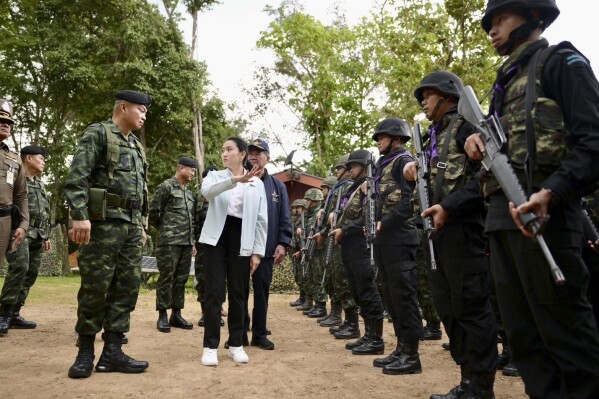
The simmering tensions along the Thailand-Cambodia border erupted into a full-scale military confrontation on July 25, 2025, displacing over 150,000 civilians and raising fears of a broader regional conflict.
The clashes, centered around the disputed territory near the 11th-century Preah Vihear temple—a UNESCO World Heritage site—began earlier this week when both nations accused each other of violating sovereignty. Thai forces reported Cambodian incursions into Kantharalak district, while Cambodia claimed Thai troops shelled villages in Preah Vihear province. The exchange of heavy artillery, mortars, and small arms fire has left at least 20 soldiers and civilians dead, with hundreds injured.
The humanitarian toll has been devastating. Families have fled their homes, seeking refuge in makeshift camps lacking adequate food, water, and medical supplies. “We ran with nothing but our clothes,” said Srey Meas, a Cambodian mother of three, now sheltered in a school 20 kilometers from the border. The United Nations High Commissioner for Refugees (UNHCR) has deployed emergency teams, but access to the region remains limited due to ongoing hostilities. Social media posts from displaced residents show harrowing images of burning villages and crowded shelters, amplifying calls for international intervention.
A former U.S. Marine, posting anonymously on X, claimed the conflict is a proxy for larger geopolitical rivalries involving China and the U.S., though these assertions lack verification and have been dismissed by regional analysts. ASEAN, led by Indonesia and Malaysia, has scheduled an emergency summit in Bangkok to broker a ceasefire, but both nations have bolstered their military presence, with Thailand deploying tanks and Cambodia mobilizing additional infantry units.
The historical dispute over the temple, awarded to Cambodia by the International Court of Justice in 1962 but still contested by Thai nationalists, lies at the heart of the conflict. Experts warn that without swift de-escalation, the crisis could destabilize Southeast Asia, disrupt trade routes, and draw in external powers.
The international community, including the U.S. and India, has urged restraint, with UN Secretary-General António Guterres calling for “dialogue over destruction.” As negotiations loom, the region braces for a critical juncture that could reshape bilateral relations and test ASEAN’s mediation capabilities.
Comments are closed.