
Ten Years After the Paris Agreement, ICC Leaders Call for COP30 to Focus on Implementation

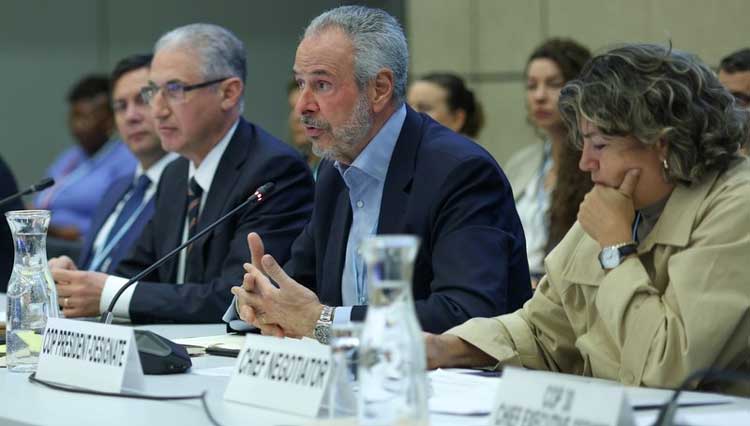
A decade after the Paris Agreement, ICC Chair Philippe Varin and its architect Laurent Fabius warn that, while progress has been made, it remains dangerously insufficient. Speaking ahead of COP30 in Belém, they stressed that governments and businesses must move beyond promises toward concrete action.
Reflecting on the Paris Agreement
Fabius highlighted the Agreement’s impact: it helped limit projected global warming from 4–5°C to just under 3°C by the end of the century. “One degree is enormous in terms of consequences, and it is largely thanks to the Paris Agreement,” he said. Clean energy investment reached a record USD $2 trillion in 2024—a six-fold increase since 2015—while millions of jobs have been created.
Yet Fabius issued a caution: the 1.5°C target will almost certainly be exceeded, extreme weather has cost the global economy $2 trillion over the past decade, and climate finance, particularly for developing nations, remains insufficient. Many countries have yet to submit updated Nationally Determined Contributions (NDCs).
COP30: From Promises to Delivery
Both Varin and Fabius see COP30 as a pivotal opportunity to shift from pledges to implementation. “Now is the time for implementation, and this necessarily involves the business community,” Fabius said. Varin emphasized the need for governments to create the enabling environment that allows private investment and innovation to scale.
“What has been missing is the enabling environment—only governments can provide this—to achieve genuine scale in deploying green and climate-resilient solutions,” Varin said. The ICC has launched its ‘Opportunity of a Lifetime’ campaign to press governments for meaningful outcomes in Belém.
Priority Areas for Action
Fabius outlined key focus areas for COP30 beyond formal negotiations:
-
Reducing methane emissions, which have outsized impacts on global temperatures but often receive less attention than CO₂.
-
Tropical Forest Forever Facility (TFFF), a blended finance initiative to halt deforestation and protect tropical ecosystems.
-
Greater inclusion of indigenous communities and local governments in climate decision-making.
-
Innovative climate finance mechanisms to scale private capital, including de-risking instruments and catalytic roles for multilateral development banks.
The Brazilian Presidency has emphasized the creation of a structured Action Agenda to drive accountability and real-world results. Both Varin and Fabius underscored that the private sector’s participation is essential, framing climate action as both an economic necessity and a transformational opportunity.
“Leading organizations such as the ICC have long shaped global discussions on climate ambition,” the Presidency stated, highlighting the historic potential of COP30 to translate commitments into action.
Comments are closed.