
Telangana Police Clarify Bondi Beach Shooter Sajid Akram’s Limited Ties to India

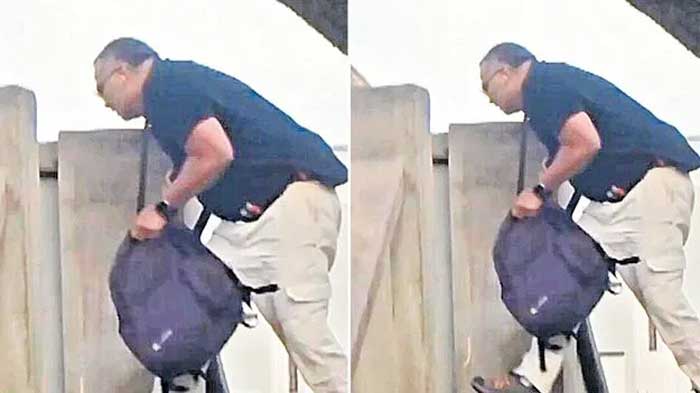
Telangana Police on Tuesday said Sajid Akram, the 50-year-old man killed in a shootout with Australian police following the terror attack at Sydney’s Bondi Beach, had minimal contact with his family in Hyderabad over nearly three decades. He had not travelled to India even after his father’s death, highlighting his limited ties to his hometown.
In an official statement, the police confirmed that Sajid Akram was originally from Hyderabad, where he completed a B.Com degree, before migrating to Australia in November 1998. He retained his Indian passport.
“Sajid Akram had limited contact with his relatives in Hyderabad over the past 27 years,” the police said, noting that he visited India only six times after migrating, mainly for property matters and to see his elderly parents. “It is understood that he did not travel to India even at the time of his father’s demise.”
The clarification comes amid international investigations into the December 14 mass shooting at a Hanukkah event at Bondi Beach. Sajid Akram and his 24-year-old son Naveed Akram opened fire, killing 15 people and injuring at least 42. Sajid was shot dead during a police encounter, bringing the death toll to 16, while Naveed remains hospitalised under police guard.
The Philippines’ Bureau of Immigration confirmed that Sajid, an Indian national and Australian resident, travelled with his son to the Philippines shortly before the attack. They arrived in Davao on November 1, 2025, and returned to Sydney on November 28.
Telangana Police added that Sajid Akram married a European woman after settling in Australia, and the couple had a son and a daughter, both Australian citizens. Family members in India reportedly had no knowledge of his alleged radicalisation or activities.
“The factors that led to the radicalisation of Sajid Akram and his son Naveed appear to have no connection with India or any local influence in Telangana,” the statement said, noting that Sajid had no adverse record in India prior to his migration in 1998.
Australian Prime Minister Anthony Albanese has described the attack as a targeted terrorist act influenced by Islamic State ideology. Australian authorities are investigating the father and son’s recent travel to the Philippines, including Davao in Mindanao, a region with a history of Islamic State-linked activity.
Comments are closed.