
Taiwan Reports Heightened Chinese Military Activity Amid Rising Tensions

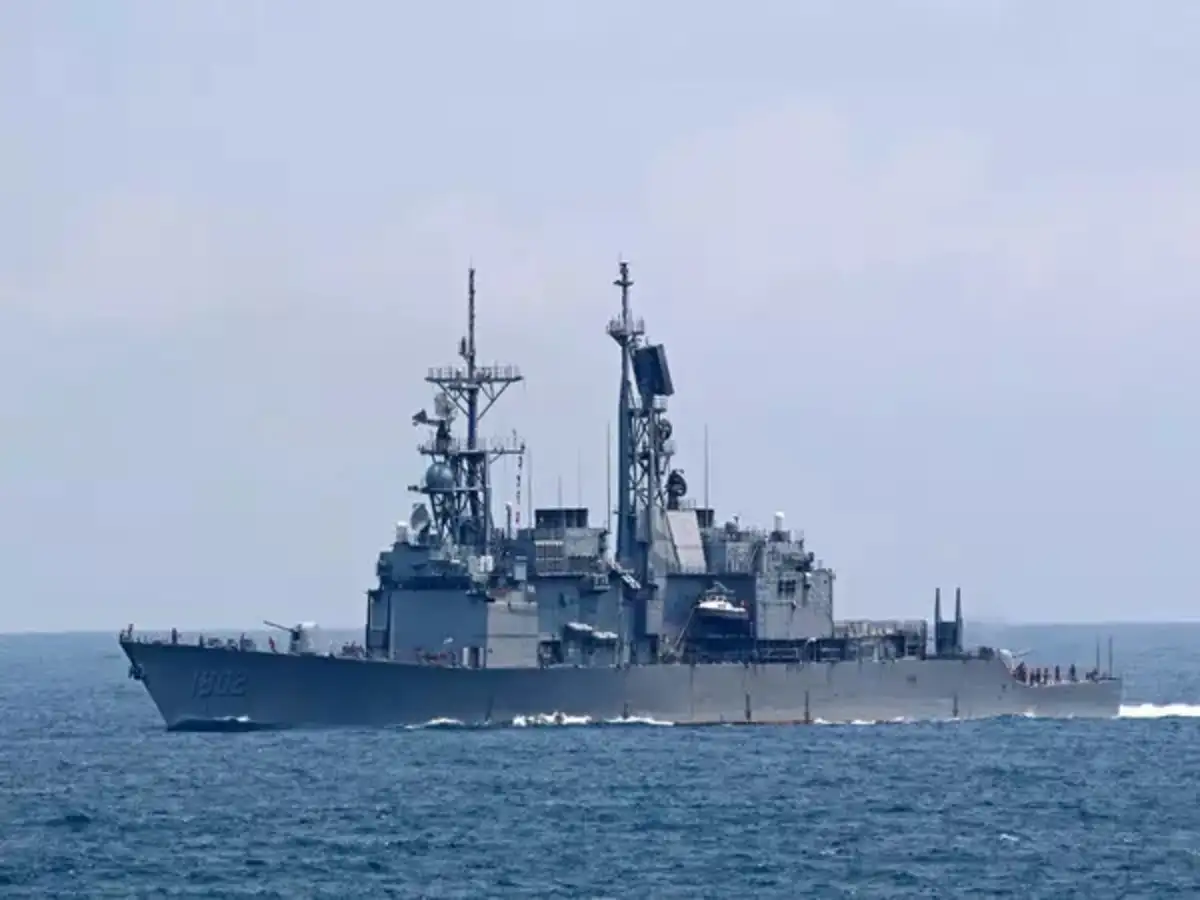
Taiwan’s Ministry of National Defense (MND) reported detecting 11 Chinese People’s Liberation Army (PLA) aircraft, seven People’s Liberation Army Navy (PLAN) vessels, and one official ship operating around Taiwan until 6 a.m. (UTC+8). Nine of the 11 aircraft crossed the median line of the Taiwan Strait, entering Taiwan’s southwestern and eastern Air Defense Identification Zone (ADIZ). The following day, July 14, the MND reported 17 PLA aircraft, eight PLAN vessels, and one ship, with seven aircraft entering the northern, southwestern, and eastern ADIZ. Taiwan responded by deploying aircraft, naval ships, and coastal missile groups to monitor the situation, amid growing concerns over potential Chinese invasion threats. This escalation, reported by outlets like WIONews, underscores heightened cross-strait tensions and their implications for regional stability.
Background of the Incursions
The Taiwan Strait, separating Taiwan from mainland China, has been a flashpoint for decades due to Beijing’s claim that Taiwan is a breakaway province that must be reunified, by force if necessary. The median line, an informal boundary, has historically served as a buffer, but China’s PLA has increasingly violated it with frequent incursions since 2020. The July 13–14 activities are part of a pattern of intensified Chinese military operations, with the MND reporting daily incursions involving warplanes, drones, and naval vessels. Posts on X, such as those from @MoNDefense, confirm that nine of the 11 aircraft on July 13 and seven of the 17 on July 14 crossed the median line, entering Taiwan’s ADIZ, a zone where foreign aircraft are expected to identify themselves.
These incursions coincide with broader regional tensions, including China’s disputes in the South China Sea and U.S. military support for Taiwan. The U.S., Taiwan’s primary arms supplier, has increased its presence in the Indo-Pacific, with recent Freedom of Navigation Operations (FONOPs) challenging China’s maritime claims. China’s actions are seen as both a response to these moves and a signal to Taiwan’s Democratic Progressive Party (DPP) government, led by President Lai Ching-te, which rejects Beijing’s “One China” principle.
Details of the Military Activity
According to Taiwan’s MND, the July 13 incursion involved 11 PLA aircraft, including fighter jets and drones, with nine crossing the median line into the southwestern and eastern ADIZ. Seven PLAN vessels, including frigates and destroyers, and one official ship, likely a coast guard or maritime surveillance vessel, were also detected. On July 14, the MND reported 17 aircraft, eight naval vessels, and one ship, with seven aircraft entering the ADIZ. The MND’s posts on X (@MoNDefense) detailed that Taiwan deployed Combat Air Patrol (CAP) aircraft, naval ships, and mobile missile groups to track and respond to the activities, maintaining a state of heightened alertness.
The PLA’s crossings into Taiwan’s ADIZ are significant, as they challenge Taiwan’s airspace monitoring capabilities and test its defense readiness. The eastern ADIZ incursions, in particular, are notable, as they extend beyond the Taiwan Strait into the Pacific, signaling China’s ability to project power toward Taiwan’s eastern coast, a strategically vulnerable area. Posts on X, including one from @DI313_, highlighted Taiwan’s preparations to “resist China’s invasion,” reflecting public concern about escalation.
Regional and International Context
The incursions occur amid heightened geopolitical friction. China has intensified military exercises around Taiwan since President Lai’s inauguration in May 2024, viewing his pro-independence stance as provocative. In June 2025, China conducted large-scale drills simulating a blockade of Taiwan, prompting condemnation from the U.S. and Japan. The U.S., under the Taiwan Relations Act, continues to supply Taiwan with defensive arms, including F-16 jets and missile systems, while conducting joint exercises with allies like Japan and Australia in the Indo-Pacific.
Posts on X, such as those from @WIONews and @BislaDiksha, reported Taiwan’s deployment of aircraft and ships in response, underscoring the island’s proactive stance. However, users like @ShineHamesha speculated about a potential Chinese invasion and a U.S. counter-response, reflecting fears of a broader conflict. These sentiments are inconclusive but highlight the anxiety surrounding China’s actions. The U.S. has reiterated its commitment to a “free and open Indo-Pacific,” with recent statements from the Pentagon emphasizing support for Taiwan’s self-defense capabilities.
Political and Public Reactions
In Taiwan, the government has condemned the incursions as a threat to regional peace. President Lai, in a July 13 statement, called for China to cease provocative actions, emphasizing Taiwan’s resolve to defend its sovereignty. The MND’s regular updates on X demonstrate transparency in reporting PLA activities, aiming to reassure the public while signaling vigilance. Opposition parties, including the Kuomintang (KMT), have urged dialogue with Beijing to de-escalate tensions, though they support Taiwan’s defensive measures.
Internationally, the incursions have drawn attention from regional powers. Japan, which hosts U.S. bases and shares concerns about China’s assertiveness, issued a statement on July 14 urging restraint. Australia and South Korea, part of the U.S.-led Indo-Pacific alliance, have also expressed concern. Posts on X, such as @Global__persp1, linked the incursions to “rising tensions and invasion threats,” reflecting global unease about a potential conflict in the Taiwan Strait, which could disrupt global trade routes and semiconductor supply chains, given Taiwan’s role as a leading chip producer.
Broader Implications
The repeated incursions signal China’s intent to normalize its military presence around Taiwan, potentially preparing for scenarios like a blockade or invasion. Analysts estimate that a full-scale conflict could cost the global economy $2.6 trillion due to disruptions in shipping and technology supply chains. For Taiwan, the incursions strain military resources and heighten domestic pressure to bolster defenses, with the government allocating 2.5% of GDP to defense in 2025.
The U.S.’s role remains critical. While it maintains a policy of “strategic ambiguity,” recent arms sales and joint exercises suggest a stronger commitment to Taiwan’s defense. However, any escalation risks drawing the U.S. into direct conflict with China, with ripple effects for allies like Japan and South Korea. The incursions also test the resilience of Taiwan’s 23 million residents, who face psychological pressure from China’s “gray zone” tactics—actions short of war aimed at intimidation.
Taiwan’s detection of 11 Chinese aircraft, seven naval vessels, and one ship on July 13, followed by 17 aircraft and eight vessels on July 14, marks a significant escalation in cross-strait tensions. The PLA’s ADIZ violations and naval maneuvers underscore China’s assertive stance, prompting Taiwan to deploy robust defensive measures. Amid global concerns about a potential invasion, as reflected in X posts, the situation highlights the delicate balance of deterrence and diplomacy in the Taiwan Strait. As Taiwan strengthens its defenses and the U.S. and allies monitor the region, the international community watches closely, aware that any miscalculation could have profound consequences for regional and global stability.
Comments are closed.