
Taiwan Intensifies Vetting of Public Servants to Counter Rising Chinese Espionage Threat

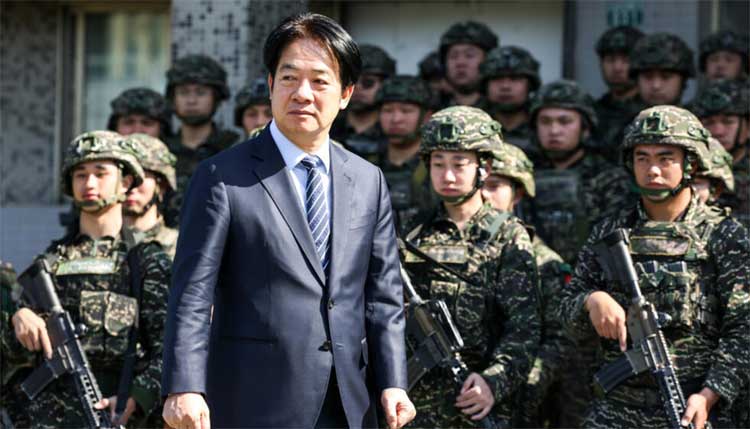
Taiwan has launched a sweeping vetting campaign targeting hundreds of thousands of civil servants, military personnel, and public school teachers in an effort to root out individuals who may harbor allegiance to China. The move comes amid growing alarm over Beijing’s escalating efforts to infiltrate the self-governed island, which China claims as its own and has threatened to seize by force.
The campaign follows a string of espionage cases, including the recent indictment of four former members of the ruling Democratic Progressive Party (DPP) — among them, an ex-aide to President Lai Ching-te — for allegedly leaking state secrets to Beijing. While intelligence gathering between Taipei and Beijing has long been mutual, analysts warn that the threat posed by China is becoming more acute given the risk of a military confrontation.
China’s main targets have been active and retired military officials, lured through financial incentives, blackmail, or ideological sympathy. President Lai, a vocal advocate for Taiwan’s sovereignty and a figure reviled by Beijing, has condemned China as a “foreign hostile force” and called for greater public vigilance.
In response, Taiwan is now scrutinizing individuals in sensitive roles for links to China. Anyone found to possess Chinese identity documents — such as residence permits or national ID cards — could lose their Taiwanese household registration, which effectively equates to loss of citizenship.
DPP lawmaker Wang Ting-yu defended the move, telling AFP that China was using these documents as a tool to infiltrate Taiwan’s institutions. “The threat is getting worse and worse and we have to deal with that,” he said.
In the first round of checks, 371,203 individuals signed declarations affirming they did not possess prohibited Chinese documents. Only two admitted to holding Chinese ID cards, and 75 disclosed having residence permits — all of which were annulled, according to the Mainland Affairs Council.
A second round of vetting is now underway. While the focus remains on public service personnel, the government has stated that ordinary citizens will not be subject to the same level of scrutiny. Concerns were heightened last year after a YouTube video claimed tens of thousands of Taiwanese held Chinese ID documents, though officials say confirming such numbers is difficult without cooperation from Beijing.
The issue extends to Chinese spouses and their children in Taiwan, who are now being asked to provide proof they have relinquished their Chinese household registration — a long-standing legal requirement. Around 10,000 individuals have received such requests, prompting criticism of the policy’s perceived harshness.
“I personally feel that it’s a bit disturbing for the people,” said Li I-ching, a graduate student in Taipei with a Chinese mother and Taiwanese father, who now faces bureaucratic hurdles to confirm her residency status.
The opposition Kuomintang (KMT) party has condemned the vetting as an overreach, accusing the government of imposing ideological “loyalty” tests. “At a time when our country is facing so many difficulties… the government is only thinking about how to cleanse the population,” said KMT legislator Chen Yu-jen.
But officials argue that vigilance is necessary, pointing to instances where immigrants from China were found to be involved in election interference and espionage.
Experts stress the need for such measures in the face of persistent threats. “It’s a fight every day for the Taiwanese against this sort of stuff,” said Mark Harrison, a senior lecturer in Chinese studies at the University of Tasmania. “Their democracy has tremendous integrity, but it does have to be defended.”
Taiwan continues to face pressure on multiple fronts — from cyberattacks and disinformation campaigns to the looming threat of military aggression — as it seeks to preserve its autonomy against an increasingly assertive China.
Comments are closed.