

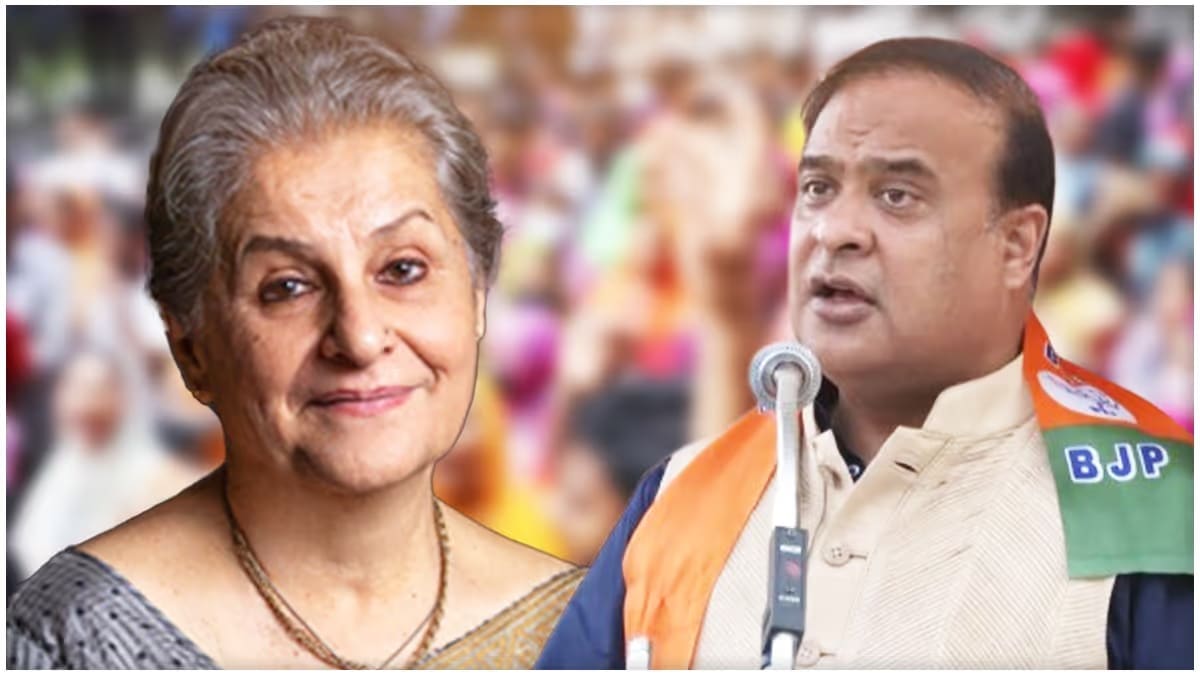
Former Planning Commission member Syeda Hameed is facing intense backlash for her remark suggesting that “Bangladeshis can live in Assam,” made during a seminar on “The State of the Nation with Special Reference to Assam” around August 24-26, organized by Asom Nagarik Sanmilan. Hameed, part of a delegation including Harsh Mander and Prashant Bhushan, argued that Bangladeshis are humans too and the world is large enough to accommodate them, questioning the eviction drives targeting alleged illegal immigrants. This statement, delivered in Guwahati, has sparked outrage across political, social, and regional lines, with the controversy escalating as Assam Chief Minister Himanta Biswa Sarma and other leaders condemn it as a legitimization of infiltration, threatening the state’s cultural identity.
Political Storm Engulfs Assam and Beyond
The strategic context of Hameed’s remark is deeply tied to Assam’s long-standing struggle with illegal immigration, a sensitive issue exacerbated by the 1971 Assam Accord, which sets March 25, 1971, as the cut-off date for identifying foreigners. Her comments, made amid ongoing eviction drives, have drawn sharp criticism from Sarma, who accused her of supporting Jinnah’s dream of integrating Assam into Pakistan, and from groups like the All Assam Students’ Union (AASU), which sees it as an insult to the 860 martyrs of the anti-foreigner movement. The backlash extends beyond Assam, with Hindu Sena protesters disrupting her Delhi event on August 26, chanting slogans like “Bangladeshion ko bahar nikalo.” X posts reveal a polarized public, with some defending her humanitarian stance and others decrying it as anti-national, highlighting the divisive nature of the immigration debate.
Wide-Ranging Implications for Society and Politics
The implications of Hameed’s remark are profound, affecting economic, social, and political spheres. Economically, the controversy could disrupt trade and labor dynamics in Assam, where Bangladeshi immigrants have influenced demographics and markets. Socially, it has deepened community tensions, with indigenous groups fearing cultural erosion and Muslims feeling targeted, as Hameed suggested the government unfairly labels them as infiltrators. Politically, the statement has intensified calls for deportation and implementation of the Assam Accord’s Clause 6, while putting pressure on the Congress party, linked to Hameed, to clarify its stance. The incident also raises operational concerns, as protests and counter-protests may strain law enforcement, challenging the narrative of a unified national response to immigration.
Challenges Arise Amid Escalating Tensions
Significant challenges emerge as the controversy unfolds. Operationally, managing public unrest and ensuring Hameed’s safety after the Delhi protest require delicate handling by authorities. Economically and socially, the debate risks alienating communities, with potential job losses for immigrant workers and increased regional disparities if evictions intensify. Policy risks are evident, as the backlash could lead to stricter immigration laws or legal battles, with critics like Union Minister Kiren Rijiju accusing Hameed of misleading in the name of humanity. The establishment’s portrayal of her as a Gandhi family confidante fuels political rivalry, but the lack of clear evidence behind her intent leaves room for skepticism about the narrative’s completeness, suggesting deeper regional grievances at play.
Opportunities for Dialogue and Policy Reform
Despite the challenges, opportunities exist for constructive outcomes. Economically, the controversy could prompt a review of labor policies to integrate or manage immigrant contributions legally. Socially, it opens a chance for dialogue between communities to address identity and inclusion, potentially reducing tensions if handled sensitively. Policy-wise, the heat on Hameed might push for a transparent immigration framework, aligning with the Assam Accord and addressing both humanitarian and security concerns. Innovative approaches, such as community-led initiatives or international mediation, could emerge to balance regional stability with national interests. Whether this episode leads to reconciliation or further division depends on leadership, but it underscores the need for a nuanced approach to Assam’s complex demographic landscape.
Conclusion Hinges on Resolution of Ongoing Conflict
Syeda Hameed’s “Bangladeshis welcome” remark, made around August 24-26, has ignited a firestorm in Assam and beyond, drawing ire from political leaders, student groups, and protesters. While it highlights humanitarian concerns, the statement’s alignment with illegal immigration has fueled a fierce backlash, challenging Assamese identity and prompting calls for deportation. Amid operational strains and policy risks, opportunities for dialogue and reform offer a path forward, though the establishment’s narrative of Hameed as a political pawn invites scrutiny. The outcome—whether it strengthens regional policies or deepens social rifts—rests on how stakeholders navigate this contentious issue in the coming days.
Comments are closed.