
Surendra Koli to Be Acquitted by Supreme Court in Nithari Killings Case? A Revisit to the ‘House of Horrors’

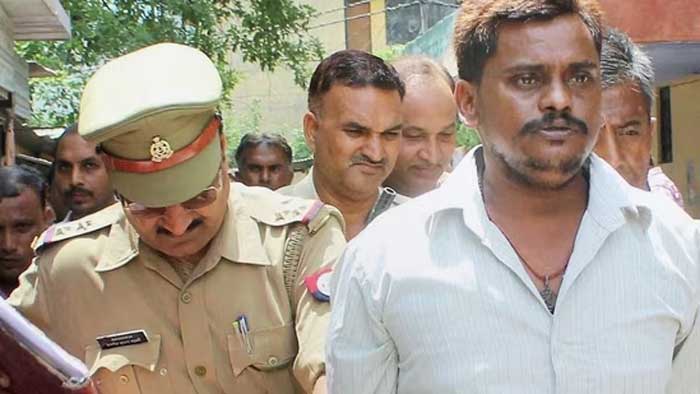
The Supreme Court on Tuesday reserved its verdict on a curative petition filed by Surendra Koli, challenging his conviction and death sentence in one of the Nithari murder cases — while strongly indicating that his plea “deserves to be allowed.”
A bench of Chief Justice of India BR Gavai and Justices Surya Kant and Vikram Nath observed that it would be “anomalous” to uphold Koli’s conviction in the lone pending case when he has already been acquitted in others based on the same evidence.
“Will this not be anomalous?” the bench remarked during the hearing. “If on the same set of facts this court has acquitted him in other cases, and he is convicted in this one on the same evidence — will this not be a travesty of justice?”
Koli, a domestic help at businessman Moninder Singh Pandher’s house in Noida’s Nithari village, has been behind bars since 2006. The court’s comments suggest he could soon walk free after nearly 19 years in prison.
The Nithari Killings: A Timeline of One of India’s Grimmest Crimes
Discovery of the crimes (2006):
The Nithari killings came to light on December 29, 2006, when skeletal remains of eight children were discovered in a drain behind Pandher’s bungalow (D-5) in Noida’s Nithari village.
More remains found:
Subsequent searches uncovered additional skulls, bones, and body parts — many belonging to missing children and young women from the area’s poor neighbourhoods.
Arrests and CBI probe:
Pandher and his domestic worker Surendra Koli were arrested the same day. The case was handed over to the CBI on January 11, 2007, which went on to file 16 charge sheets in separate cases.
Nature of crimes:
The killings were among India’s most shocking serial murders, with allegations of sexual assault, cannibalism, and organ trade — though some claims were never conclusively proven in court.
Charges and convictions:
Koli was chargesheeted in all 16 cases and received multiple death sentences, including one in 2011 for the rape and murder of a 15-year-old girl. Pandher, too, faced several convictions and death sentences.
Judicial twists:
In 2015, the Allahabad High Court commuted Koli’s death sentence to life imprisonment due to delays in deciding his mercy plea. Over time, both Koli and Pandher were acquitted in most cases for lack of evidence.
High court acquittal (2023):
On October 16, 2023, the Allahabad High Court acquitted both men in all remaining cases, sharply criticising the CBI’s investigation for violating “basic norms of evidence collection.”
Supreme Court’s stance:
The CBI and victims’ families challenged the acquittals, but the Supreme Court dismissed all 14 appeals on July 30, 2025.
Latest development:
Koli’s curative plea — his final legal remedy — pertains to the only case where his conviction still stood. The top court’s observations now indicate that it is likely to be set aside, paving the way for his release after nearly two decades behind bars.
Comments are closed.