
Supreme Court permits limited use of green firecrackers in Delhi-NCR during Diwali on trial basis

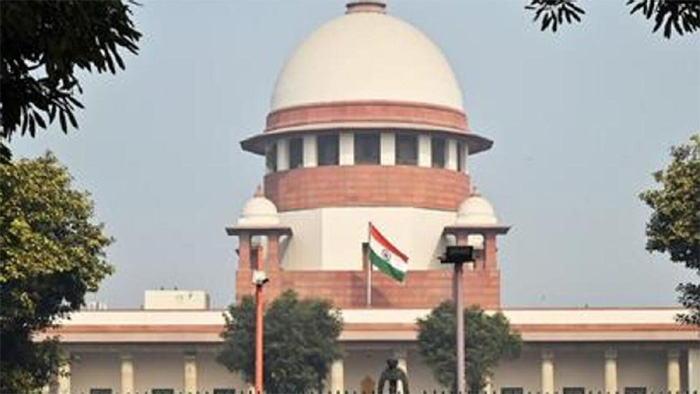
The Supreme Court on Friday said it would allow the sale and bursting of firecrackers in Delhi and the National Capital Region (NCR) for five days during Diwali, marking what could be the city’s first festive season with legal fireworks in several years. The move comes despite warnings from environmental experts and the court’s amicus curiae about enforcement gaps and potential air quality risks.
A bench led by Chief Justice of India Bhushan R. Gavai and Justice K. Vinod Chandran reserved its order after the Union government proposed a regulated framework permitting only “green firecrackers” approved by the National Environmental Engineering Research Institute (NEERI).
“For the time being, we will allow it during the five days of Diwali on a trial basis… however, we will confine it to certain time limits,” the bench observed.
Solicitor General Tushar Mehta, representing the Centre, outlined a detailed plan restricting sales to licensed traders and banning online platforms such as Flipkart and Amazon from selling firecrackers in Delhi-NCR. The government also promised to maintain a ban on traditional firecrackers while seeking relaxation for other festivals.
The Centre proposed specific time windows: 8 p.m. to 10 p.m. on Diwali and major festivals, 11:55 p.m. to 12:30 a.m. on New Year’s Eve, and one-hour morning and evening slots for Gurpurab. Fireworks would also be permitted for weddings and personal events. Mehta urged the court to consider extending the Diwali window slightly, saying, “It is a matter of a few days. Let children celebrate Diwali with fervour.”
Environmentalists expressed concern, citing data from 2018–2020 showing that the introduction of green firecrackers failed to reduce pollution levels. Experts said enforcement remains a challenge and distinguishing green crackers from conventional ones is nearly impossible at the retail level.
Sunil Dahiya, founder of think tank Envirocatalysts, warned that the decision could “set back Delhi’s air quality fight by 10 years,” adding that firecracker emissions, when combined with stubble burning and weather conditions, could prolong pollution spikes.
Amicus curiae Uttara Babbar described the Centre’s enforcement plan as “lip service,” pointing out that the Petroleum and Explosives Safety Organisation (PESO) lacks testing facilities in Delhi to verify whether products sold as green firecrackers meet standards.
Green firecrackers, developed by NEERI, replace barium nitrate with zeolites, reduce aluminium content, and add dust suppressants, claiming 30–35% lower emissions than conventional fireworks. But experts such as IIT Delhi’s Mukesh Khare noted that poor enforcement and mass use negate these benefits: “Even if we had only green firecrackers, the sheer number would still cause a pollution spike.”
The court’s position marks a shift from an April order by a bench led by Justice Abhay S. Oka that reaffirmed Delhi’s blanket firecracker ban, ruling that no relaxation was possible unless emissions were “bare minimum.” The CJI-led bench said both matters should be heard together, questioning whether Delhi’s air quality had improved significantly between 2018 and 2024 to justify continuing the ban.
Data from last Diwali showed severe spikes in particulate matter, with PM2.5 levels at some stations reaching over 1,800 µg/m³ — more than 120 times the World Health Organisation’s safe limit of 15 µg/m³.
The Centre’s proposed enforcement plan includes QR-code tracking for all NEERI-approved products, surprise inspections, penalties for violations, and public awareness campaigns through the Sameer and Green Delhi apps. Authorities would also conduct source apportionment studies to determine the fireworks’ share in pollution levels.
The court acknowledged that testing infrastructure cannot be built overnight but suggested random sampling as a temporary measure. It also highlighted the livelihood concerns of workers in the firecracker industry, many of whom belong to marginalised communities.
Senior advocate K. Parameshwar, appearing for firecracker manufacturers, suggested designating specific sale points to simplify compliance monitoring.
Last month, the Supreme Court permitted manufacturers with valid NEERI and PESO certifications to resume production but maintained the sales ban in NCR, observing that a blanket prohibition without strong enforcement mechanisms was unsustainable.
Comments are closed.