
Supreme Court Hears Crucial Case on Voter List Revision and Alleged Bangladeshi Infiltration

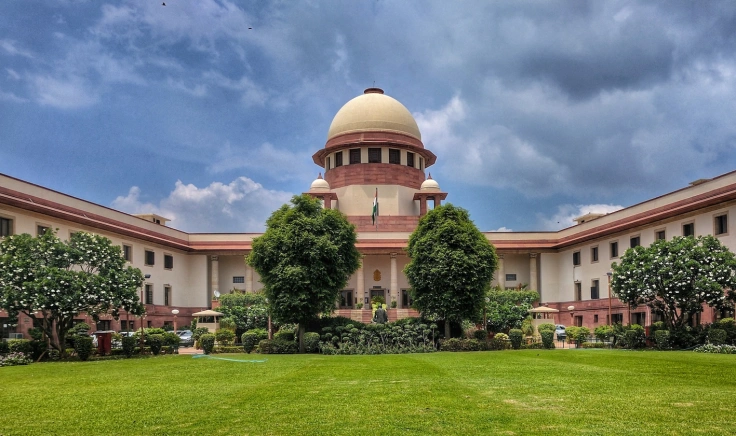
The Supreme Court of India is currently hearing a critical case concerning the Election Commission’s plan to carry out a Special Intensive Revision (SIR) of electoral rolls in Bihar and potentially other states. The court has permitted the revision process to move forward but raised serious questions about the timing and scope, especially with state elections approaching.
The bench expressed concern that sudden deletions from the voter list—based on doubts about citizenship or documentation—could lead to mass disenfranchisement, particularly of poor and marginalized communities with limited access to identity proofs.
Clarifying Authority on Citizenship
In a key observation, the Supreme Court noted that the Election Commission (EC) does not have the authority to determine citizenship. That responsibility lies with the Union Home Ministry. The EC, the court emphasized, is only empowered to conduct voter registration and maintain electoral rolls—not decide who is a citizen.
This distinction is crucial, as the EC’s revision strategy reportedly included mechanisms to identify and remove suspected foreign nationals, particularly alleged Bangladeshi infiltrators.
Acceptance of Basic Documents Ordered
To safeguard legitimate voters from arbitrary exclusion, the Supreme Court has directed the Election Commission to accept commonly available documents such as:
-
Aadhaar cards
-
Voter ID cards
-
Ration cards
These were deemed sufficient for verifying voter identity during the ongoing revision. The court warned against rejecting voters for minor documentation issues.
PIL Seeks Nationwide Electoral Roll Verification
The case also involves a Public Interest Litigation (PIL) filed by lawyer and activist Ashwini Upadhyay. The PIL calls for mandatory nationwide revisions of voter rolls before every election, citing the presence of large numbers of illegal infiltrators from Bangladesh.
The petitioner argued that demographic changes in districts across Bihar, Assam, and West Bengal have distorted electoral outcomes and urged the court to order regular and thorough roll revisions to preserve the sanctity of Indian democracy.
Opposition Warns of Political Motive
Several opposition parties, especially in Bihar, have criticized the timing of the revision exercise. They claim it could be politically motivated, designed to selectively disenfranchise groups perceived as unfavorable to the ruling establishment.
They argue that many working-class voters, migrants, and marginalized communities lack access to timely legal remedies and could be unfairly removed from the list without notice or hearing.
Court’s Balanced Approach
The Supreme Court acknowledged the need to maintain clean and accurate voter lists but stressed that no voter should be deprived of their fundamental right without due process. The court noted that similar special revisions have not taken place since 2003, and rushing the exercise just ahead of elections may not be justified.
It also asked the Election Commission to provide clearer timelines and mechanisms to allow excluded voters to challenge and reapply for inclusion before the polls.
Next Hearing and Broader Impact
The court has adjourned the matter for further hearing later this month. It is expected to issue more detailed directions regarding:
-
Appeal procedures for affected voters
-
Transparency in the deletion process
-
Coordination with Home Ministry for citizenship-related concerns
The outcome of this case could set a precedent for how India manages voter list verification, citizenship scrutiny, and election preparation—especially in sensitive border states and high-stakes electoral battles.
Comments are closed.