
Supreme Court Challenges ECI on Bihar Voter Roll Revision Timing and Process

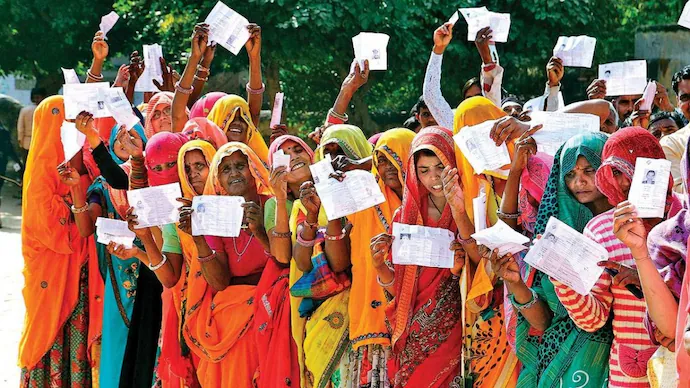
The Supreme Court of India, led by Justices Sudhanshu Dhulia and Joymalya Bagchi, questioned the Election Commission of India (ECI) over its Special Intensive Revision (SIR) of electoral rolls in Bihar, ahead of the state’s assembly elections scheduled for November 2025. The court, while refusing to stay the revision process, urged the ECI to consider including widely accessible documents like Aadhaar, voter ID, and ration cards for voter verification, emphasizing the need to avoid disenfranchising eligible voters. The bench raised concerns about the timing, process, and documentation requirements of the SIR, noting that the exercise “goes to the root of democracy and the power to vote.” With the next hearing set for July 28, 2025, this case has sparked intense debate over voter rights and electoral integrity in Bihar.
Background of the Controversy
On June 24, 2025, the ECI announced the SIR for Bihar, the first such intensive revision since 2003, to update electoral rolls by adding eligible voters and removing ineligible ones, citing issues like rapid urbanization, migration, and potential inclusion of non-citizens. The exercise, set to conclude with a draft roll publication on August 1, 2025, requires voters to submit one of 11 specified documents to verify their eligibility, excluding commonly held IDs like Aadhaar, voter ID, and ration cards. This decision triggered widespread criticism, with opposition parties and activists, including the Association for Democratic Reforms (ADR), alleging that the SIR could disenfranchise millions, particularly marginalized groups like migrants, Dalits, and minorities, due to stringent documentation requirements and a tight timeline.
The Supreme Court’s involvement began after over 10 petitions were filed by opposition leaders, including RJD’s Manoj Jha, TMC’s Mahua Moitra, Congress’ K.C. Venugopal, and others, alongside NGOs like ADR and PUCL. The petitioners argued that the SIR violates fundamental rights under Articles 14 (equality), 19 (free speech), 21 (life and liberty), 325 (non-discrimination in elections), and 326 (adult suffrage) of the Constitution, as well as provisions of the Representation of People Act, 1950 (RPA). They claimed the process is arbitrary, lacks legal grounding, and risks excluding legitimate voters, especially in a state with high poverty and migration rates.
Supreme Court’s Observations and Directives
During the July 10 hearing, the Supreme Court acknowledged the ECI’s constitutional mandate under Article 324 to manage electoral rolls but scrutinized the SIR’s timing and methodology. Justice Dhulia remarked, “Why are you connecting the Special Intensive Revision to the elections? Why can’t it be irrespective of elections?” The court questioned the ECI’s decision to conduct the revision just months before the November elections, noting that the tight timeline could prevent disenfranchised voters from seeking redress before the polls. The bench also emphasized that citizenship verification, a key aspect of the SIR, falls under the Ministry of Home Affairs’ purview, not the ECI’s, stating, “If you are to check citizenship under SIR of electoral rolls in Bihar, then you should have acted early; it is a bit late.”
The exclusion of Aadhaar, voter ID (EPIC), and ration cards from the list of acceptable documents drew sharp scrutiny. Justice Dhulia noted that Aadhaar is a primary identity document used for other certifications, questioning, “If I want a caste certificate, I show my Aadhaar. A document like Aadhaar, considered basic for getting other documents, is not part of the 11 documents?” The court observed that the ECI’s list of 11 documents was “not exhaustive” and suggested including Aadhaar, EPIC, and ration cards to prevent exclusion, especially given that 99% of India’s adult population holds Aadhaar. The ECI countered that Aadhaar is not proof of citizenship, but the court insisted it consider these documents, leaving the final decision to the ECI’s discretion.
The bench refused to issue an interim stay on the SIR, noting that none of the petitioners explicitly sought one, but directed the ECI to file a counter-affidavit by July 21 and scheduled the next hearing for July 28, before the draft roll’s publication. The court also referenced its 1995 Lal Babu Hussain ruling, which mandates a fair process for voter deletions, and the 1977 Mohinder Gill case, which limits the ECI’s powers to ensure fairness and legality.
Political and Public Reactions
The SIR has ignited a political firestorm in Bihar, with opposition parties, including the INDIA bloc, labeling it a “conspiracy” to suppress voters in opposition strongholds, particularly in the Seemanchal region near Bangladesh, where concerns about illegal immigration have been raised. RJD leader Tejashwi Yadav called the process an “undercover NRC” (National Register of Citizens), arguing that it unfairly burdens Bihar’s 8 crore electorate, 20% of whom are migrant workers, to re-verify their status in just 25 days. Congress president Mallikarjun Kharge and Rahul Gandhi supported a “Bihar bandh” on July 9, 2025, to protest the SIR, with Gandhi alleging it could exclude up to 2 crore voters.
The ruling BJP in Bihar, led by Deputy CM Samrat Chowdhary, defended the SIR, asserting it ensures only Indian citizens vote, accusing the opposition of protecting “fake voters.” Posts on X, such as one by @TimesAlgebraIND, echoed this sentiment, stating, “SC makes it clear: Once electoral rolls are finalised, they won’t be touched.” However, others, like @deKoderdigital, reported panic among Bihar’s locals, with fears of disenfranchisement driving voters to scramble for documents.
Broader Context and Challenges
Bihar’s SIR comes amid heightened concerns about electoral integrity, with the ECI citing issues like duplicate entries and non-citizen voters, particularly from Bangladesh and Myanmar. The state’s high migration rates—up to 20% of its workforce moves seasonally—and recent floods affecting 73% of its districts exacerbate the challenge of document verification. Critics argue that excluding Aadhaar and ration cards, which are widely held, disproportionately impacts marginalized groups like Dalits, Adivasis, Muslims, and women, who may lack alternative documents like passports or birth certificates.
The ECI’s Form 6 for voter registration does not typically require citizenship proof, raising questions about why the SIR imposes such stringent criteria. A former Chief Election Commissioner told India Today that the entire voter registration process needs an overhaul to address illegal immigration, a point echoed by the ECI’s claim that the SIR targets ineligible voters. However, the Supreme Court’s 1992 HRA Choudhury and 1995 Lal Babu Hussain rulings emphasize that voters already on rolls cannot be removed without a fair hearing, reinforcing the petitioners’ argument that the SIR’s process lacks due process.
Potential Implications
The Supreme Court’s scrutiny of the SIR could reshape India’s electoral processes. If the court rules the SIR unconstitutional or orders significant changes, it may delay Bihar’s elections or prompt a nationwide review of voter verification practices, especially as the ECI plans a similar exercise in other states like West Bengal and Delhi. A decision to include Aadhaar and other IDs could ease the burden on voters but may not fully address concerns about citizenship verification, given Aadhaar’s limitations. Conversely, upholding the SIR could embolden the ECI to conduct similar revisions elsewhere, potentially altering electoral dynamics in opposition-dominated regions.
The case also has political ramifications. The opposition’s claims of targeted disenfranchisement could galvanize voter mobilization, while the BJP’s support for the SIR may strengthen its narrative of cracking down on illegal immigration. The outcome, expected after the July 28 hearing, will likely influence public trust in the ECI and the fairness of Bihar’s elections.
Comments are closed.