
Supreme Court Asks Government to Reclaim Official CJI Bungalow from Former Chief Justice DY Chandrachud

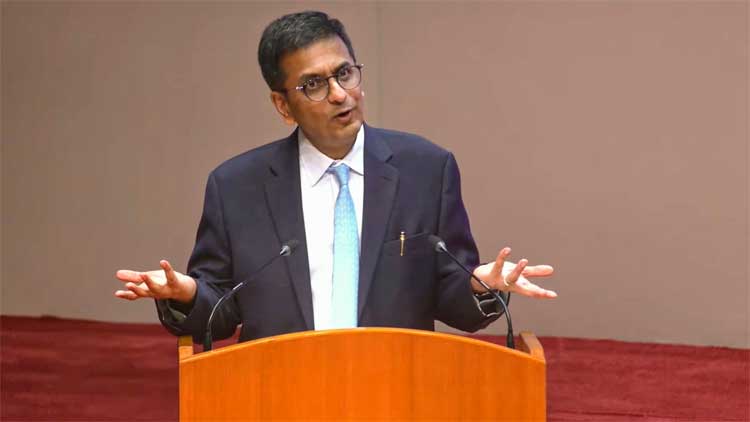
In an extraordinary move, the Supreme Court administration has formally asked the Union government to reclaim Bungalow No. 5, Krishna Menon Marg—the official residence of India’s Chief Justice—from its current occupant, former CJI Dhananjaya Y Chandrachud, citing a breach of permitted occupancy.
In a letter dated July 1, addressed to the Ministry of Housing and Urban Affairs (MoHUA) and seen by Hindustan Times, the court stated that Justice Chandrachud has overstayed the permissible period post-retirement and must vacate the Type VIII Lutyens’ bungalow without further delay.
“The permission granted for retention expired on May 31, 2025, and the six-month period under Rule 3B of the 2022 Rules ended on May 10, 2025,” the letter said, urging immediate repossession.
Timeline of Occupancy and Requests
Justice Chandrachud, who served as India’s 50th CJI from November 2022 to November 2024, has been residing at the Krishna Menon Marg residence for nearly eight months since demitting office.
Following his retirement, he sought an extension through a letter dated December 18, 2024, citing delays in renovation work at an allotted bungalow on Tughlak Road due to pollution-linked construction bans under GRAP-IV. The request was granted until April 30, 2025, with MoHUA officially approving the extension and charging ₹5,430/month in licence fees.
Later, an oral request was made for an additional month, which the sitting CJI approved with the clear condition that no further extension would be entertained, especially since newly elevated judges were awaiting accommodation.
Statutory Framework and Breach
According to the Supreme Court Judges (Amendment) Rules, 2022, a retired Chief Justice is entitled to Type VII accommodation for up to six months after retirement. The court administration now contends that Justice Chandrachud has exceeded that limit, both in duration and bungalow category, as Bungalow No. 5 is Type VIII.
The letter highlights that while “special circumstances” led to the initial extension, it was understood that the premises would be vacated by May-end. With that deadline now missed, the court has urged MoHUA to take possession and confirm compliance.
Justice Chandrachud Responds: Personal Circumstances Delayed Move
In response to queries, Justice Chandrachud said the delay was due to compelling personal reasons, particularly concerning the special needs of his two daughters.
“I have two daughters with severe comorbidities, including nemaline myopathy, requiring long-term treatment at AIIMS,” he said, adding that his new government-allotted residence had been uninhabitable for over two years and was under renovation.
He clarified that he had already informed the Supreme Court of his circumstances and plans to shift immediately once the house is ready.
“I fully understand my obligations. I have held the highest judicial office in the country. It’s only a matter of a few more days,” he said, noting that past CJIs have also been granted extended stays due to personal exigencies.
Unprecedented Move Reflects Changing Norms
While former top officials often receive grace periods for vacating government housing, this formal communication by the Supreme Court administration is rare and reflects growing insistence on following rules to the letter—even at the highest levels.
This episode underscores the tight housing situation for judges and the delicate balance between institutional norms and individual needs.
Comments are closed.